Req 1c — Freight and Passenger Cars
You need to identify ten car types and explain what each one does. “Using models or pictures” means you can work from photographs, diagrams, or physical models — you do not need to go out and find the cars in person. A printed or on-screen reference sheet works perfectly.
Ten Car Types to Know
Here is a solid set of ten that covers both freight and passenger rail. Learn the silhouette and function of each.
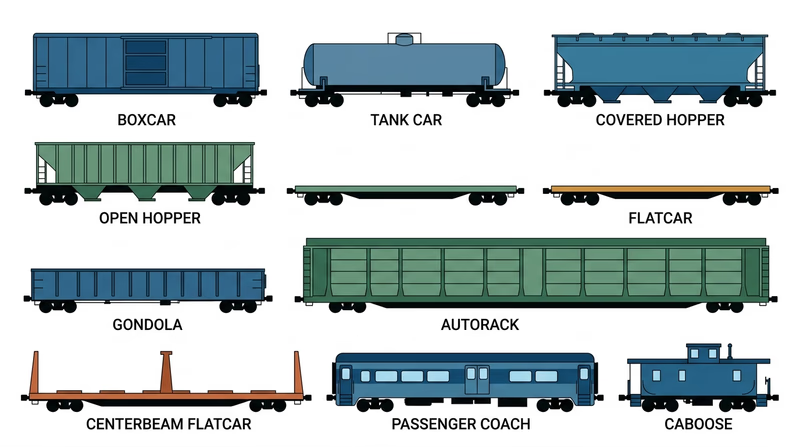
Freight Cars
1. Boxcar — A fully enclosed rectangular car used to protect cargo from weather. Carries everything from packaged goods and paper rolls to auto parts and canned goods. One of the most common and recognizable car types.
2. Flatcar — An open platform with no sides or roof. Used for large, heavy, or oddly shaped loads including lumber, steel beams, military vehicles, and construction equipment.
3. Gondola — An open-top car with fixed sides and a flat floor. Used for bulk loads that do not need weather protection: scrap metal, steel coils, sand, aggregate, and coal.
4. Hopper — An open-top car with sloped floors and bottom-discharge gates. Coal, grain, potash, and other loose bulk materials flow out through the bottom when the hatches are opened. Covered hoppers have a roof and are used for grain, cement, and plastic pellets that need to stay dry.
5. Tank Car — A cylindrical pressurized or non-pressurized tank mounted on a car frame. Carries liquids and gases: crude oil, ethanol, propane, chlorine, molten sulfur, and corn syrup. Tank cars are regulated by the DOT because many carry hazardous materials.
6. Well Car (Double-Stack Car) — A specialized car with a low center section (the “well”) that allows two standard ocean containers to be stacked on top of each other. Used exclusively in intermodal service — the backbone of modern long-distance container shipping by rail.
7. Autorack — A multi-level steel rack car that carries new automobiles and light trucks. Typically two or three levels high. The vehicles are driven on and secured at loading facilities. Autoracks carry virtually every new car sold in the U.S. that was not manufactured near its dealership.
8. Centerbeam Flatcar — A flatcar with a vertical steel beam down the center. Loads of lumber, wallboard, or fence posts are stacked on both sides and strapped to the beam for stability during transit.
9. Refrigerated Boxcar (Reefer) — An insulated boxcar with a mechanical refrigeration unit. Carries perishables such as produce, meat, frozen foods, and beer that must stay at controlled temperatures. Modern reefers can maintain precise temperatures for multi-day cross-country runs.
10. Passenger Coach — A climate-controlled car with seating for 50–80 passengers. Used on Amtrak trains and commuter rail services. Modern coaches include large windows, overhead luggage racks, electrical outlets, and accessible seating. Amtrak’s Superliner coaches are bi-level; single-level coaches are more common on commuter systems.
Bonus Types Worth Knowing
Once you have your ten solid, you might also be able to identify:
- Sleeper car (Amtrak, private roomettes for overnight travel)
- Dining car (kitchen and seating for meal service)
- Maintenance-of-way (MOW) equipment (ballast tampers, rail grinders — technically not revenue cars but often seen on tracks)
🎬 Video: Every Type of Railcar Explained in 15 Minutes — Practical Engineering — https://www.youtube.com/watch?v=psjExhXfvbI
How to Prepare
Req 1c Preparation Checklist
- Print or save a labeled photo reference for all 10 car types
- Practice identifying each type from the silhouette alone (cover the labels)
- Write one sentence for each car explaining what it carries and why that car type is used
- If you have model railroad cars, set them out by type as a visual aid for your counselor meeting