Req 7a3 — Scales and Gauges
This is a knowledge and identification requirement. You need to learn the vocabulary that every model railroader uses — “scale” and “gauge” — and apply it to real equipment. The difference between these two words trips up a lot of beginners, so let’s start there.
Scale vs. Gauge: What Is the Difference?
Scale is the ratio of the model’s size to the real thing. HO scale (1:87) means the model is 87 times smaller than the prototype (the real railroad car or locomotive).
Gauge is the distance between the inside faces of the two rails — measured in inches or millimeters. Standard prototype gauge in North America is 4 feet 8½ inches. Model gauges are scaled-down versions of this.
The confusion: many people use “gauge” when they really mean “scale.” In the hobby, they are technically different things, but the four gauges you need to know each have one standard scale associated with them.
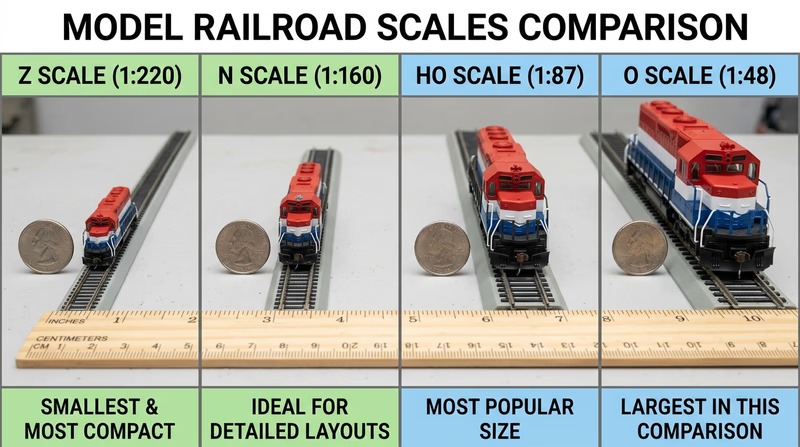
The Four Most Popular Model Railroad Gauges and Their Scales
Gauge Reference
Name these four for your counselor
- Z Gauge — Scale 1:220. The smallest mainstream scale. Entire layouts can fit in a large briefcase. Track gauge is 6.5 mm.
- N Gauge — Scale 1:160. Very popular for space-constrained hobbyists. Track gauge is 9 mm. Second most popular in the US.
- HO Gauge — Scale 1:87. The most popular model railroad scale worldwide. Track gauge is 16.5 mm.
- O Gauge — Scale 1:48 (American standard; some manufacturers use 1:43.5). Large, detailed, very visible. Track gauge is 32 mm. Traditional Lionel and Marx trains use this gauge.
How to Identify the Scale of a Model Car or Locomotive
The scale is almost always printed:
- On the box — look for “HO Scale,” “N Scale,” etc.
- On the bottom of the model — manufacturers often molded or stamped the scale there
- In the catalog number or description at a hobby shop or online
If you do not have the box, you can measure the model’s length and compare it to known prototype dimensions. A standard 40-foot boxcar in HO scale should be about 5.5 inches long.
For the requirement, locate four specific models — actual cars or locomotives you can examine in person at a hobby shop, club layout, or from your own collection — and state the scale of each.
Ready for Your Counselor?
Make sure you can do all of these
- Name Z gauge and its scale (1:220)
- Name N gauge and its scale (1:160)
- Name HO gauge and its scale (1:87)
- Name O gauge and its scale (1:48)
- Identify (by name and scale) four specific model cars or locomotives