 Getting Started
Introduction & Overview
A tree frog calling from a pond, a box turtle crossing a trail, a snake sliding through grass without making a sound — reptiles and amphibians are some of the most overlooked animals in the outdoors. Once you learn how to spot them, though, every wetland, creek, rock pile, and log becomes more interesting.
Reptile and Amphibian Study teaches you how to observe carefully, identify species, and understand why these animals matter. You will build field skills, learn real natural history, and practice the kind of patient watching that good Scouts and good naturalists both depend on.
Then and Now
Then — Fear, Folklore, and Early Naturalists
For a long time, many people saw frogs, salamanders, snakes, and lizards through a fog of fear and superstition. Some cultures admired them. Others treated them as bad luck, poison, or pests. Early naturalists had to sort out myth from fact by watching real animals closely and recording what they saw.
In the 1800s and early 1900s, field biologists often collected animals to study them. Museums built huge reference collections, and scientists slowly mapped where species lived, what they ate, and how they reproduced. That work gave us the first big picture of reptile and amphibian life in North America.
Now — Observation, Conservation, and Citizen Science
Today, scientists still study reptiles and amphibians, but observation matters more than ever. Trail cameras, smartphone photos, frog-call surveys, and community science tools help people document species without disturbing them. At the same time, habitat loss, road mortality, disease, and climate change have made many amphibians and reptiles more vulnerable.
That means your observations can do more than help you earn a badge. They can help you notice local wildlife, understand habitats, and become the kind of person who protects the places these animals need.
Get Ready!
This badge rewards patience. You do not usually find reptiles and amphibians by stomping around loudly. You find them by slowing down, looking carefully, listening at the right time of day, and noticing details other people miss.
Kinds of Reptile and Amphibian Study
Pond and Wetland Study
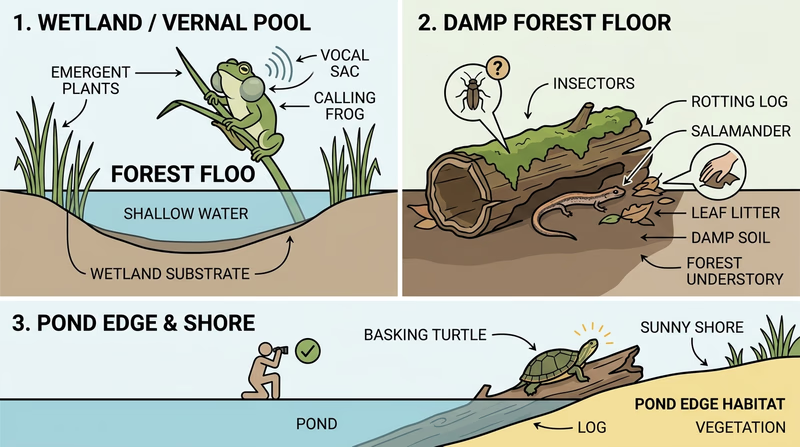
Wetlands are some of the best places to start because they attract many amphibians and also plenty of reptiles. Frogs call there, salamanders breed there, and turtles bask nearby. Early spring evenings can be especially active.
Woodland and Stream Study
Wooded areas with creeks, leaf litter, and fallen logs are excellent salamander habitat. Forest edges also attract skinks, racers, rat snakes, and box turtles. These places teach you to search slowly and gently without tearing up habitat.
Desert and Grassland Study
Dry habitats often hold lizards, rattlesnakes, horned lizards, and other specialists that handle heat and low moisture well. In these places, temperature, shade, and time of day make a huge difference in what you will see.
Backyard and Neighborhood Study
Not every observation has to happen in deep wilderness. Toads, fence lizards, garter snakes, anoles, and tree frogs often live surprisingly close to people. A carefully watched garden, drainage ditch, or local pond can teach you a lot.
Study for Conservation
Some Scouts get especially interested in the conservation side of this badge. That might mean learning frog calls for a survey, helping with habitat restoration, or tracking which local species are protected. The more you know about the animals around you, the better you can speak up for them.
Next Steps
Your first challenge is learning how to identify species instead of just calling everything a frog, turtle, or snake. That means paying attention to patterns, body shape, habitat, and behavior.