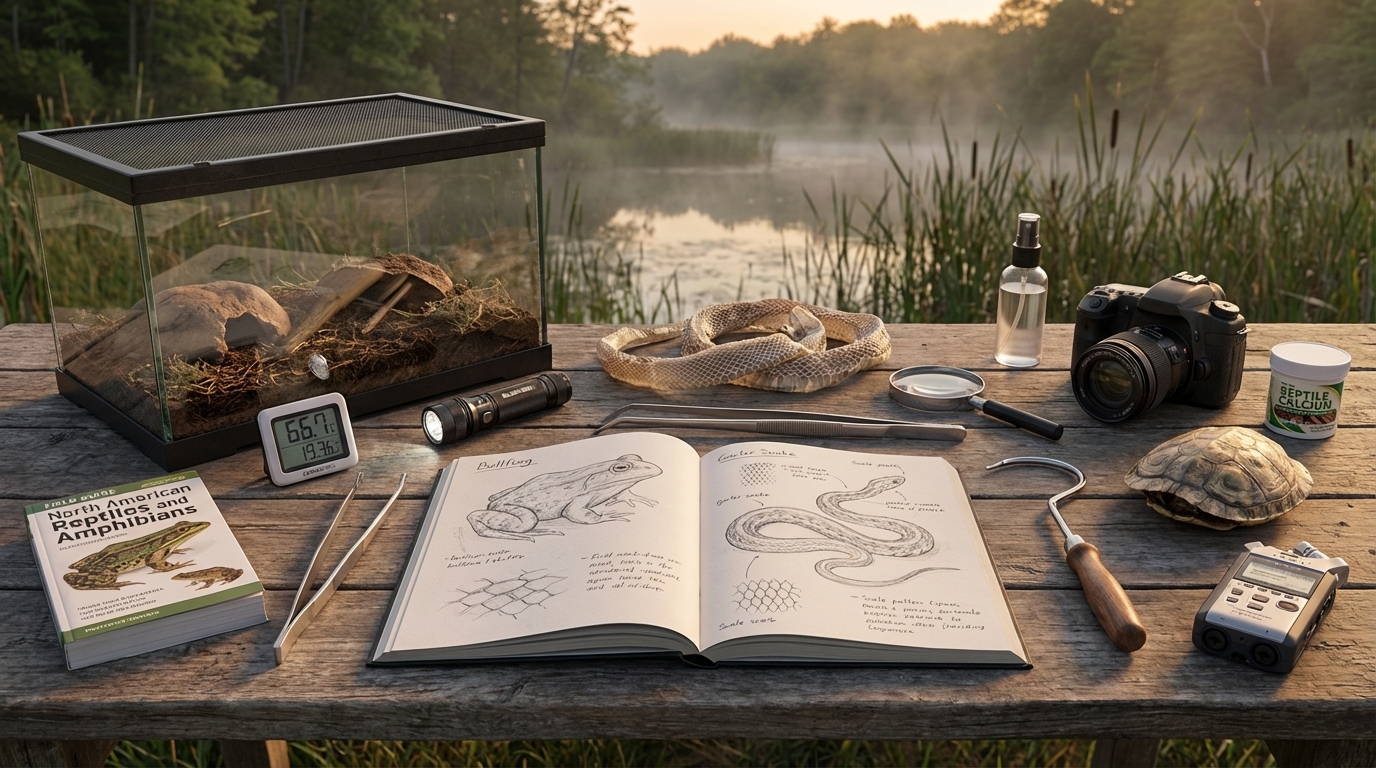
Reptile and Amphibian Study Merit Badge — Complete Digital Resource Guide
https://merit-badge.university/merit-badges/reptile-and-amphibian-study/guide/
Introduction & Overview
A tree frog calling from a pond, a box turtle crossing a trail, a snake sliding through grass without making a sound — reptiles and amphibians are some of the most overlooked animals in the outdoors. Once you learn how to spot them, though, every wetland, creek, rock pile, and log becomes more interesting.
Reptile and Amphibian Study teaches you how to observe carefully, identify species, and understand why these animals matter. You will build field skills, learn real natural history, and practice the kind of patient watching that good Scouts and good naturalists both depend on.
Then and Now
Then — Fear, Folklore, and Early Naturalists
For a long time, many people saw frogs, salamanders, snakes, and lizards through a fog of fear and superstition. Some cultures admired them. Others treated them as bad luck, poison, or pests. Early naturalists had to sort out myth from fact by watching real animals closely and recording what they saw.
In the 1800s and early 1900s, field biologists often collected animals to study them. Museums built huge reference collections, and scientists slowly mapped where species lived, what they ate, and how they reproduced. That work gave us the first big picture of reptile and amphibian life in North America.
Now — Observation, Conservation, and Citizen Science
Today, scientists still study reptiles and amphibians, but observation matters more than ever. Trail cameras, smartphone photos, frog-call surveys, and community science tools help people document species without disturbing them. At the same time, habitat loss, road mortality, disease, and climate change have made many amphibians and reptiles more vulnerable.
That means your observations can do more than help you earn a badge. They can help you notice local wildlife, understand habitats, and become the kind of person who protects the places these animals need.
Get Ready!
This badge rewards patience. You do not usually find reptiles and amphibians by stomping around loudly. You find them by slowing down, looking carefully, listening at the right time of day, and noticing details other people miss.
Kinds of Reptile and Amphibian Study
Pond and Wetland Study
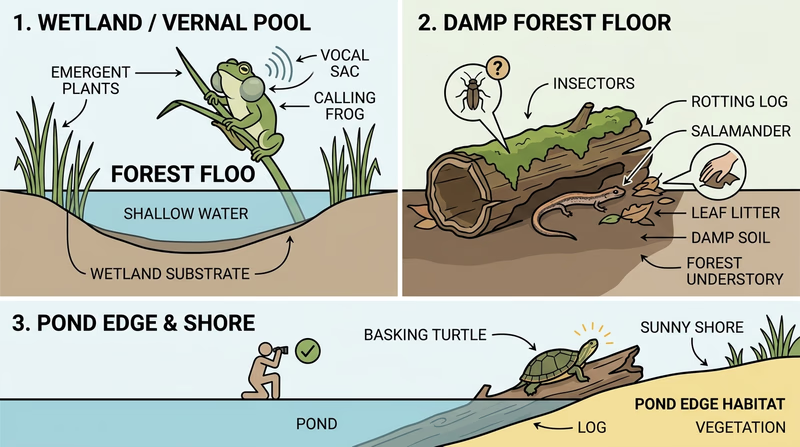
Wetlands are some of the best places to start because they attract many amphibians and also plenty of reptiles. Frogs call there, salamanders breed there, and turtles bask nearby. Early spring evenings can be especially active.
Woodland and Stream Study
Wooded areas with creeks, leaf litter, and fallen logs are excellent salamander habitat. Forest edges also attract skinks, racers, rat snakes, and box turtles. These places teach you to search slowly and gently without tearing up habitat.
Desert and Grassland Study
Dry habitats often hold lizards, rattlesnakes, horned lizards, and other specialists that handle heat and low moisture well. In these places, temperature, shade, and time of day make a huge difference in what you will see.
Backyard and Neighborhood Study
Not every observation has to happen in deep wilderness. Toads, fence lizards, garter snakes, anoles, and tree frogs often live surprisingly close to people. A carefully watched garden, drainage ditch, or local pond can teach you a lot.
Study for Conservation
Some Scouts get especially interested in the conservation side of this badge. That might mean learning frog calls for a survey, helping with habitat restoration, or tracking which local species are protected. The more you know about the animals around you, the better you can speak up for them.
Next Steps
Your first challenge is learning how to identify species instead of just calling everything a frog, turtle, or snake. That means paying attention to patterns, body shape, habitat, and behavior.
Req 1 — Identify Species in the Field
A green frog and a green snake may both be green, but they do not live the same way, move the same way, or show the same field marks. This requirement is about learning to notice the details that turn a quick sighting into a confident identification.
Start with a Balanced Species List
You need six reptiles and four amphibians found in the United States. Do not try to memorize every species in the country. Instead, build a list that makes sense for your area and for the places you can actually visit.
A strong list usually includes a mix of:
- Frogs or toads from ponds, wetlands, or neighborhood edges
- Salamanders if your region has moist woods or streams
- Turtles that bask on logs or live in ponds and marshes
- Lizards from rocks, fences, dry ground, or sunny forest edges
- Snakes that you can observe safely from a distance
What to Record for Each Species
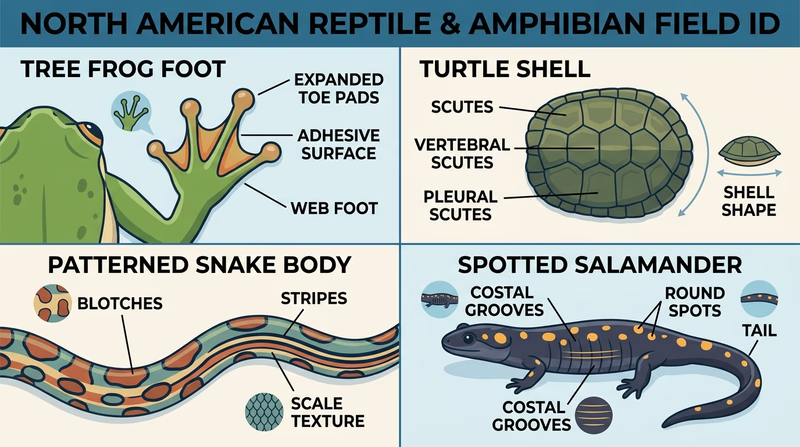
Build notes you can use in your counselor discussion- Key field marks: stripes, spots, blotches, toe pads, shell shape, head shape, or tail length.
- Color pattern: the main colors and where they appear.
- Habitat: pond edge, marsh, rocky hillside, forest floor, roadside ditch, backyard garden, and so on.
- Habits: basking, calling, hiding under cover, climbing, burrowing, hunting at night.
- How you know what it is: the clue that separates it from similar species.
What Makes a Good Identification
Body Shape
Start big. Is it long and legless, short and squat, flat and broad, or protected by a shell? Body shape quickly narrows the possibilities. Salamanders have tails and slender bodies. Frogs usually have long jumping legs. Turtles are built around their shells. Lizards have visible eyelids and external ear openings. Snakes do not.
Pattern and Markings
Once body shape gets you close, markings help you finish the job. A line through the eye, a row of spots down the back, bold shell markings, or a bright belly may be the clue that separates one species from another.
Habitat and Behavior
Where you found the animal matters. A species seen calling from a pond at dusk suggests something very different from a lizard darting across hot rocks at noon. Good naturalists always connect the animal to its place.
Sketches and Photos That Actually Help
For four of your 10 species, you need your own sketches or photographs. The goal is not perfect art. The goal is evidence that you noticed the right things.
Try to show:
- markings on the back or sides
- shape of the head and body
- leg size, toe pads, or tail if those matter
- where the animal was sitting or moving
- a note about size if the photo makes size hard to judge
If you sketch, label the important features. If you photograph, write a short caption in your notes explaining what the image shows.
Habits and Habitats
Your counselor will want more than a name. Be ready to discuss how each species lives.
Ask yourself:
- Is it active by day, night, or during certain weather?
- Does it bask in the sun or stay hidden in cool cover?
- Does it breed in water, live near water, or stay mostly dry?
- What does it eat?
- Does it climb, burrow, jump, crawl, or swim?
This is where the badge becomes natural history instead of simple memorization.
Reptiles of the United States (website) Browse reptiles observed across the United States and compare photos, maps, and identification clues. Link: Reptiles of the United States (website) — https://www.inaturalist.org/places/united-states#taxon=26036 Amphibians of the United States (website) Use real observations to study amphibian species, field marks, and where each one is found. Link: Amphibians of the United States (website) — https://www.inaturalist.org/places/united-states#taxon=20978A Smart Way to Finish This Requirement
Pick a few places you can visit more than once. A pond, trail, nature center, or neighborhood creek is better than chasing rare species all over the map. Repeat visits help you notice more animals and more behavior.
In Req 2, you will narrow your focus from the whole country to the species that actually live near you. That makes identification even easier.
Req 2 — Species Around You
A species list for the whole United States is interesting, but a species list for your own area is useful. This requirement helps you move from broad facts to local knowledge: what lives near you, where it is likely to be found, and why.
Big Picture: Distribution Across the United States
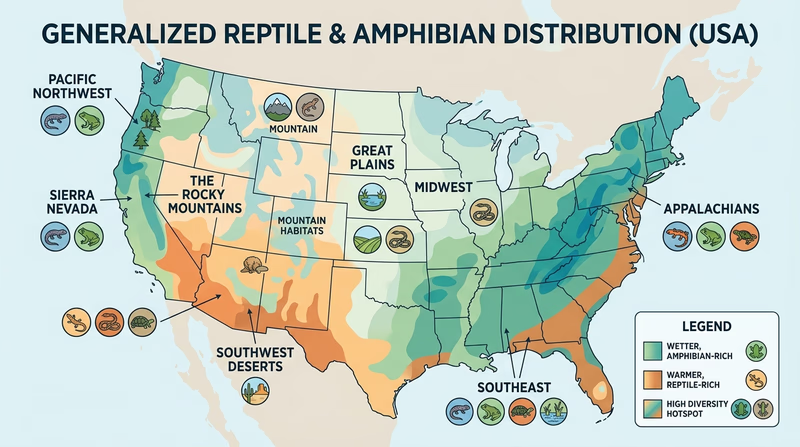
Reptiles and amphibians are not spread evenly across the country. Climate, rainfall, elevation, and habitat shape where each group thrives.
Amphibians
Amphibians usually need moisture. That is why the eastern United States, the Southeast, the Pacific Northwest, and many mountain regions support high amphibian diversity. Frogs and salamanders especially benefit from wetlands, streams, forests, and humid conditions.
Reptiles
Reptiles are generally better suited to dry and warm conditions because their skin does not dry out as easily as amphibian skin. That is why the Southeast, Southwest, and many warm lowland areas support large numbers of lizards, snakes, turtles, and crocodilians.
What “Approximate Number of Species” Means
Your counselor is not expecting you to memorize an exact national total forever. What matters is that you understand the scale and the pattern:
- there are hundreds of reptile species in the United States
- there are hundreds of amphibian species in the United States
- some regions have many more species than others
- a local list is always much shorter than the national list
A Scout in Arizona will likely see a very different set of animals than a Scout in Maine or Oregon.
Build a Local Species List
The second half of this requirement is practical. You need a list of the most common species in your area or state. That list should be realistic. Focus on species that are often reported, not just rare or famous ones.
Good Sources for a Local List
Find Amphibian and Reptile Species in Your Area (website) Use the USGS explorer to see which reptile and amphibian species are recorded in your state or region. Link: Find Amphibian and Reptile Species in Your Area (website) — https://geonarrative.usgs.gov/amphibianreptileexplorer/ Reptiles of the United States (website) Study maps and recent observations to see which reptiles are regularly found near you. Link: Reptiles of the United States (website) — https://www.inaturalist.org/places/united-states#taxon=26036 Amphibians of the United States (website) Compare local amphibian observations, photos, and range information before you make your list. Link: Amphibians of the United States (website) — https://www.inaturalist.org/places/united-states#taxon=20978Also consider state wildlife agencies, local nature centers, park staff, or a merit badge counselor who knows the region well.
How to Make a Useful List
Do not just copy names from a website. Sort them into a form you can discuss.
A Strong Local Species List
Organize it so you can actually use it with your counselor- Common name: what the species is called locally.
- Type: frog, toad, salamander, turtle, lizard, snake, or crocodilian.
- Where you might find it: pond, creek, rocky hill, neighborhood garden, pine woods, and so on.
- When you are most likely to see or hear it: spring evenings, hot afternoons, after rain, near water at dusk.
- How common it really is: very common, fairly common, seasonal, or occasional.
Example Thinking
Instead of writing only “American bullfrog,” you could write: “American bullfrog — common in permanent ponds and marshes; easiest to hear and see on warm evenings; very common in local wetlands.” That kind of note helps you and proves you understand the species as part of a habitat.
Why Distribution Matters
Once you know where species are likely to live, you stop wasting time searching the wrong places. You also start asking better questions:
- Why are salamanders common in one county but rare in another?
- Why do some turtles show up in ponds while others prefer rivers?
- Why are some frogs heard only in certain seasons?
Those are the same kinds of questions wildlife biologists ask.
Get Ready for Your Counselor Conversation
Bring your list and be prepared to explain:
- the difference between national diversity and local diversity
- why climate and habitat shape geographic distribution
- which species are common near you
- where you would go to look for them
This requirement also sets you up well for Req 4, where local protected and unprotected species matter.
Req 3 — Spot the Differences
This requirement covers four pairs that people often confuse. The goal is not just to memorize names. It is to notice the body features, habitats, and behaviors that separate one kind of animal from another.
What to Compare First
Use the same field-science routine for each pair- Body covering: moist skin, dry scales, shell, tail, or exposed teeth.
- Where it lives: mostly in water, mostly on land, or both.
- How it reproduces: eggs in water, leathery eggs on land, live young, or metamorphosis.
- How it moves: jumping, crawling, swimming, slithering, or walking.
Requirement 3a
Skin and water balance
Amphibians usually have thin, moist skin that helps them exchange water and sometimes oxygen with their surroundings. Because of that, they dry out easily and stay tied to damp habitats or water during at least part of their lives.
Reptiles have dry, scaly skin that helps hold moisture in. That lets them live in much drier places. A reptile can still need shade, water, or shelter, but it does not depend on moist skin the way an amphibian does.
Eggs and life cycle
Most amphibians lay jelly-like eggs in water or very wet places. Many hatch into aquatic young, such as tadpoles, and then transform into adults. Most reptiles lay amniotic eggs with leathery shells on land, or give live birth in some species. Young reptiles usually hatch or are born looking like smaller versions of the adults.
Temperature and lifestyle
Both groups are ectothermic, which means they depend on outside heat sources. But amphibians are usually more limited by moisture, while reptiles are often better adapted for dry heat, basking, and longer movement on land.
🎬 Video: Reptiles vs Amphibians: (video) — https://www.youtube.com/watch?v=6MsTbQi19SA
🎬 Video: What's the Difference Between Reptiles and Amphibians? (video) — https://www.youtube.com/watch?v=j1vMyuYBqA4&t=54s
Requirement 3b
Snout and teeth
Alligators usually have broader, U-shaped snouts. Crocodiles usually have narrower, more V-shaped snouts. When the mouth is closed, an alligator’s lower teeth are mostly hidden. On a crocodile, a large lower tooth often sticks up where you can see it.
Habitat tolerance
Alligators prefer freshwater more often, although they can handle some brackish water. Crocodiles generally tolerate saltwater better because they have glands that help remove excess salt.
Range and attitude
In the United States, the American alligator is widespread in the Southeast. The American crocodile has a much smaller U.S. range, mainly in South Florida. Crocodiles are often described as more likely to live in coastal environments, while alligators are the more common sight in inland swamps, ponds, and marshes.
🎬 Video: Alligator or Crocodile - What's the Difference? (video) — https://youtu.be/oins54YQGYI?si=k7YJDZxBk91z5IkW
Requirement 3c
Skin and build
Frogs usually have smoother, wetter skin and longer hind legs built for jumping. Toads usually have drier, bumpier skin and shorter legs for hopping or walking shorter distances.
Eggs and breeding places
Many frogs lay eggs in clusters or floating masses. Many toads lay eggs in long strings. Both need water for reproduction, but they often choose different breeding sites and have different calling habits.
Habitat and movement
Frogs are often more closely tied to ponds, marshes, and other wet places. Toads can spend more time in drier yards, gardens, and woods, returning to water mainly for breeding.
🎬 Video: Differences Between Frogs & Toads (video) — https://www.youtube.com/watch?v=O7QaL3xehRw
🎬 Video: What Is the Difference Between Frogs and Toads? (video) — https://www.youtube.com/watch?v=mM59TQOPDYQ
🎬 Video: Frogs and Toads: What's the Difference? (video) — https://www.youtube.com/watch?v=IF0EWfbevrM
Requirement 3d
Eyes, ears, and legs
Lizards usually have movable eyelids and visible ear openings. Snakes do not have external ears, and they do not blink because their eyes are covered by a clear protective scale. Most lizards also have legs, while snakes do not.
Tail and body structure
Many lizards can drop part of their tail to escape predators. Snakes cannot do that. Lizards also tend to have more rigid jaw structure than snakes. Snake jaws are built to stretch around larger prey.
How they move and hunt
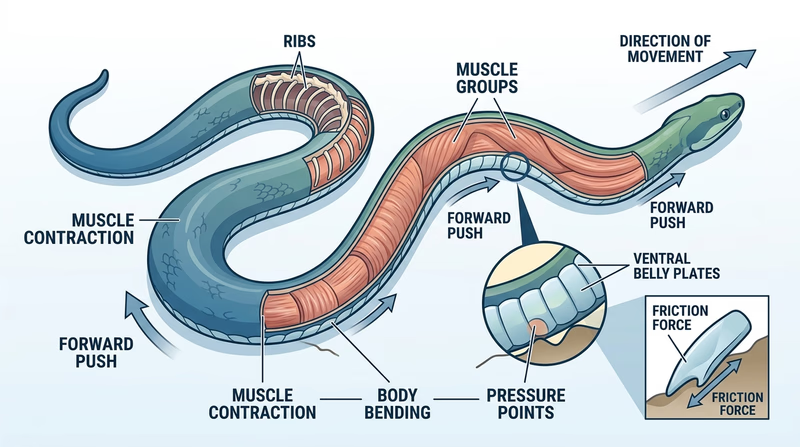
Snakes move by pushing against the ground with muscles, ribs, and belly scales. Lizards usually run, climb, or crawl using their legs, though some legless lizards can fool people at first glance. Watching the head, eyelids, and ear openings helps you avoid that mistake.
🎬 Video: How Are Snakes Different From Lizards? (video) — https://youtu.be/MMFcutNSKZk?si=u6Ux_2x9TxmepTJp
In Req 1, you learned to look for markings and habitat clues. This page adds the bigger comparison skills that keep common mix-ups from tripping you up.
Req 4 — Why They Matter
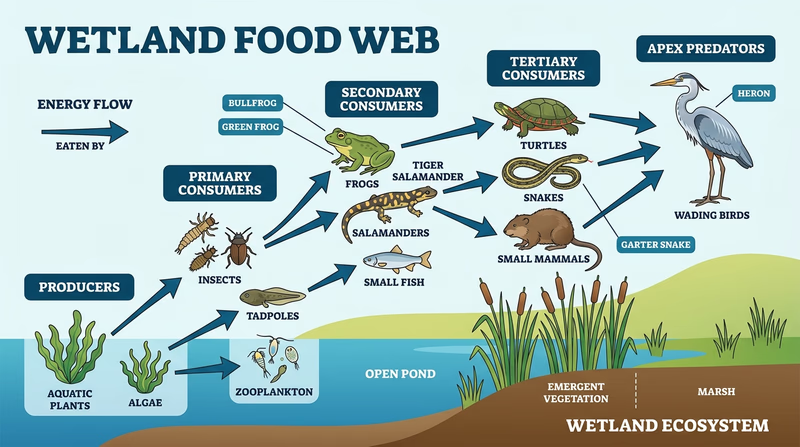
A wetland without frogs, salamanders, turtles, or snakes is missing a big part of its food web. This requirement asks you to think like an ecologist: which species live in your area, what they eat, what eats them, and why some need legal protection.
Why Reptiles and Amphibians Matter
Reptiles and amphibians are both predators and prey. Frogs eat insects. Snakes eat rodents. Turtles scavenge and help recycle nutrients. Salamanders can be major predators of small forest-floor animals. At the same time, fish, birds, mammals, and other reptiles eat them.
That means these animals help control populations and move energy through the ecosystem. If they disappear, the balance changes.
Ecological Roles of Reptiles and Amphibians (website with videos) Explore how reptiles and amphibians function as predators, prey, scavengers, and indicators of ecosystem health. Link: Ecological Roles of Reptiles and Amphibians (website with videos) — https://www.online-field-guide.com/ecological-roles-of-reptiles-and-amphibians/Protected Species: Why Laws Matter
Some species are protected because their populations have dropped or because their habitat is disappearing. Common reasons include:
- wetland loss or drainage
- roads cutting across migration routes
- pollution or pesticide exposure
- illegal collection for the pet trade
- invasive species or disease
- climate shifts that affect breeding or survival
🎬 Video: Dying for Protection: Amphibians and Reptiles (video) — https://youtu.be/dQpHqkAvNnc?si=2E6kp1GO8McIHRsI
Your state wildlife agency may also protect species that are not federally listed. For your counselor discussion, be ready to say why each protected species is protected, not just whether it appears on a list.
Unprotected Species in Your Area
Unprotected does not mean unimportant. It only means the species is not currently under a specific protection law in the way an endangered or threatened species is. Common local turtles, toads, or snakes may still be valuable parts of the ecosystem.
A good list of three local reptiles and three local amphibians should focus on species you are actually likely to find or verify in your area.
Build Your 10-Species Discussion List
Four protected species plus six local unprotected species- Species name: common name first.
- Protected or not: say whether it is federally protected, state protected, or unprotected.
- Why protected: habitat loss, rarity, disease pressure, collection pressure, or another cause.
- Food habits: what the species mainly eats.
- Ecological role: predator, prey, scavenger, grazer, or a mix.
Food Habits
Food habits help explain why these animals belong in healthy ecosystems.
- Frogs and toads often eat insects and other invertebrates.
- Salamanders may eat worms, insects, slugs, and small arthropods.
- Turtles vary widely: some are mostly plant-eaters, some are omnivores, and some eat fish, insects, or carrion.
- Lizards often eat insects, though some also eat plants, fruit, or small vertebrates.
- Snakes may eat rodents, amphibians, eggs, fish, insects, or other reptiles.
🎬 Video: Feeding Our Amphibians (video) — https://www.youtube.com/watch?v=baY4dzLSWlY
Put It All Together
A strong answer for this requirement connects all four ideas:
- reptiles and amphibians matter in food webs
- some species need protection because populations are under pressure
- local unprotected species still play important roles
- food habits explain those roles clearly
Req 5 — Reproduction and Life Cycles
A frog’s life often begins in water and changes shape dramatically before adulthood. A turtle or snake usually starts life looking like a miniature version of the adult. That difference is one of the clearest ways to compare amphibians and reptiles.
Amphibian Reproduction
Most amphibians reproduce in or near water. Their eggs are usually soft, jelly-like, and laid in moist places where they will not dry out. Frogs and toads commonly lay eggs in ponds, pools, marshes, or slow water. Many salamanders also depend on streams, vernal pools, or damp woodland sites.
After hatching, many amphibians go through metamorphosis. A frog starts as a tadpole with gills and a tail, then gradually develops legs, lungs, and an adult body shape. Not every amphibian follows exactly the same pattern, but major life-stage change is common.
🎬 Video: Lifecycle of an Amphibian (Frog) (video) — https://youtu.be/sZnvgGmvuVs?si=3d5-sxPLy1jJbJz_
Reptile Reproduction
Reptiles are better adapted to reproducing on land. Most lay eggs with leathery shells that help hold moisture in while still allowing gas exchange. Some reptiles guard nests, but many do not. Others give live birth instead of laying eggs.
Young reptiles usually hatch or are born with the same basic body form they will keep as adults. A hatchling lizard is still a lizard. A baby snake is still a snake. It may be tiny and vulnerable, but it does not pass through a tadpole-like stage.
🎬 Video: How Lizards Reproduce (Video) — https://www.youtube.com/watch?v=ACEpFX2Dnmk
🎬 Video: What Are Oviparous and Viviparous Snakes? (video) — https://youtu.be/KFCfL99rHpw?si=rCqWcKm5S4LBA7zW
Side-by-Side Comparison
| Reproduction Feature | Amphibians | Reptiles |
|---|---|---|
| Egg type | Jelly-like, no shell | Usually leathery-shelled or live birth |
| Need for water | Usually strong | Often less direct |
| Young stage | Often larval stage like tadpoles | Usually miniature adult form |
| Skin role | Thin skin loses water easily | Dry scales reduce water loss |
| Typical breeding site | Water or very damp places | Land, nests, burrows, or protected sites |
🎬 Video: Reptile vs Amphibian (video) — https://www.youtube.com/watch?v=GKM_mDDPJh0
Why the Difference Matters
These different strategies shape where the animals can live. Amphibians are often more tied to seasonal water, moisture, and careful timing for breeding. Reptiles generally have more freedom to reproduce in drier habitats because their eggs and skin are better protected from drying out.
That is one reason amphibians are often more vulnerable when wetlands disappear or drought hits at the wrong time.
Ecological Roles of Reptiles and Amphibians (website with videos) Use this overview to connect life cycles with habitat needs and conservation challenges. Link: Ecological Roles of Reptiles and Amphibians (website with videos) — https://www.online-field-guide.com/ecological-roles-of-reptiles-and-amphibians/🎬 Video: Dying for Protection: Amphibians and Reptiles (video) — https://youtu.be/dQpHqkAvNnc?si=2E6kp1GO8McIHRsI
A Simple Way to Explain It to Your Counselor
You can summarize the comparison like this: amphibians usually need water more directly for reproduction and often change form as they grow, while reptiles are usually better adapted for reproduction on land and hatch or are born looking like small adults.
🎬 Video: Feeding Our Amphibians (video) — https://www.youtube.com/watch?v=baY4dzLSWlY
Req 6 — How Snakes Move
A snake can climb, swim, push through grass, and cross sand without a single leg. That looks almost magical until you understand the body parts doing the work.
Watch First, Explain Second
This requirement starts with observation. Before you try to explain snake movement, spend time actually watching one move. Notice whether it is moving across a smooth surface, rough ground, branches, or loose sand. The surface changes the motion.
🎬 Video: How Snakes Move! (They Don't Just Slither!) (video) — https://www.youtube.com/watch?v=7-AKPFiIEEw
🎬 Video: How Do Snakes Move? (video) — https://www.youtube.com/watch?v=aPV0HpPRH2A
The Three Main Parts Doing the Job
Muscles
A snake has long, powerful muscles running along its body. These muscles contract in sequence, creating waves of movement. Instead of one big push, the body makes many small pushes one after another.
Ribs
Snakes have many ribs attached along much of the body. Those ribs help support the body wall and work with the muscles to control shape, tension, and pushing force. They are part of the snake’s movement system, not just a protective cage.
Belly plates
The wide scales on the underside are called belly plates or ventral scales. These catch against rough spots on the ground. When the muscles pull and the belly plates grip, the snake moves forward instead of just sliding in place.
Common Ways Snakes Move
Lateral undulation
This is the classic side-to-side movement most people picture. The snake forms a series of S-shaped curves and pushes against rocks, grass stems, bumps, or other irregularities in the environment.
Rectilinear movement
This is a straighter, slower movement often used by heavy-bodied snakes like boas or pythons. Sections of the belly move forward in sequence, almost like a tank tread.
Concertina movement
When climbing or moving through a narrow space, a snake may bunch part of its body into loops, anchor itself, then extend forward and pull the rest along.
Sidewinding
Some snakes in sandy habitats lift parts of the body and set them down in a special pattern that works well on loose ground.
🎬 Video: True Facts: How Snakes Move (video) — https://www.youtube.com/watch?v=zFNnx4UgkNI
What to Say to Your Counselor
A strong explanation sounds something like this: the muscles create the force, the ribs help control the body, and the belly plates grip the surface. Together they let a snake push itself forward.
You can make that even stronger by naming the kind of movement you observed and describing what surface the snake was using.
Observation Notes to Bring
Write these down while you watch- Where the snake was moving: grass, branch, rock, pavement, sand, or water edge.
- What the body shape looked like: tight curves, straight body, bunching, or lifted loops.
- How fast it moved: quick glide, slow crawl, or stop-and-go movement.
- What the surface provided: rough spots, branches, or loose sand.
Because Req 7 focuses on venomous species, this is a good time to practice watching snakes carefully without getting too close.
🎬 Video: Reptile vs Amphibian (video) — https://www.youtube.com/watch?v=GKM_mDDPJh0
🎬 Video: Lifecycle of an Amphibian (Frog) (video) — https://youtu.be/sZnvgGmvuVs?si=3d5-sxPLy1jJbJz_
🎬 Video: How Lizards Reproduce (Video) — https://www.youtube.com/watch?v=ACEpFX2Dnmk
🎬 Video: What Are Oviparous and Viviparous Snakes? (video) — https://youtu.be/KFCfL99rHpw?si=rCqWcKm5S4LBA7zW
Req 7 — Venomous Species and Bite Response
This requirement is about recognition and response, not fear. The safest Scout is the one who can identify the main venomous species in the United States, respect their space, and react correctly in an emergency.
The Main Venomous Reptiles in the United States
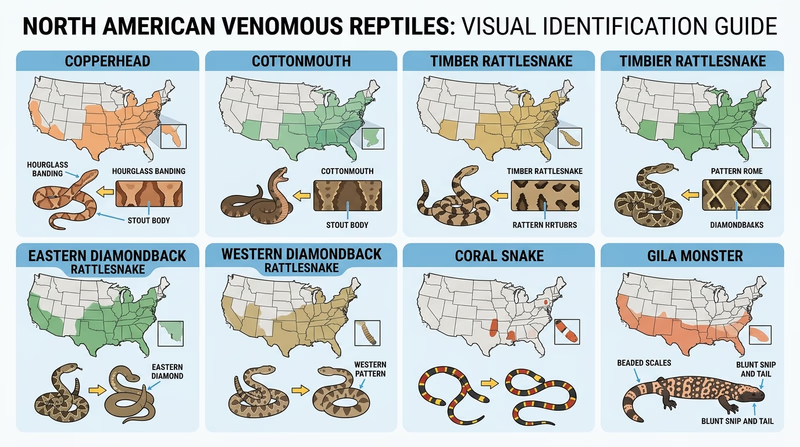
Most lists for this requirement include these six venomous snake groups or species plus the one venomous lizard:
- Copperhead
- Cottonmouth
- Timber rattlesnake
- Eastern diamondback rattlesnake
- Western diamondback rattlesnake
- Coral snake
- Gila monster
Your counselor may accept closely related regional species in place of one rattlesnake if that makes more sense for your part of the country.
Habits and Range
Pit vipers
Copperheads, cottonmouths, and rattlesnakes are pit vipers. They have heat-sensing pits between the eye and nostril, thick bodies, and hinged fangs. Many rely on camouflage and prefer to avoid conflict if left alone.
- Copperheads are common in wooded and rocky habitats in much of the eastern and central United States.
- Cottonmouths are associated with wetlands, swamps, slow water, and the Southeast.
- Rattlesnakes occupy a wide range of habitats, from forests to deserts, depending on the species.
Coral snakes
Coral snakes are slender, brightly banded, and belong to a different venomous group from pit vipers. In the United States they are found mainly in the Southeast and parts of the Southwest, depending on the species.
Gila monster
The Gila monster is the only widely recognized venomous lizard native to the United States. It lives in the Southwest, especially desert and scrub habitats, and is usually slow-moving and secretive.
🎬 Video: The Most VENOMOUS Snakes in the US (video) — https://youtu.be/guMzO7vzMT0?si=3thQ8FQdwoEHXV75
What to Notice Without Getting Close
A Scout should never try to prove bravery around a venomous animal. Instead, look for safe, visible clues:
- body shape and thickness
- head shape, if clearly seen
- color pattern or bands
- rattle, if present
- habitat and region
- behavior such as coiling, freezing, or warning display
What To Do If Someone Is Bitten
The correct response is simple and serious:
What Not To Do
Do not cut the wound, suck out venom, apply ice, use a tourniquet, or rely on old myths. Those actions waste time and can make the injury worse.
🎬 Video: How Snakes Move! (They Don't Just Slither!) (video) — https://www.youtube.com/watch?v=7-AKPFiIEEw
🎬 Video: How Do Snakes Move? (video) — https://www.youtube.com/watch?v=aPV0HpPRH2A
Req 8 — Choose Your Observation Project
You complete exactly one option here. Both options teach close observation, careful recordkeeping, and responsible animal care, but they fit different situations.
Your Options
Req 8a — Care for a Captive Animal: Care for one or more reptiles or amphibians, or their eggs or larvae, for at least a month with your counselor’s approval. This option is best if you already have access to an approved animal and can manage daily care responsibly. You will gain hands-on experience with habitat setup, feeding, humidity, temperature, and long-term observation.
Req 8b — Study an Animal in Captivity: Visit the same reptile or amphibian weekly for three months at a zoo, aquarium, classroom, rescue, or nature center. This option is best if you cannot keep an animal yourself but can return to the same specimen regularly. You will gain strong observation skills and learn from professional caretakers.
How to Choose
Choosing Between 8a and 8b
Pick the option you can do well from start to finish- Daily responsibility: 8a requires regular direct care. 8b requires weekly visits instead.
- Access: 8a depends on counselor-approved animal care. 8b depends on access to a stable exhibit or program.
- What you will learn: 8a teaches hands-on husbandry. 8b teaches long-term observation and interviewing caretakers.
- Time pattern: 8a is shorter but more frequent. 8b lasts longer but usually involves fewer visits.
What Both Options Have in Common
Whichever route you choose, your counselor will expect more than a few quick notes. You need to show how the animal lives, what changed over time, and how you paid attention to the habitat and care needs.
Bring records that include:
- dates of observations
- what the animal ate or refused
- behavior changes
- coloration or shedding changes
- habitat conditions such as light, humidity, and temperature
- questions you asked and what you learned
🎬 Video: The Most VENOMOUS Snakes in the US (video) — https://youtu.be/guMzO7vzMT0?si=3thQ8FQdwoEHXV75
Even though this official resource is about venomous snakes rather than captive care, it is a useful reminder that some reptiles must only be handled or housed by experts. For this badge, choose safe, approved animals and settings.
Req 8a — Care for a Captive Animal
This option is real animal care, not pretend pet-sitting. The best work on this requirement shows that you understood the species’ needs every day, paid attention to changes, and put the animal’s welfare ahead of your convenience.
Start with Approval and a Plan
Before anything else, confirm three things with your counselor:
- the species is appropriate and legal to keep
- the housing and care plan are realistic
- there is a responsible long-term plan for the animal after your study ends
That last part matters. This requirement does not give permission to keep an animal casually and then figure things out later.
What You Need to Observe
Your records should show patterns over time, not one-time snapshots. Pay attention to:
- what food the animal accepts
- how it eats
- normal activity times
- changes in color or skin condition
- shedding events
- signs of stress or healthy behavior
- habitat conditions such as light, heat, and humidity
Daily or Regular Care Notes
These notes make your counselor discussion much easier- Date and time: when you checked on or fed the animal.
- Food offered and accepted: what it ate, how much, and how eagerly.
- Behavior: active, hiding, basking, climbing, soaking, burrowing, or restless.
- Habitat conditions: temperature, humidity, lighting schedule, and enclosure cleanliness.
- Physical changes: shedding, growth, color shift, egg development, or larval change.
Matching Care to the Species
A tree frog, corn snake, box turtle, and salamander do not need the same setup. That is why generic care is never enough. You need to understand the natural habitat and recreate the important parts of it.
For example:
- a basking reptile may need a warm basking spot and cooler retreat area
- a frog may need clean water and careful humidity control
- a salamander may need cooler, moist cover and less handling
- eggs may need stable conditions and minimal disturbance
What Good Records Look Like
Short notes like “fed it” or “looked fine” are not enough. Strong records say what happened.
Better examples:
- “Ate two crickets immediately after dusk and hunted from a perch.”
- “Stayed hidden most of the day but basked for 20 minutes after lights came on.”
- “Skin looked dull in the morning and shed by evening.”
- “Humidity was low, so I misted the enclosure and rechecked it later.”
Questions to Ask While You Work
- What conditions seem to make the animal most active?
- Does it eat differently at different times of day?
- Does it use every part of the habitat or only certain zones?
- What signs suggest good health?
- What veterinary concerns would a keeper need to watch for?
The more specific your notes are, the easier it will be to explain the animal’s needs to your counselor.
Finish Responsibly
At the end of the study, the animal must remain with a responsible long-term owner or approved caretaker. That should be arranged before the project starts, not at the last minute.
Req 8b — Study an Animal in Captivity
This option turns you into a long-term observer. Instead of caring for the animal yourself every day, you return week after week and learn how its behavior, body condition, and enclosure fit together.
Pick the Right Specimen
Choose an animal you can revisit reliably for three months. A stable exhibit animal is better than one that might be moved, transferred, or off display the next week.
Good choices usually have:
- a predictable location
- visible daily or weekly behavior
- a caretaker who can answer questions
- a habitat setup you can study closely
What to Notice Every Visit
At each visit, sketch the animal in its enclosure and record what changed or stayed the same.
Weekly Observation Notes
Look for patterns, not just isolated facts- Where the animal spent its time: under cover, basking, climbing, soaking, or hiding.
- Activity level: alert, inactive, feeding, exploring, or resting.
- Body and skin changes: shedding, color change, growth, scars, or healing.
- Habitat use: warm side, cool side, water area, branches, rocks, burrows.
- Anything different from last week: enclosure changes, feeding differences, or behavior shifts.
Learn From the Caretaker
One of the best parts of 8b is the chance to ask questions. A keeper, educator, or rescue volunteer can help you understand the invisible part of the work.
Ask about:
- diet and feeding schedule
- how temperature and humidity are controlled
- lighting, including UV needs if relevant
- cleaning and enclosure maintenance
- health checks and veterinary care
- how the species’ natural habitat influenced the enclosure design
Go Beyond the Glass
You also need to know about the species in the wild, not just in captivity. Learn its:
- native habitat and home range
- preferred climate
- average life expectancy
- natural predators
- human-caused threats
- legal protections, if any
That turns your project from “I watched an animal” into “I understand the species.”
Human-Caused Threats
Depending on the species, threats may include:
- habitat loss
- pollution
- road mortality
- invasive predators
- collection for the pet trade
- disease
- climate change
If the species is protected, be ready to say what law helps protect it and why that protection exists.
A Strong Final Report
After three months, you should be able to explain both the animal in captivity and the species in nature.
A good counselor conversation includes:
- what the animal did over time
- how the enclosure met its needs
- what caretakers had to manage carefully
- what the species would face in the wild
- what surprised you most during the study
Since Req 9 also asks you to use observation skills, the careful note-taking you build here will help there too.
Req 9 — Choose Two Field Challenges
You must choose exactly two of these three challenges. Each one builds a different field skill: listening, visual identification, or teaching.
Your Options
Req 9a — Listen for Frogs and Toads: Head out at night, identify three kinds of frogs or toads by voice, imitate the calls for your counselor, and figure out how and where each animal is singing. This option builds listening skills and rewards patience near wetlands.
Req 9b — Identify Eight Species by Sight: Spot and identify eight reptile or amphibian species visually. This option strengthens the field-mark skills you practiced earlier in the badge and works well if you can visit several habitats.
Req 9c — Teach a Short Talk: Use visual aids to teach a small group about three different reptiles and amphibians. This option helps you organize what you know and communicate it clearly.
How to Choose
Choosing Your Two Challenges
Pick the pair that matches your access, season, and strengths- Season and timing: 9a works best in warm weather and at night near breeding areas.
- Field access: 9b is easiest if you can visit ponds, woods, trails, or nature centers more than once.
- Confidence speaking to a group: 9c is strong if you enjoy explaining things and making visuals.
- What you will gain: 9a sharpens your ear, 9b sharpens your eye, and 9c sharpens your voice as a teacher.
Think Ahead Before You Commit
- If you do not have safe nighttime wetland access, 9a may be difficult.
- If the weather is cold and local herps are inactive, 9b may take longer.
- If you need a requirement you can prepare at home with steady practice, 9c may be the easiest to schedule.
Keep Good Evidence
For either option you choose, keep notes. Your counselor will want more than a claim that you did it.
Useful evidence includes:
- field notes and dates
- sketches or photos
- a species list
- talk notes or slides for 9c
- descriptions of what made each identification reliable
Req 9a — Listen for Frogs and Toads
A spring pond after dark can sound like a full orchestra. This requirement teaches you to sort those sounds into individual species, then track down who is making them and how.
Why Frog Calls Matter
Frogs and toads are often easier to hear than to see. Males call to attract mates and defend calling space. Different species produce different patterns: trills, peeps, clucks, chirps, buzzes, or long musical notes.
That means your ears can identify animals hiding in grass, reeds, mud, or shallow water.
🎬 Video: Frog Sounds: Why They Make Them (Examples) (video) — https://youtu.be/74-vaZv54s8?si=7ClcX_Akwhjh0A_T
How to Do a Night Listening Session
Pick a warm night in the right season, especially after rain or during breeding season. Visit a pond, marsh, ditch, creek edge, or wet woodland where frogs and toads are active.
Night Frog-Call Gear
Simple tools make this much easier- Flashlight or headlamp: for safe walking and careful observation.
- Notebook or phone notes: record call patterns and location.
- Field guide or call app approved by your counselor: compare likely local species.
- Quiet clothing and patience: frogs often stop calling when disturbed, then start again.
Listen Before You Move
Stand still first. Let the sounds settle. Count how many different calls you hear. Then describe each one in your own words.
Examples of useful notes:
- fast trill
- short peeping whistle
- deep repeated croak
- metallic click
- buzzing call from grass at the pond edge
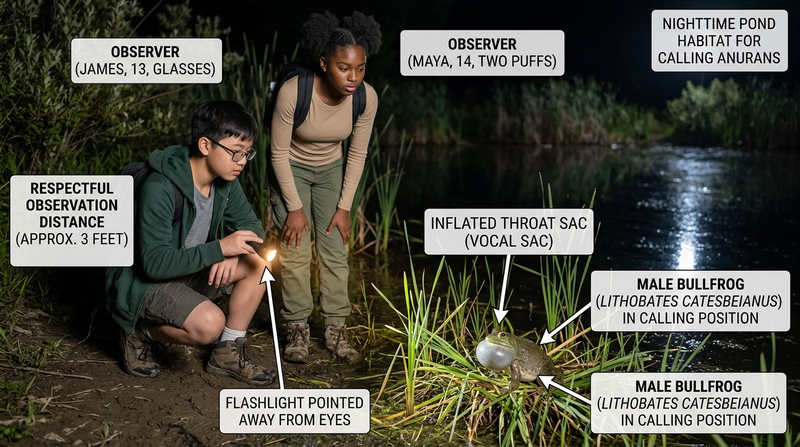
After you identify a likely caller, move slowly with your flashlight to locate where the sound is coming from.
Discovering How Each One Sings
This part is easy to overlook, but it matters. When you find the caller, pay attention to:
- whether it is floating, sitting on shore, or hidden in vegetation
- whether the throat pouch inflates when it calls
- whether it calls alone or in a chorus
- whether the call changes when you get closer
Imitating the Call
Your imitation does not need to sound perfect. Your counselor is looking for proof that you learned to notice the pattern. A simple description plus your best imitation is often enough to show the difference between species.
Pet Journaling: Track Your Pet's Needs and Your Time Efficiently (website) Use the note-taking ideas here to build a clear observation log with dates, times, locations, and call descriptions. Link: Pet Journaling: Track Your Pet's Needs and Your Time Efficiently (website) — https://fluent-time-management.com/pet-journaling-track-your-pets-needs-and-your-time-efficiently/Safety and Courtesy at Night
This requirement pairs especially well with Req 2, because local species lists help you narrow down which calls are most likely.
Req 9b — Identify Eight Species by Sight
This requirement is short on words but demanding in practice. A fast, correct visual identification means you noticed the features that matter before the animal disappeared.
Use the Skills You Already Built
By now you have practiced field marks, habitats, and local species lists. This requirement pulls those pieces together. You do not need to find rare animals. You need to identify eight species correctly.
Reptiles of the United States (website) Compare real reptile observations, range maps, and photos before or after your field visits. Link: Reptiles of the United States (website) — https://www.inaturalist.org/places/united-states#taxon=26036 Amphibians of the United States (website) Use observation photos and maps to narrow down likely amphibians in your region. Link: Amphibians of the United States (website) — https://www.inaturalist.org/places/united-states#taxon=20978How to Reach Eight Species Without Guessing
Visit more than one habitat. A single pond or trail may not get you to eight species quickly.
Habitats to Try
Different places reveal different animals- Ponds and marshes: frogs, turtles, water snakes, and toads.
- Woodland edges: skinks, box turtles, tree frogs, and salamanders.
- Sunny rocks or fences: basking lizards or snakes.
- Moist logs and leaf litter: salamanders and small frogs or toads.
- Nature centers or parks: often easier places to confirm sightings with help nearby.
What Counts as a Good Visual ID
A strong identification includes at least two or three reliable clues:
- overall body shape
- color pattern
- stripe, spots, or blotches
- shell shape or shell markings
- toe pads, tail length, or head shape
- habitat and behavior
Make a Field List That Proves Your Work
For each species, record:
- date and location
- what you saw clearly
- what made you decide on that species
- whether you took a photo or sketch
If your counselor asks how you knew the difference between two similar species, your notes should answer that question.
Avoid the Most Common Mistakes
- calling every small brown frog a toad
- relying only on color instead of pattern and shape
- forgetting that juveniles may look different from adults
- ignoring habitat clues
- making a rushed identification after only a one-second look
Build Toward Better Sightings
If you find only three or four species on the first outing, that is normal. Go again at a different time of day, after rain, or in a different habitat. Reptiles and amphibians are highly affected by weather and temperature.
This option also works well with Req 1, since sketches or photos from that earlier requirement can strengthen your identifications here.
Req 9c — Teach a Short Talk
The fastest way to find out whether you really understand a subject is to teach it. This requirement asks you to take what you have learned and turn it into a short, clear talk that other people can follow.
Pick Three Animals with a Purpose
Do not choose three species at random. A better talk has a simple theme, such as:
- one frog, one turtle, and one snake from your area
- three species that use very different habitats
- one protected species, one common species, and one species people misunderstand
- three animals that show the difference between reptiles and amphibians
A theme makes your talk easier to organize and easier for your audience to remember.
Use Visual Aids That Actually Help
Visual aids should make identification, habitat, or behavior easier to understand.
Good choices include:
- your own photos
- labeled sketches
- a simple map
- habitat photos
- a comparison chart
- a few large images instead of many tiny ones
What to Include for Each Species
Keep the talk short, but make each animal memorable- Name: common name and type of animal.
- Where it lives: local habitat or range.
- How to recognize it: one or two strong field marks.
- Interesting habit: calling, basking, burrowing, hunting, breeding, or camouflage.
- Why it matters: role in the ecosystem or conservation importance.
A Simple Talk Structure
Opening
Start with one sentence that explains your theme. Example: “These three animals show how different reptiles and amphibians can be, even when they live in the same wetland.”
Species 1, 2, and 3
Spend about a minute on each animal. Show the visual, name the species, explain how to recognize it, and share one memorable fact.
Closing
End by connecting them: what do these three animals teach your audience about habitats, adaptation, or conservation?
Practice Before You Present
Run through the talk out loud at least once. That helps you catch awkward spots and see whether your visual aids are big enough and in the right order.
Things to check:
- Can people in the back see the image?
- Does each image match what you are saying right then?
- Are you pronouncing the species names clearly?
- Can you finish without rushing?
What Your Counselor Is Looking For
Your counselor is not grading you like a formal speech contest judge. They want to see that you can teach accurate information with useful visuals and that you understand the species well enough to explain them to others.
This requirement also strengthens everything else in the badge. When you explain a species to someone else, you often realize which details you really know and which ones you still need to review.
Req 10 — Myths, Legends, and True Stories
Few animals collect myths as easily as snakes, frogs, salamanders, and lizards. Some of those stories come from fear. Some come from misunderstanding. This requirement helps you separate folklore from biology.
Five Common False Beliefs
1. “All snakes are venomous.”
False. Most snake species in the United States are nonvenomous. Learning the main venomous groups helps you stay safe without treating every snake like a threat.
2. “Toads give you warts.”
False. Warts come from viruses, not from touching toads. A toad’s bumpy skin may release irritating substances, but it does not cause human warts.
3. “Baby snakes are always more dangerous because they cannot control venom.”
This is often repeated as a fact, but it is not a reliable rule. Any venomous bite is serious, whether the snake is young or adult. The smart lesson is not “babies are worse.” The smart lesson is “avoid all venomous bites and get medical help immediately.”
4. “Salamanders can live safely in fire.”
False. This myth likely came from salamanders hiding in damp logs. When logs were thrown into fires, salamanders sometimes ran out, making it look as if they came from the flames.
5. “A rattlesnake always rattles before it strikes.”
False. A rattlesnake may rattle, but it does not always give a warning you can hear first. Never depend on a rattle as your only safety signal.
🎬 Video: Debunking Common Reptile and Amphibian Myths & Misconceptions (video) — https://www.youtube.com/watch?v=Nz6VQSlr9mI
🎬 Video: Busting 15 Crazy Reptile Myths in 15 Minutes (video) — https://www.youtube.com/watch?v=i7FR8h4Ky44
Seven Wild but True Facts
1. Some frogs can freeze and survive.
Wood frogs can survive with ice forming in parts of their body during winter, then thaw and become active again.
2. Some salamanders live almost entirely hidden underground or under cover.
That is one reason people may live near salamanders for years without realizing it.
3. Many lizards can drop their tails.
This defense, called tail autotomy, helps them escape predators while the detached tail keeps wriggling.
4. Snakes smell with their tongues.
They pick up scent particles with the tongue and deliver them to the Jacobson’s organ in the roof of the mouth.
5. Turtles can live a very long time.
Some species live for decades, which means habitat damage can affect a population for a very long time.
6. Frog calls can identify species even when you cannot see the animal.
That is why call surveys are a real scientific tool.
7. Amphibians can be environmental warning signs.
Because their skin is so sensitive, population declines can reveal pollution or habitat problems early.
How to Talk About Myths Well
Your counselor is likely looking for two things:
- that you can state the myth clearly
- that you can replace it with a better biological explanation
That means your answer should sound like: “People say X, but the accurate explanation is Y.”
Turn a Myth Into a Strong Answer
Use this structure when you prepare for counselor discussion- State the false belief clearly.
- Say it is false or misleading.
- Explain the real biology.
- Add why the myth may have started, if you know.
Why This Requirement Matters
Myths can lead people to harm animals they do not understand. Correct information leads to safer, smarter, and more respectful behavior outdoors. That makes this requirement about more than trivia. It is about replacing fear with knowledge.
Extended Learning
Congratulations!
You finished a badge that asks for patience, careful observation, and real respect for living things. Those are the same skills used by field biologists, wildlife educators, park naturalists, and conservation volunteers.
Frog Calls as Science
Listening to frogs is not just a fun night activity. Frog and toad call surveys are a real research tool. Because many species call only during certain weather and seasons, repeated surveys can reveal whether populations are stable, shifting, or disappearing.
If you liked Req 9a, look for state amphibian-monitoring programs or community science projects that train volunteers to identify calls accurately.
The Secret Life of Turtles
Turtles often look calm and slow, but their lives are full of challenges. Many species take years to reach breeding age, which means populations recover slowly when adults are killed on roads or when nests are destroyed. A single stretch of busy road near a wetland can affect a turtle population for decades.
That is one reason turtle crossings, nest protection, and wetland conservation matter so much.
Reptiles and Amphibians in Human-Dominated Landscapes
Not every conservation story happens in a wilderness area. Neighborhood ponds, drainage ditches, schoolyards, parks, and roadside wetlands can all support herps. That also means everyday choices matter:
- leaving cover objects and natural edges intact
- reducing pesticide use
- protecting wetlands
- driving carefully during migration times
- reporting important sightings to reputable programs
How Zoos, Aquariums, and Nature Centers Help
Some species are so threatened that captive breeding, rescue work, and public education all matter. Zoos and nature centers can help people learn what habitats animals need, why some species are protected, and how local communities can help.
If you enjoyed Req 8b, you may have already seen how much behind-the-scenes care and science goes into a good exhibit.
Real-World Experiences
Join a Night Call Survey
Many wildlife agencies and conservation groups run frog-call monitoring events. These outings teach you how to identify species by sound and collect useful data.
Visit a Wetland in Different Seasons
The same pond can sound and look completely different in March, May, July, and September. Returning across the year teaches you timing, breeding cycles, and habitat change.
Volunteer at a Nature Center
Some centers need help with educational programs, trail work, invasive species removal, or habitat restoration. That can put you close to the kind of stewardship this badge is really about.
Build a Local Species Notebook
Keep going after the badge by making your own county or park list of reptiles and amphibians, with sketches, dates, habitats, and call notes.
Organizations
Partners in Amphibian and Reptile Conservation (PARC)
A North American partnership focused on conserving reptiles, amphibians, and their habitats through science, management, and education.
Partners in Amphibian and Reptile Conservation Learn about conservation projects, regional working groups, and educational resources focused on reptiles and amphibians. Link: Partners in Amphibian and Reptile Conservation — https://parcplace.org/Amphibian and Reptile Conservancy
A nonprofit organization working on habitat conservation, science, and public education for native herpetofauna.
Amphibian and Reptile Conservancy Explore conservation programs, habitat work, and ways to support reptile and amphibian protection. Link: Amphibian and Reptile Conservancy — https://www.arcprotects.org/Association of Zoos and Aquariums (AZA)
AZA-accredited institutions often support conservation breeding, research, and wildlife education, including reptiles and amphibians.
Association of Zoos and Aquariums Find accredited zoos and aquariums that support conservation, animal care, and public education. Link: Association of Zoos and Aquariums — https://www.aza.org/U.S. Fish & Wildlife Service
The federal agency responsible for endangered species protection, habitat management, and many wildlife recovery programs.
U.S. Fish & Wildlife Service Use federal species and habitat resources to continue learning about wildlife protection and recovery. Link: U.S. Fish & Wildlife Service — https://www.fws.gov/