Req 1 — Identify Species in the Field
A green frog and a green snake may both be green, but they do not live the same way, move the same way, or show the same field marks. This requirement is about learning to notice the details that turn a quick sighting into a confident identification.
Start with a Balanced Species List
You need six reptiles and four amphibians found in the United States. Do not try to memorize every species in the country. Instead, build a list that makes sense for your area and for the places you can actually visit.
A strong list usually includes a mix of:
- Frogs or toads from ponds, wetlands, or neighborhood edges
- Salamanders if your region has moist woods or streams
- Turtles that bask on logs or live in ponds and marshes
- Lizards from rocks, fences, dry ground, or sunny forest edges
- Snakes that you can observe safely from a distance
What to Record for Each Species
Build notes you can use in your counselor discussion
- Key field marks: stripes, spots, blotches, toe pads, shell shape, head shape, or tail length.
- Color pattern: the main colors and where they appear.
- Habitat: pond edge, marsh, rocky hillside, forest floor, roadside ditch, backyard garden, and so on.
- Habits: basking, calling, hiding under cover, climbing, burrowing, hunting at night.
- How you know what it is: the clue that separates it from similar species.
What Makes a Good Identification
Body Shape
Start big. Is it long and legless, short and squat, flat and broad, or protected by a shell? Body shape quickly narrows the possibilities. Salamanders have tails and slender bodies. Frogs usually have long jumping legs. Turtles are built around their shells. Lizards have visible eyelids and external ear openings. Snakes do not.
Pattern and Markings
Once body shape gets you close, markings help you finish the job. A line through the eye, a row of spots down the back, bold shell markings, or a bright belly may be the clue that separates one species from another.
Habitat and Behavior
Where you found the animal matters. A species seen calling from a pond at dusk suggests something very different from a lizard darting across hot rocks at noon. Good naturalists always connect the animal to its place.
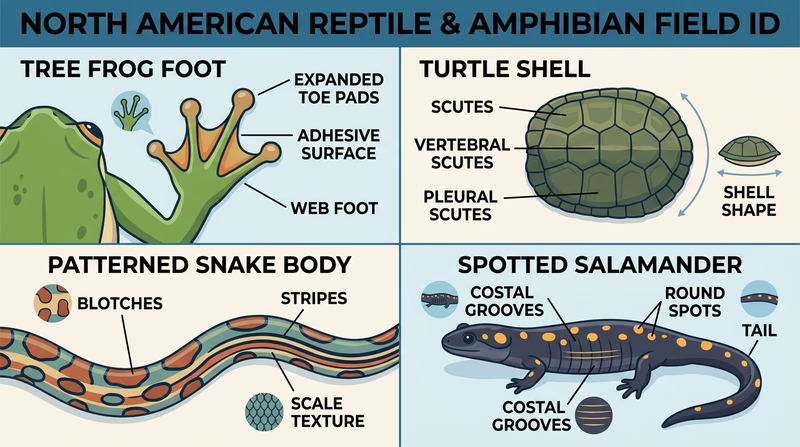
Sketches and Photos That Actually Help
For four of your 10 species, you need your own sketches or photographs. The goal is not perfect art. The goal is evidence that you noticed the right things.
Try to show:
- markings on the back or sides
- shape of the head and body
- leg size, toe pads, or tail if those matter
- where the animal was sitting or moving
- a note about size if the photo makes size hard to judge
If you sketch, label the important features. If you photograph, write a short caption in your notes explaining what the image shows.
Habits and Habitats
Your counselor will want more than a name. Be ready to discuss how each species lives.
Ask yourself:
- Is it active by day, night, or during certain weather?
- Does it bask in the sun or stay hidden in cool cover?
- Does it breed in water, live near water, or stay mostly dry?
- What does it eat?
- Does it climb, burrow, jump, crawl, or swim?
This is where the badge becomes natural history instead of simple memorization.
Reptiles of the United States (website) Browse reptiles observed across the United States and compare photos, maps, and identification clues. Link: Reptiles of the United States (website) — https://www.inaturalist.org/places/united-states#taxon=26036 Amphibians of the United States (website) Use real observations to study amphibian species, field marks, and where each one is found. Link: Amphibians of the United States (website) — https://www.inaturalist.org/places/united-states#taxon=20978A Smart Way to Finish This Requirement
Pick a few places you can visit more than once. A pond, trail, nature center, or neighborhood creek is better than chasing rare species all over the map. Repeat visits help you notice more animals and more behavior.
In Req 2, you will narrow your focus from the whole country to the species that actually live near you. That makes identification even easier.