Req 4 — Why They Matter
A wetland without frogs, salamanders, turtles, or snakes is missing a big part of its food web. This requirement asks you to think like an ecologist: which species live in your area, what they eat, what eats them, and why some need legal protection.
Why Reptiles and Amphibians Matter
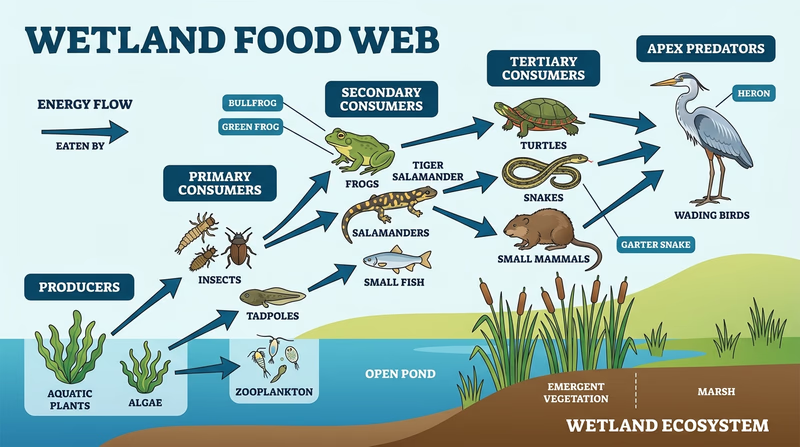
Reptiles and amphibians are both predators and prey. Frogs eat insects. Snakes eat rodents. Turtles scavenge and help recycle nutrients. Salamanders can be major predators of small forest-floor animals. At the same time, fish, birds, mammals, and other reptiles eat them.
That means these animals help control populations and move energy through the ecosystem. If they disappear, the balance changes.
Ecological Roles of Reptiles and Amphibians (website with videos) Explore how reptiles and amphibians function as predators, prey, scavengers, and indicators of ecosystem health. Link: Ecological Roles of Reptiles and Amphibians (website with videos) — https://www.online-field-guide.com/ecological-roles-of-reptiles-and-amphibians/Protected Species: Why Laws Matter
Some species are protected because their populations have dropped or because their habitat is disappearing. Common reasons include:
- wetland loss or drainage
- roads cutting across migration routes
- pollution or pesticide exposure
- illegal collection for the pet trade
- invasive species or disease
- climate shifts that affect breeding or survival
🎬 Video: Dying for Protection: Amphibians and Reptiles (video) — https://youtu.be/dQpHqkAvNnc?si=2E6kp1GO8McIHRsI
Your state wildlife agency may also protect species that are not federally listed. For your counselor discussion, be ready to say why each protected species is protected, not just whether it appears on a list.
Unprotected Species in Your Area
Unprotected does not mean unimportant. It only means the species is not currently under a specific protection law in the way an endangered or threatened species is. Common local turtles, toads, or snakes may still be valuable parts of the ecosystem.
A good list of three local reptiles and three local amphibians should focus on species you are actually likely to find or verify in your area.
Build Your 10-Species Discussion List
Four protected species plus six local unprotected species
- Species name: common name first.
- Protected or not: say whether it is federally protected, state protected, or unprotected.
- Why protected: habitat loss, rarity, disease pressure, collection pressure, or another cause.
- Food habits: what the species mainly eats.
- Ecological role: predator, prey, scavenger, grazer, or a mix.
Food Habits
Food habits help explain why these animals belong in healthy ecosystems.
- Frogs and toads often eat insects and other invertebrates.
- Salamanders may eat worms, insects, slugs, and small arthropods.
- Turtles vary widely: some are mostly plant-eaters, some are omnivores, and some eat fish, insects, or carrion.
- Lizards often eat insects, though some also eat plants, fruit, or small vertebrates.
- Snakes may eat rodents, amphibians, eggs, fish, insects, or other reptiles.
🎬 Video: Feeding Our Amphibians (video) — https://www.youtube.com/watch?v=baY4dzLSWlY
Put It All Together
A strong answer for this requirement connects all four ideas:
- reptiles and amphibians matter in food webs
- some species need protection because populations are under pressure
- local unprotected species still play important roles
- food habits explain those roles clearly