Req 9a — Listen for Frogs and Toads
A spring pond after dark can sound like a full orchestra. This requirement teaches you to sort those sounds into individual species, then track down who is making them and how.
Why Frog Calls Matter
Frogs and toads are often easier to hear than to see. Males call to attract mates and defend calling space. Different species produce different patterns: trills, peeps, clucks, chirps, buzzes, or long musical notes.
That means your ears can identify animals hiding in grass, reeds, mud, or shallow water.
🎬 Video: Frog Sounds: Why They Make Them (Examples) (video) — https://youtu.be/74-vaZv54s8?si=7ClcX_Akwhjh0A_T
How to Do a Night Listening Session
Pick a warm night in the right season, especially after rain or during breeding season. Visit a pond, marsh, ditch, creek edge, or wet woodland where frogs and toads are active.
Night Frog-Call Gear
Simple tools make this much easier
- Flashlight or headlamp: for safe walking and careful observation.
- Notebook or phone notes: record call patterns and location.
- Field guide or call app approved by your counselor: compare likely local species.
- Quiet clothing and patience: frogs often stop calling when disturbed, then start again.
Listen Before You Move
Stand still first. Let the sounds settle. Count how many different calls you hear. Then describe each one in your own words.
Examples of useful notes:
- fast trill
- short peeping whistle
- deep repeated croak
- metallic click
- buzzing call from grass at the pond edge
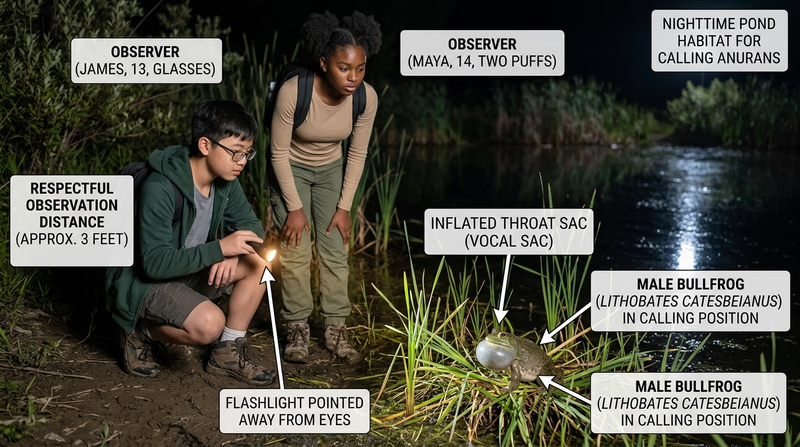
After you identify a likely caller, move slowly with your flashlight to locate where the sound is coming from.
Discovering How Each One Sings
This part is easy to overlook, but it matters. When you find the caller, pay attention to:
- whether it is floating, sitting on shore, or hidden in vegetation
- whether the throat pouch inflates when it calls
- whether it calls alone or in a chorus
- whether the call changes when you get closer
Imitating the Call
Your imitation does not need to sound perfect. Your counselor is looking for proof that you learned to notice the pattern. A simple description plus your best imitation is often enough to show the difference between species.
Pet Journaling: Track Your Pet's Needs and Your Time Efficiently (website) Use the note-taking ideas here to build a clear observation log with dates, times, locations, and call descriptions. Link: Pet Journaling: Track Your Pet's Needs and Your Time Efficiently (website) — https://fluent-time-management.com/pet-journaling-track-your-pets-needs-and-your-time-efficiently/Safety and Courtesy at Night
This requirement pairs especially well with Req 2, because local species lists help you narrow down which calls are most likely.