Req 1a — Projectiles and Why They Demand Respect
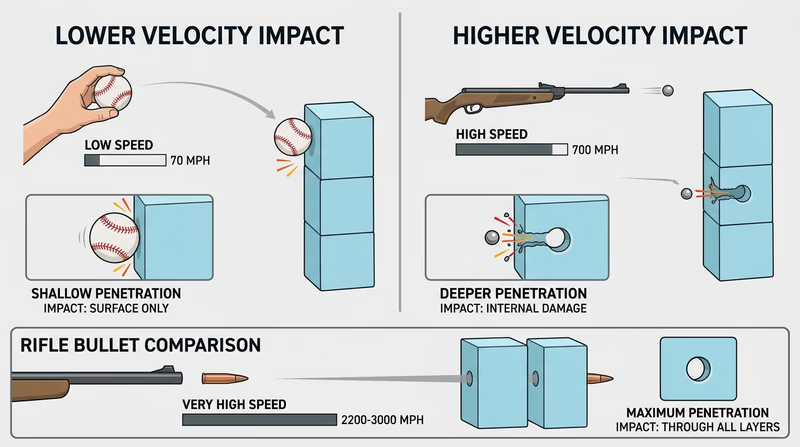
A projectile is any object propelled forward by a force—in the case of firearms, that force is rapidly expanding gas from burning propellant. The moment the trigger is pressed, the projectile leaves the muzzle at speeds ranging from roughly 400 feet per second for a BB gun up to 3,000 feet per second or more for a high-powered cartridge rifle. Once it leaves the barrel, you have no control over it.
Why Speed Changes Everything
The energy carried by a moving object increases with the square of its speed. Double the velocity and the energy quadruples. A rifle bullet carries enough energy to penetrate walls, ricochet off hard surfaces, and travel far beyond the intended target. That energy is exactly what makes a rifle useful for its intended purpose—and exactly what makes careless handling so dangerous.
Consider a few consequences of high-speed projectiles:
- Penetration: A .22 LR bullet can penetrate several inches of soft wood. It passes through interior walls, car doors, and other barriers that seem solid.
- Range: Even a BB fired horizontally can travel hundreds of feet. A rifle bullet can remain dangerous at distances of a mile or more.
- Ricochet: Hard or angled surfaces—rocks, metal, water—can redirect a projectile unpredictably.
- No recall: Unlike a ball you can throw and catch, a fired projectile cannot be recalled. Every shot is permanent.
Approved Locations Matter
“Approved locations” means ranges, fields, and areas that have been designed and designated for shooting:
- Backstops and berms are constructed to contain projectiles safely. Shooting outside a proper backstop puts people, animals, and property at risk.
- Range safety officers are present to ensure all shooters follow the same rules at the same time.
- Scouting America’s National Range and Target Activities Manual defines what makes a range site acceptable for Scout shooting activities. Your counselor will work with you only at an authorized location.
The Counselor Conversation
When your counselor asks you to explain this requirement, they want to hear two things: (1) a clear definition of a projectile in your own words, and (2) specific reasoning about why speed and energy make firearms fundamentally different from other tools—and why approved ranges are non-negotiable. Don’t just recite definitions; explain the physics and the logic.