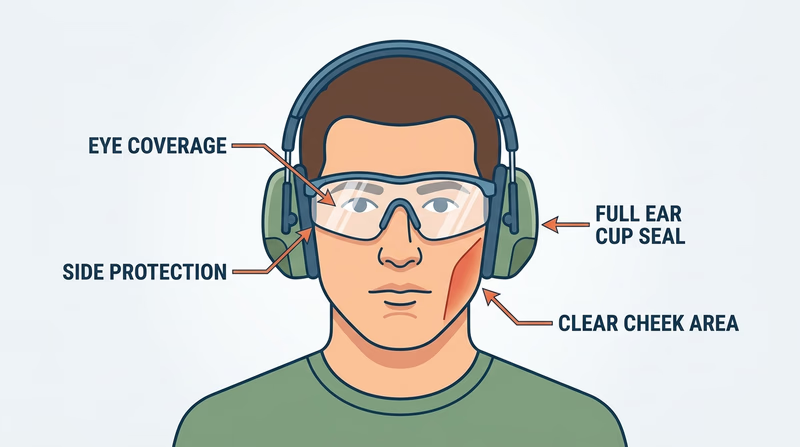
Req 1d — Eye and Hearing Protection
Eye and hearing protection are not optional on any shooting range. They protect against two hazards that are permanent and irreversible: eye injury from debris and noise-induced hearing loss.
Eye Protection
Why You Need It
When a cartridge fires, burning gas, powder residue, and fragments of the primer can blow back toward the shooter. Ejected brass casings fly to the side. On indoor ranges, particles can ricochet off walls. Any of these can cause serious eye injury.
Types
- Safety glasses / shooting glasses: Polycarbonate lenses rated to ANSI Z87.1+ impact standards. Most common. Available with clear, tinted, or color-enhancing lenses.
- Goggles: Wrap around the eye more completely. Useful at ranges with significant debris or when shooting in dusty conditions.
- Over-glasses (OTG): Designed to fit over prescription eyewear.
Proper Use
Safety glasses must be worn from the moment you step into a hot range (a range where shooting is occurring or may occur) until the range goes cold and is declared safe. Regular eyeglasses are not a substitute—they are not impact rated.
Hearing Protection
Why You Need It
A gunshot is one of the loudest sounds in everyday life—a .22 LR produces about 140 decibels at the shooter’s ear. OSHA considers 85 dB a threshold for hearing damage with prolonged exposure. A single unprotected shot can cause permanent hearing loss.
Types
- Foam earplugs: Compressed, inserted in the ear canal, and allowed to expand. Very effective (NRR 29–33 dB typical). Inexpensive and disposable.
- Earmuffs: Cup over the entire outer ear. Easy to put on and remove. NRR typically 20–30 dB.
- Electronic earmuffs: Use microphones and speakers to amplify soft sounds (voices, range commands) while electronically cutting off sounds above a safe threshold. Popular with experienced shooters because you can still communicate normally.
- Double protection: At indoor ranges or when shooting high-powered rifles, wearing both foam plugs and earmuffs provides the highest protection.
Proper Use
Hearing protection goes on before the first shot and stays on until the range is declared cold. Foam plugs must be properly inserted—rolled, inserted deep into the canal, and held until expanded—or they provide significantly less protection than rated.
Counselor Tips
Know the difference between passive earmuffs (simple sound blocking) and electronic earmuffs (sound limiting), and be able to explain why eye protection must be impact-rated rather than just any pair of glasses.