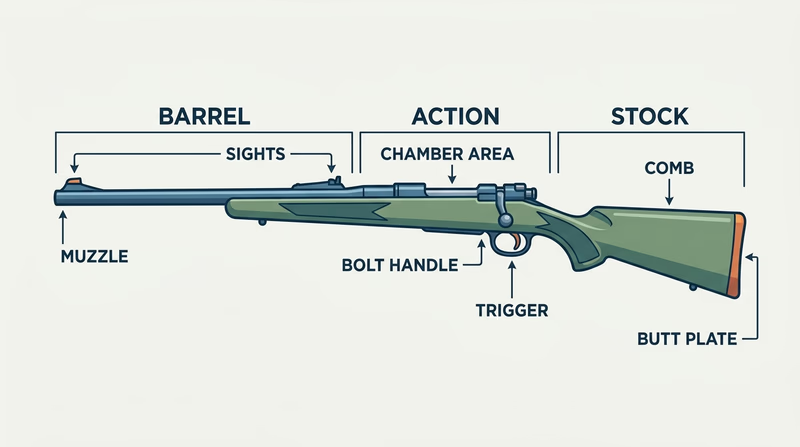
Req 2aa — Three Main Parts of a Rifle
Every rifle, from a simple single-shot .22 to a precision bolt gun, is built from three main assemblies: the stock, the action, and the barrel. Understanding what each part does tells you how the whole system works.
The Three Parts
1. Stock
The stock is the wooden, polymer, or composite body that you hold and shoulder. It performs several functions:
- Mounting platform: The action and barrel are bedded into or attached to the stock.
- Cheekweld: The comb (top of the stock) supports your cheek at a consistent height, aligning your eye with the sights.
- Grip and stability: The pistol grip (or straight wrist on traditional stocks) lets you control the trigger while the butt plate rests against your shoulder.
- Recoil management: The stock distributes recoil across your shoulder and cheek.
Stock materials range from traditional walnut to modern synthetic polymers. Adjustable stocks let shooters change length of pull, comb height, and butt plate position to fit different body sizes.
2. Action
The action is the mechanical heart of the rifle. It performs every step in the firing cycle:
- Loads a cartridge from the magazine or manually into the chamber.
- Locks the bolt (on a bolt-action) or otherwise seals the chamber for firing.
- Fires the cartridge when the trigger releases the firing pin or striker, which strikes the primer.
- Extracts the spent case after firing.
- Ejects the case clear of the action.
For a bolt-action rifle (the type used in Option A), the shooter manually lifts, pulls back, pushes forward, and locks down the bolt to cycle the action. This deliberate process reinforces control and is why bolt actions are preferred for teaching beginners.
3. Barrel
The barrel is the metal tube through which the bullet travels after firing. It does two important jobs:
- Directs the bullet: The bore (interior of the barrel) channels the bullet precisely toward the target.
- Imparts spin via rifling: The spiral grooves cut into the bore’s interior cause the bullet to spin in flight, stabilizing it and dramatically improving accuracy. This is where the word “rifle” comes from.
Barrel length affects velocity and sight radius. Longer barrels generally produce higher velocities (more complete powder burn) and longer sight radii that make aiming more precise. Barrel diameter at the bore is the caliber of the rifle.
Putting It Together
When you pull the trigger, the action’s firing pin strikes the primer, which ignites the propellant, generating high-pressure gas that propels the bullet down the rifled barrel. The stock keeps all of this controlled and pointed in the right direction.