Req 2cb — Principal Parts and How They Work
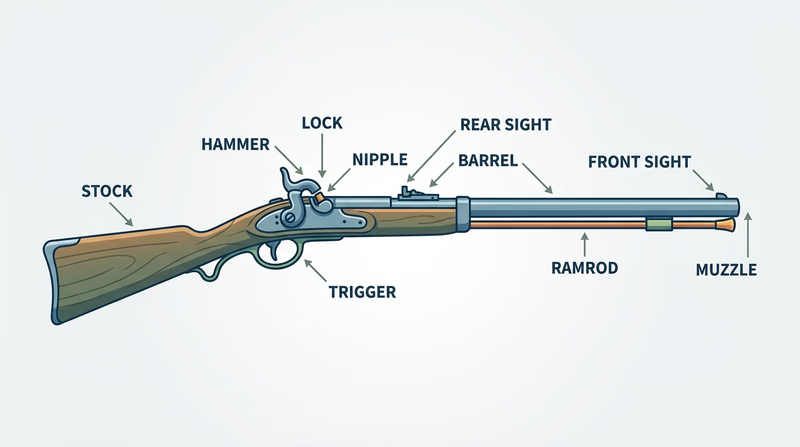
A percussion-cap muzzleloading rifle (the type most commonly used in Scout programs) shares some parts with a modern rifle but has several components that are unique to its ignition and loading system.
The Main Parts
Stock
Same function as in a modern rifle—it houses the barrel and lock, provides cheekweld and shoulder contact, and allows the shooter to aim and control the firearm.
Barrel
A long, rifled metal tube. Muzzleloaders for Scout programs are typically .45 or .50 caliber, meaning the bore diameter is 0.45 or 0.50 inches. The muzzle (front opening) is where the powder, patch, and ball are loaded. The breech end is the closed rear where the charge is ignited.
The flash channel (drum and nipple, or in flintlocks the touch hole) connects the ignition system to the powder charge inside the barrel.
Lock
The lock is the ignition mechanism. On a percussion lock, the lock consists of:
- Hammer: Falls on the percussion cap when the trigger is pulled.
- Nipple: A small threaded cone on which the percussion cap is placed. The nipple has a small hole that directs the flash from the cap into the powder charge.
- Percussion cap: A small copper cup containing a fulminate primer. Placed on the nipple; struck by the hammer to ignite.
- Mainspring: Powers the falling hammer.
- Trigger and sear: Releases the hammer when the trigger is pressed.
Ramrod
A long rod stored under the barrel in a ramrod channel. Used to push the powder charge, patch, and ball down the barrel during loading, seating them firmly against the breech.
Front Sight and Rear Sight
Open sights used to aim. Similar in concept to iron sights on a modern rifle.
Patch Box (on some rifles)
A small compartment in the stock, often with a decorative brass cover, for storing pre-lubed patches. Not present on all muzzleloaders.
How It Works
- A measured powder charge is poured down the barrel.
- A greased patch and round ball (or conical projectile) are placed at the muzzle.
- The ramrod seats the load firmly against the powder.
- A percussion cap is placed on the nipple.
- The hammer is cocked.
- Pulling the trigger drops the hammer onto the cap. The cap fires, sending a flash through the nipple into the powder charge.
- The powder burns rapidly, generating gas that propels the ball down the rifled barrel.