Req 4a — Boat Handling Skills
This option is a complete small-boat handling workout. You are not just rowing for distance. You are launching cleanly, controlling direction, backing, turning, landing safely, and finishing with the knots that secure the craft.
Treat the whole requirement as one connected skill set. A smart launch leads to cleaner tracking. Clean tracking makes your pivot easier. Good control on the return sets up a safer landing.
Requirement 4a1
Prepare before launch
Launching begins before the hull touches open water. Check your oars, seat, foot position if present, life jacket, and the space around the dock or shore. Make sure the boat is pointed the right way and the path ahead is clear.
Launch with balance
Step or settle in smoothly, keeping your weight centered. Sudden side-to-side movement is a common reason beginners feel unstable at the dock. If you have a passenger, explain who moves first and when.
Push off with control
A good launch is quiet and deliberate. Push away enough to clear the dock, then organize your first strokes before you start trying to build speed.
Requirement 4a2
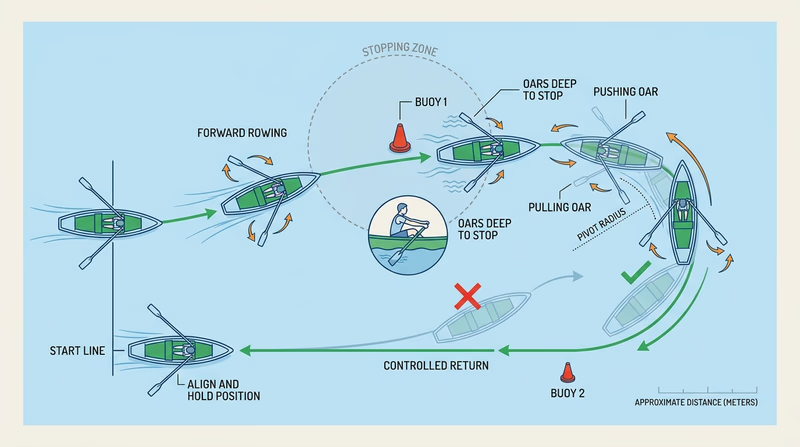
Row in a straight line
Straight tracking comes from even pressure, matched catches, and noticing drift early. Many beginners wait too long to correct, then overcorrect. Think of steering as a series of small adjustments, not one giant fix.
Pick a landmark ahead of you instead of staring at the bow. That makes it easier to notice whether the boat is wandering.
Stop with intention
Stopping is a skill, not an accident. Reduce power and use controlled strokes so the boat settles without wobbling or drifting into something you did not plan for.
Pivot and return
A pivot turns the boat around efficiently. Use a combination of stroke length, pressure difference, and backing as needed to swing the bow. Then re-establish straight tracking on the way back instead of rushing the first few strokes.
What Makes Straight Rowing Work
Simple habits that improve control
- Eyes on a landmark ahead, not just the boat.
- Even pressure on both oars whenever possible.
- Small corrections made early.
- A calm stop before the pivot.
- A deliberate first stroke after the turn.
Requirement 4a3
Backwater in control
Backwatering means moving the boat backward by reversing the action on the oars. It is useful near docks, in tight spaces, and whenever you need to change position without spinning first. The challenge is that steering can feel reversed at first.
Make a turn underway
Turning while the boat is already moving teaches real control. Instead of stopping everything and starting over, you learn to guide the boat as it keeps momentum. That is valuable around traffic, docks, and narrow shorelines.
A good underway turn is smooth. The boat should feel guided, not yanked around.
Requirement 4a4
Approach the landing under control
Do not charge at the dock or shore and hope to stop in time. Reduce speed early. Account for wind and current. Aim for a landing you can step out of safely, not one that looks fast.
Secure the boat correctly
Once landed, the job is not over. A boat left half-secured can drift, bang into pilings, or damage another craft. Mooring means tying it safely in place. Racking means storing it correctly where it belongs.
Requirement 4a5
Know what each knot does
These knots are not random rope tricks. They solve common dockside problems.
- Clove hitch: fast way to secure a line around a post, though it may need backup depending on the load.
- Roundturn with two half-hitches: strong choice when a line may stay under steady tension.
- Bowline: makes a fixed loop that is easy to untie after load.
- Wellman’s knot: useful in rowing traditions for securing boats quickly at a dock.
- Mooring hitch: designed for temporary attachment that can still be released efficiently.
Practice for real use
Your counselor is not only looking for names. They want to see that you can tie the knots neatly enough to trust them around a boat.
By the end of this option, you should look like someone who belongs around a rowboat from launch to storage. Even if you choose the team-racing option instead, these handling habits make you more useful on any waterfront.