Req 5a — Passenger Handling & Sculling
This requirement tests quiet control in the place where many boats feel least comfortable: right next to a pier with another person moving around. You are showing that you can manage balance, communicate clearly, and keep the boat calm while people get in, switch places, and get out.
Come Alongside the Pier
The key is to approach slowly and under control. Angle matters. Speed matters. Wind matters. If you come in too hot, the boat bangs the pier. If you approach badly in crosswind, the boat may slide away just as your passenger tries to board.
Set up your final strokes early. You want the boat already calm by the time the passenger moves.
Help a Passenger In and Out Safely
A passenger may not understand how sensitive the boat feels. Your job is to explain simple steps before they move.
- Tell them where to put hands and feet.
- Ask them to stay low and move one action at a time.
- Keep the boat close enough to the pier for a controlled step, not a jump.
The same is true when helping them out. A rushed exit can destabilize the whole boat at the exact moment the hull is closest to hard surfaces.
Change Positions Without Losing Control
Switching positions in the boat tests balance and communication. Plan the move before anyone stands or shifts. Decide who moves first, what handholds they will use, and how the other person will counterbalance.
Smooth position changes feel almost choreographed. That is the goal.
Sculling Over the Stern or Side
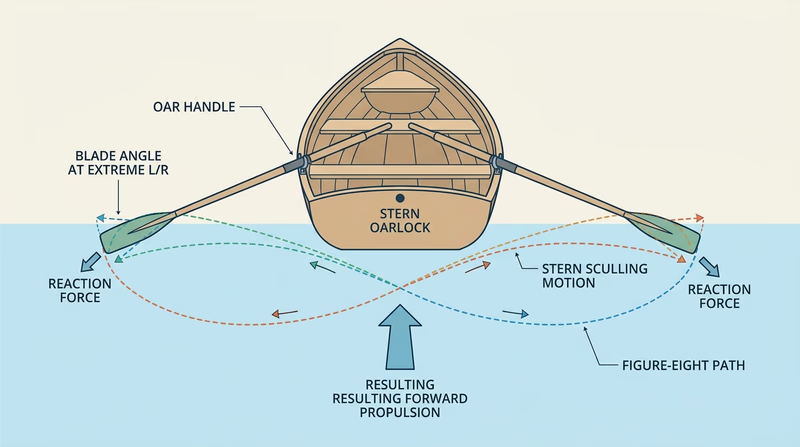
Here, sculling does not mean using two small oars in a racing shell. It means moving the boat with one oar worked in a controlled figure-eight style over the stern or alongside the hull. It is an older, useful technique for moving quietly in tight spaces.
Sculling works because the blade changes angle through the water and keeps producing useful pressure on each part of the motion. It takes touch more than strength. Too much force usually makes it worse.
Dockside Communication Script
Simple phrases that keep the boat calm
- “Wait until I say move.” Prevents surprise shifts.
- “One foot, then sit low.” Keeps the passenger balanced.
- “Hold here, not the gunwale edge.” Gives safer hand placement.
- “Move slowly on three.” Turns movement into teamwork.
Return and Land Cleanly
After the position change and sculling demonstration, resume your rowing seat, return to the pier, and set up another calm landing. A Scout who rows well in the middle of the lake but loses control at the dock is not done yet. Finish the skill the same way you started it: steady, deliberate, and aware of the passenger.
This option is a great reminder that rowing is not only about moving fast. It is also about helping other people feel safe in a boat because you are in charge of the details.
The other option focuses on similar pier work in a sliding-seat boat, where the shell is lighter and movement has to be even more careful.