 Getting Started
Introduction & Overview
A lot of accidents are not really accidents. They start with a missed clue: a bike helmet left unbuckled, a wet floor ignored, a charger overheating on a bed, a ride accepted without checking the license plate. Safety is the skill of noticing those clues early and acting before someone gets hurt.
That is why this merit badge matters. Safety is not just about rules, warning labels, and adults saying “be careful.” It is about learning how hazards work, how people reduce risk, and how good habits protect you at home, online, on the road, and in public.
Then and Now
Then
For most of human history, safety was reactive. A bridge collapsed, a mine exploded, or a fire swept through a city, and only then did people ask what should have been done differently. Early factories in the 1800s were especially dangerous. Machines had exposed gears, buildings had poor ventilation, and workers often had no protective equipment at all.
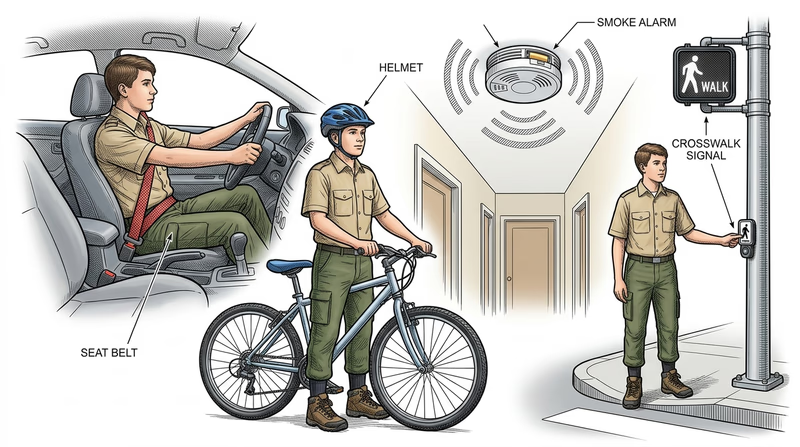
Over time, communities realized that injuries were not random bad luck. Better building codes, fire drills, traffic signs, seat belts, life jackets, smoke alarms, and workplace rules all came from one big idea: if you understand the hazard, you can lower the risk before the emergency starts.
Now
Today, safety reaches into almost every part of daily life. Your phone can warn you about severe weather. Cars beep when you drift out of a lane. Schools practice lockdown and evacuation drills. Camps use check-in systems and storm shelters. Websites add two-factor authentication to protect accounts.
But modern tools do not replace judgment. A smoke alarm is only useful if its battery works. A passcode only helps if you do not share it. A weather alert only matters if you know what action to take next. Safety still comes down to awareness, preparation, and doing the right thing early.
Get Ready!
This badge asks you to think like both a Scout and a problem-solver. You will inspect places, make plans, compare options, and talk through situations that can feel very real. That is the point. The more clearly you can think about safety before a problem starts, the more useful you will be when others freeze.
Kinds of Safety
Home Safety
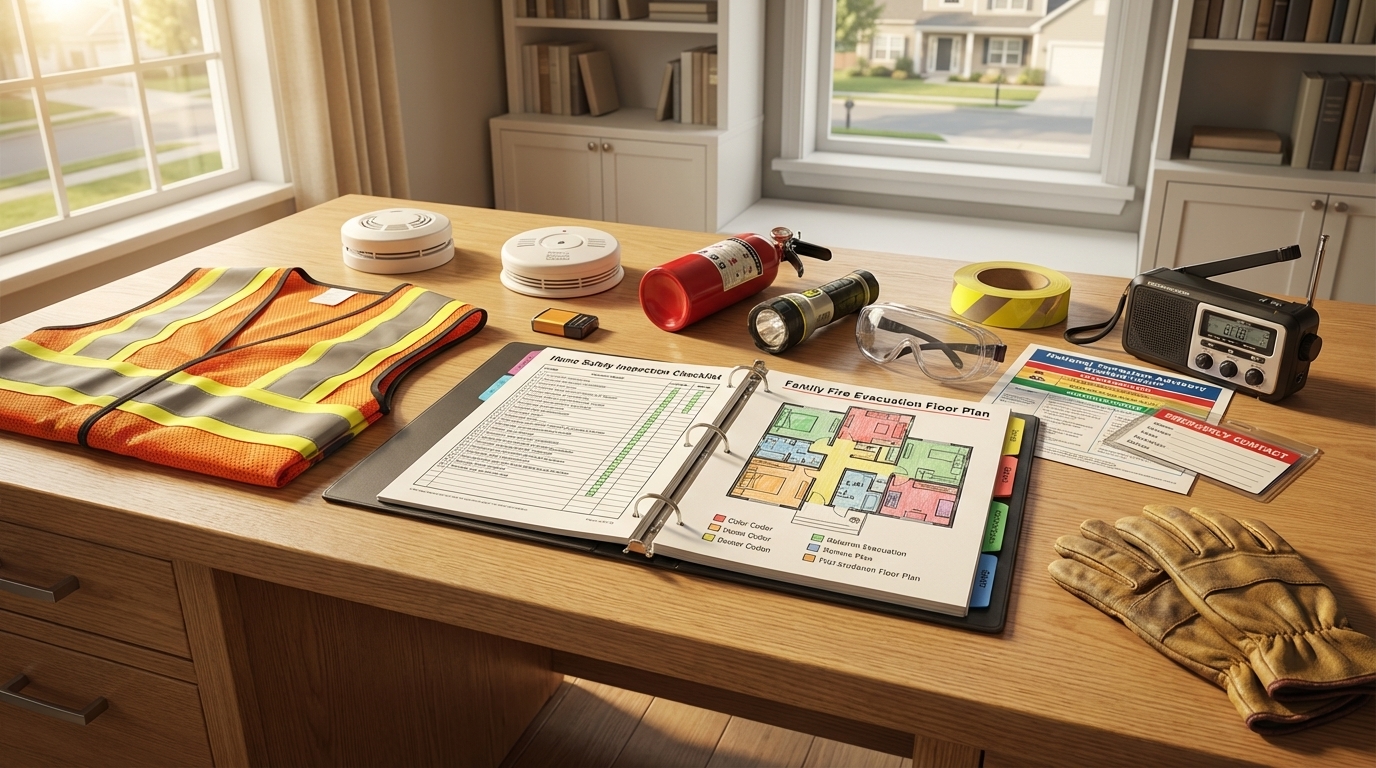
Home feels familiar, which is exactly why people stop noticing risks there. Slippery stairs, overloaded outlets, cluttered exits, and cooking distractions cause many injuries because people assume, “I know this place.” Requirement 2 will train you to look at ordinary rooms with fresh eyes.
Crime Prevention and Personal Safety
Some safety problems come from choices made by other people. Crime prevention is about protecting yourself without becoming fearful or suspicious of everyone around you. You will learn to notice patterns, set boundaries, use good judgment, and make it harder for someone to target you.
Public Place and Travel Safety
Stadiums, hotels, buses, sidewalks, trains, airports, and camps all work differently. Safe behavior changes with the setting. In public spaces, knowing where the exits are, where crowds can bottleneck, and how to follow instructions quickly can matter just as much as strength or speed.
Online Safety
Your digital life is part of your real life. Passwords, passkeys, phishing scams, fake online stores, identity theft, bullying, and oversharing can all cause real-world harm. Requirement 7 focuses on the habits that protect your money, privacy, reputation, and future opportunities.
Protecting Other People
Some of the most important safety skills are about protecting people who depend on the group. Scouting’s safeguarding rules, emergency plans, buddy systems, and reporting expectations exist because a safe community does not happen by accident. It is built on trust, accountability, and speaking up.
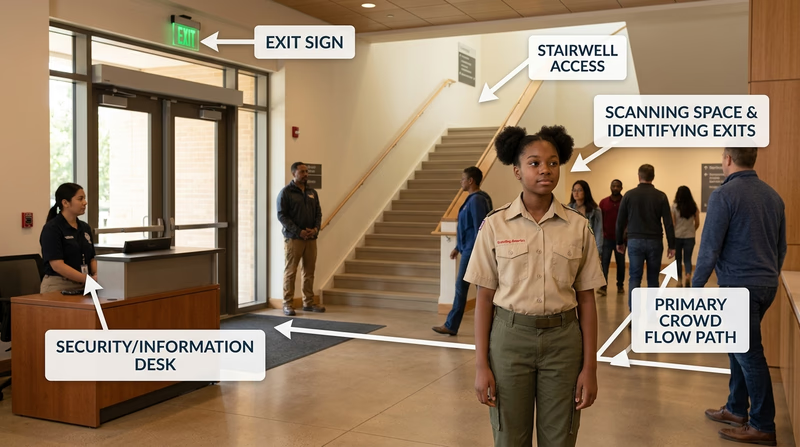
Safety starts with the same first move almost everywhere: notice what could go wrong before it does. Next, you will build that foundation by learning the difference between safety, hazards, and risk.