Safety Merit Badge — Complete Digital Resource Guide
https://merit-badge.university/merit-badges/safety/guide/
Introduction & Overview
A lot of accidents are not really accidents. They start with a missed clue: a bike helmet left unbuckled, a wet floor ignored, a charger overheating on a bed, a ride accepted without checking the license plate. Safety is the skill of noticing those clues early and acting before someone gets hurt.
That is why this merit badge matters. Safety is not just about rules, warning labels, and adults saying “be careful.” It is about learning how hazards work, how people reduce risk, and how good habits protect you at home, online, on the road, and in public.
Then and Now
Then
For most of human history, safety was reactive. A bridge collapsed, a mine exploded, or a fire swept through a city, and only then did people ask what should have been done differently. Early factories in the 1800s were especially dangerous. Machines had exposed gears, buildings had poor ventilation, and workers often had no protective equipment at all.
Over time, communities realized that injuries were not random bad luck. Better building codes, fire drills, traffic signs, seat belts, life jackets, smoke alarms, and workplace rules all came from one big idea: if you understand the hazard, you can lower the risk before the emergency starts.
Now
Today, safety reaches into almost every part of daily life. Your phone can warn you about severe weather. Cars beep when you drift out of a lane. Schools practice lockdown and evacuation drills. Camps use check-in systems and storm shelters. Websites add two-factor authentication to protect accounts.
But modern tools do not replace judgment. A smoke alarm is only useful if its battery works. A passcode only helps if you do not share it. A weather alert only matters if you know what action to take next. Safety still comes down to awareness, preparation, and doing the right thing early.
Get Ready!
This badge asks you to think like both a Scout and a problem-solver. You will inspect places, make plans, compare options, and talk through situations that can feel very real. That is the point. The more clearly you can think about safety before a problem starts, the more useful you will be when others freeze.
Kinds of Safety
Home Safety
Home feels familiar, which is exactly why people stop noticing risks there. Slippery stairs, overloaded outlets, cluttered exits, and cooking distractions cause many injuries because people assume, “I know this place.” Requirement 2 will train you to look at ordinary rooms with fresh eyes.
Crime Prevention and Personal Safety
Some safety problems come from choices made by other people. Crime prevention is about protecting yourself without becoming fearful or suspicious of everyone around you. You will learn to notice patterns, set boundaries, use good judgment, and make it harder for someone to target you.
Public Place and Travel Safety
Stadiums, hotels, buses, sidewalks, trains, airports, and camps all work differently. Safe behavior changes with the setting. In public spaces, knowing where the exits are, where crowds can bottleneck, and how to follow instructions quickly can matter just as much as strength or speed.
Online Safety
Your digital life is part of your real life. Passwords, passkeys, phishing scams, fake online stores, identity theft, bullying, and oversharing can all cause real-world harm. Requirement 7 focuses on the habits that protect your money, privacy, reputation, and future opportunities.
Protecting Other People
Some of the most important safety skills are about protecting people who depend on the group. Scouting’s safeguarding rules, emergency plans, buddy systems, and reporting expectations exist because a safe community does not happen by accident. It is built on trust, accountability, and speaking up.
Safety starts with the same first move almost everywhere: notice what could go wrong before it does. Next, you will build that foundation by learning the difference between safety, hazards, and risk.
Req 1 — Safety and Hazards
This requirement covers the two big ideas that hold the rest of the badge together:
- What safety is — not just following rules, but protecting people from harm.
- What hazards are — things or conditions that can cause injury, damage, or loss.
- How risk gets managed — by noticing hazards, reducing exposure, and building safer habits.
If you can explain those clearly, the rest of the badge will make a lot more sense.
Requirement 1a
Being safe does not mean nothing dangerous exists. It means you understand the dangers well enough to lower the chance of harm. A campsite can have knives, fire, and an axe yard and still be safe because people use rules, training, distance, and supervision to control those hazards.
A good way to explain safety is this: Safety is the condition created when people reduce risk to an acceptable level. That sounds formal, but the idea is simple. You look ahead, ask what could go wrong, and then take steps so the likely outcome is still okay.
What it means to be safe
To be safe, you usually need four things working together:
- Awareness — You notice the hazard.
- Preparation — You have the right gear, knowledge, or plan.
- Good choices — You act in a way that lowers risk.
- Follow-through — You keep paying attention instead of assuming the danger is gone.
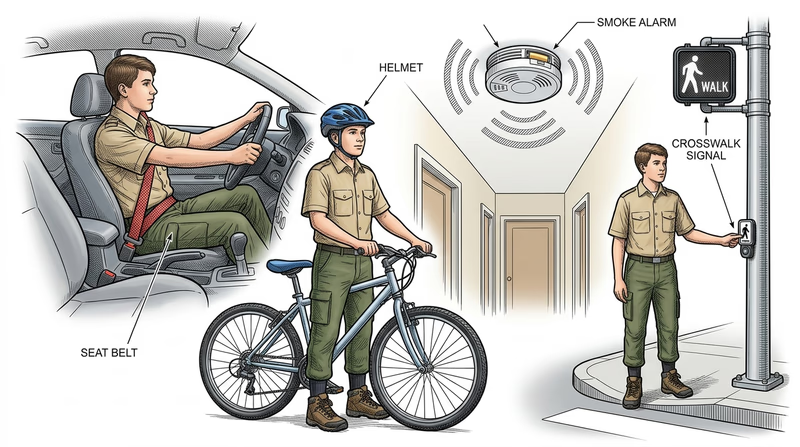
Think about crossing a busy street. You use the crosswalk, wait for the signal, look both ways, and keep your phone in your pocket. None of those steps removes traffic. Together, they make the situation much safer.
Safety is active, not passive
Sometimes people talk about safety as if it just happens because someone else made the place safe. Real safety is more active than that. A fire extinguisher helps only if someone knows where it is. A seat belt helps only if you click it. A weather warning helps only if you move when the warning says to move.
That is why Scouts talk about being prepared. Prepared people notice more, react sooner, and make better decisions under stress.
Official Resources
🎬 Video: What is Safety? (video) — https://youtu.be/qNmd4z2VFAY?si=KG7EvkG4mt08gSxz
🎬 Video: What Does Safety Mean to You? (video) — https://youtu.be/GRqwuAMqjnY
A simple way to answer your counselor
If you want a strong discussion answer, try building it around this pattern:
- Safety means protecting people from harm.
- Being safe means noticing hazards and making choices that reduce risk.
- Good safety depends on preparation, awareness, and action.
That answer is short, but it shows you understand the idea instead of just repeating a slogan.
Requirement 1b
A hazard is anything that can cause harm. That harm might be physical, financial, emotional, or digital. A wet floor is a hazard. So is an overloaded extension cord, a phishing email, an unlocked second-floor window, or a crowd pushing toward a narrow exit.
A lot of people mix up hazard and risk, so keep the difference clear:
- Hazard = the thing that can cause harm
- Risk = how likely it is that harm will happen, and how serious it could be
A campfire is a hazard. The risk changes depending on whether the fire is attended, how close people stand, how dry the area is, and whether water and tools are nearby.
How people manage hazards
Hazard management usually follows the same pattern in many settings:
1. Identify the hazard
First, notice what could hurt someone. That can mean scanning a room, checking weather, reading labels, looking for missing guards on equipment, or asking what could go wrong in a crowd.
2. Assess the risk
Ask two questions:
- How likely is this to happen?
- How bad would it be if it did?
A loose rug in a hallway has moderate likelihood and maybe moderate harm. Carbon monoxide in a home has lower visibility but potentially deadly harm. Both matter, but you would probably treat the carbon monoxide risk as more urgent.
3. Control the hazard
People reduce risk in different ways:
- Remove it — pick up the rug, fix the broken step
- Separate people from it — use barriers, distance, locked storage
- Change behavior — training, rules, supervision, checklists
- Use protective equipment — helmets, gloves, goggles, seat belts
- Prepare for failure — alarms, first-aid kits, escape plans, backups
Hazard Control Ideas
Ways people make a risky situation safer- Eliminate the problem: Put the knife away, replace the damaged cord, lock up chemicals.
- Reduce exposure: Slow down, increase distance, limit who enters the area.
- Add protection: Wear a helmet, use eye protection, turn on two-factor authentication.
- Create a response plan: Know who to call, where to go, and what to do if the hazard still causes trouble.
Official Resources
🎬 Video: Hazard and Risk - What's the Difference? (video) — https://youtu.be/_GwVTdsnN1E?si=FyaKmgWPC4Hrod-P
A Scout-sized example
Imagine your troop is unloading gear in a parking lot before camp.
- The hazard is moving vehicles.
- The risk goes up if people are backing trailers, it is dark, and Scouts are weaving between cars.
- You manage the hazard by using lights, keeping everyone in one unloading zone, having one person guide drivers, and keeping people out of blind spots.
That is what safety work looks like in real life. It is not magic. It is a chain of smart choices.
Requirement 2 takes those same ideas into the place where many injuries start: home. Next, you will look at fires, plans, hazards, and emergency checklists where families live every day.
Req 2 — Home Safety Plans
This requirement is about turning your home into a safer place on purpose. You will look at the injuries and fires that happen most often, then build two plans families actually need: how to get out of a burning building and how to leave or shelter during a disaster.
Requirement 2a
Most home injuries come from ordinary moments: carrying laundry down stairs, reaching for a pan, stepping on clutter in the dark, or using the wrong tool in a hurry. Familiar places can trick people into relaxing their attention.
Common causes of home injuries
Some of the biggest categories are:
- Falls — from stairs, loose rugs, toys on the floor, slick tubs, or climbing on furniture
- Cuts — from kitchen knives, broken glass, box cutters, and tools
- Burns — from hot pans, boiling water, curling irons, heaters, and outlets
- Poisoning — from cleaners, medication mistakes, carbon monoxide, and unsafe storage
- Strains and crush injuries — from lifting the wrong way or fingers caught in doors and drawers
Prevention starts with design and habits
A safer home usually comes from small repeatable actions:
- Keep walkways clear.
- Wipe up spills fast.
- Store medicines and chemicals where small children cannot reach them.
- Use step stools, not chairs.
- Turn pot handles inward.
- Keep sharp tools stored properly.
- Replace burned-out lights so people can see stairs and entries clearly.
Quick Home Injury Scan
Simple things that prevent many common injuries- Floors and stairs: Clear clutter, secure rugs, and make sure handrails are solid.
- Kitchen: Keep handles turned in, knives stored safely, and towels away from burners.
- Bathrooms: Use non-slip mats and clean up water quickly.
- Storage: Lock or separate medicines, cleaners, and sharp tools.
Official Resources
Seven Common Home Injuries (website) A simple overview of frequent home injuries and the habits that prevent them. Link: Seven Common Home Injuries (website) — https://healthtalk.unchealthcare.org/7-common-injuries-that-happen-at-home/ Home Accident Statistics (website) Statistics that show which home accidents happen most often and where people get hurt. Link: Home Accident Statistics (website) — https://www.rubyhome.com/blog/home-accident-stats/Requirement 2b
Fireworks combine flame, explosive force, flying debris, and crowds. That makes them dangerous even when they look fun and familiar. A sparkler may seem harmless, but it burns hot enough to cause serious skin injury. Larger fireworks can tip over, misfire, or send flaming material into dry grass, roofs, or people.
The dangers include:
- Burns to hands, face, and eyes
- Fires in homes, brush, vehicles, and clothing
- Hearing damage from close explosions
- Loss of control when fireworks launch in the wrong direction
- Crowd injuries when people panic or move suddenly
Official Resources
🎬 Video: Fireworks Safety (video) — https://youtu.be/8HxuUMoJyGA?si=bmAF8-rKBe0A1g1v
Requirement 2c
Home fires often start from ordinary routines: cooking left unattended, dryers clogged with lint, space heaters too close to blankets, candles burning in the wrong place, or overloaded outlets. Most of these are preventable.
Common causes
- Cooking — especially stovetop cooking left unattended
- Heating equipment — space heaters, fireplaces, wood stoves
- Electrical problems — damaged cords, overloaded power strips, bad wiring
- Smoking materials and open flame — candles, matches, lighters
- Laundry equipment — lint buildup in dryers and vents
Prevention habits that matter
- Stay in the kitchen when frying or broiling.
- Keep anything that can burn away from stoves and heaters.
- Test smoke alarms monthly.
- Replace damaged cords instead of taping them.
- Clean the dryer lint trap every load.
- Blow out candles before leaving the room.
Official Resources
5 Causes of Home Fires (website) The National Fire Protection Association explains the main causes of home fires and how to reduce them. Link: 5 Causes of Home Fires (website) — https://www.nfpa.org/news-blogs-and-articles/blogs/2020/12/17/most-home-fires-result-from-five-general-causesRequirement 2d
This part is where safety stops being theory. You are not just saying homes can have hazards. You are proving you know how to find them.
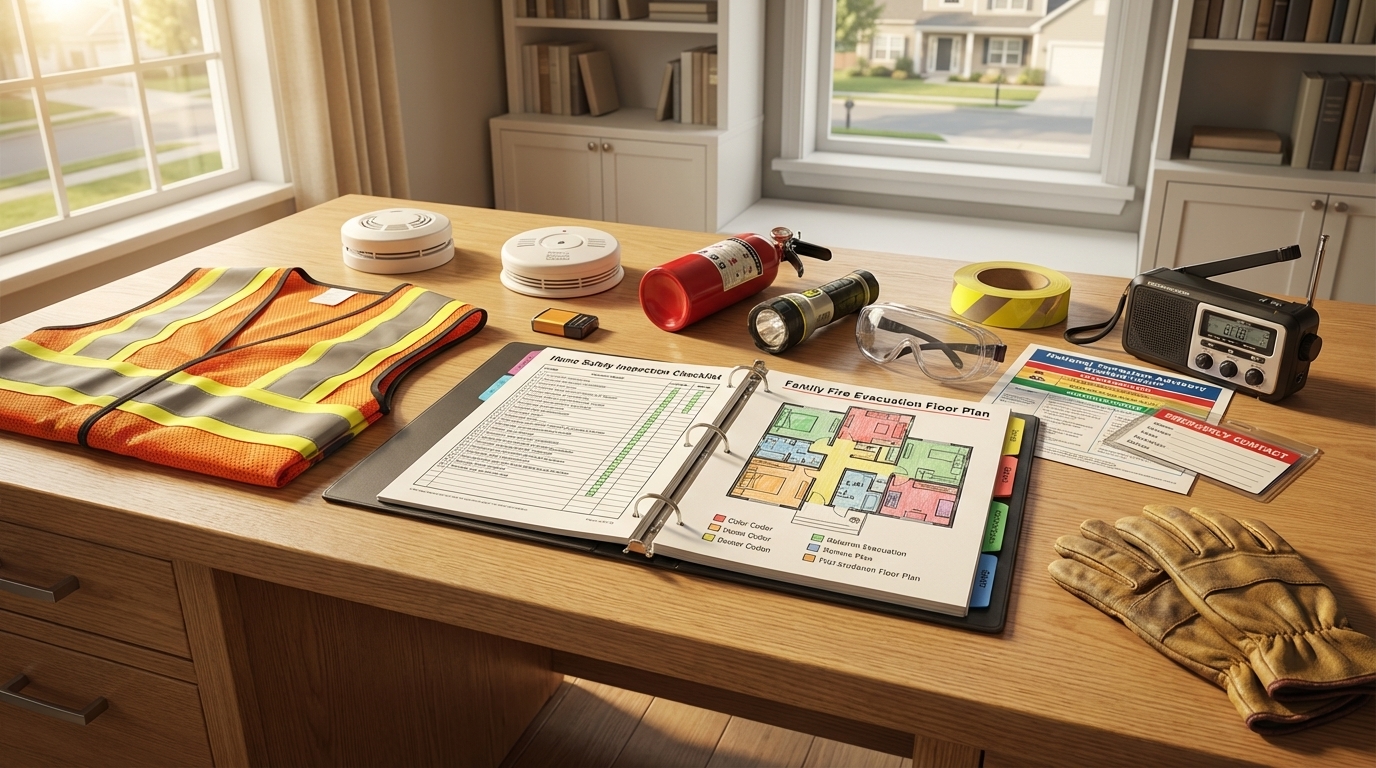
When you do your inspection, move room by room. Do not rush. Look up, down, and behind things. Ask yourself:
- What could make someone fall?
- What could start a fire?
- What could poison or burn someone?
- Are exits blocked?
- Are alarms, lighting, and emergency supplies easy to find?
Take notes as you go. A strong checklist review does more than say “looks good.” It points to specific hazards and specific fixes.
Official Resources
Home Safety Checklist (PDF) A checklist you can use with an adult to inspect each area of a home for hazards. Link: Home Safety Checklist (PDF) — https://filestore.scouting.org/filestore/Merit_Badge_ReqandRes/Requirement%20Resources/Emergency%20Preparedness/E%20Prep%20Checklists%20Home%20Safety%20%231%20%23%202.docx.pdf Home Safety Checklist (PDF) An updated home safety inspection checklist with practical categories to review together. Link: Home Safety Checklist (PDF) — https://filestore.scouting.org/filestore/Merit_Badge_ReqandRes/Requirement%20Resources/Emergency%20Preparedness/Home%20Safety%20Checklists%20%231%20%23%202%2001%202026.pdfRequirement 2e
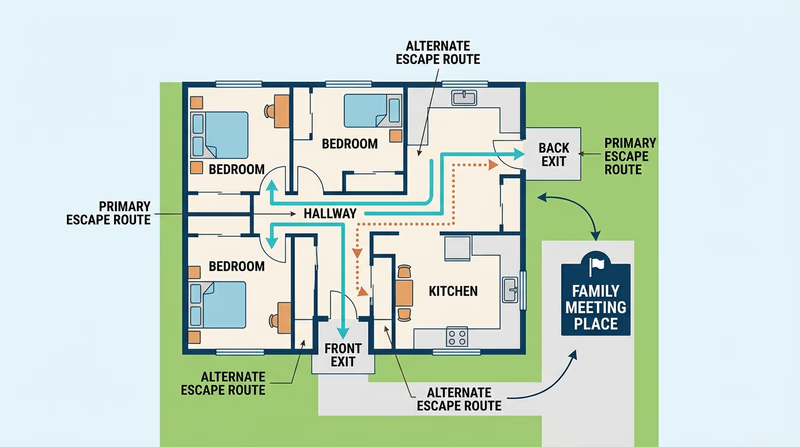
Plan escape routes from every room
A good fire-escape plan gives every sleeping area two ways out if possible. That might mean a bedroom door and a window, or a hallway route and another nearby exit. Draw the layout clearly so someone can understand it fast.
Choose one outdoor meeting place
Families waste precious time when people scatter outside and then start looking for each other. Pick one meeting place everyone knows, such as:
- the mailbox
- a tree at the edge of the yard
- a neighbor’s driveway
- the far end of the parking lot in an apartment complex
Practice the drill
A plan is only useful if people can follow it quickly. Practice moving out without stopping for pets, phones, shoes, or valuables. The goal is to get out, stay out, and meet at the agreed place.
Official Resources
Home Fire Escape Planning (website) Step-by-step advice for creating and practicing a family fire-escape plan. Link: Home Fire Escape Planning (website) — https://www.nfpa.org/education-and-research/home-fire-safety/escape-planning#safety-tips🎬 Video: Demonstration of Safely Escaping a House Fire (video) — https://www.youtube.com/watch?v=zeiN_A-OSt8&t=2s
Requirement 2f
Build the plan around your real local hazards
A good family emergency plan fits where you live. Families in wildfire areas may need fast evacuation and smoke protection. Families in tornado country need shelter locations. Coastal families may need hurricane plans. Flood-prone neighborhoods need routes that avoid low roads.
Your plan should answer:
- When do we leave or shelter?
- Who gets notified first?
- Where do we meet if separated?
- What route do we take?
- What if phones do not work?
- Who grabs pets, medication, and important documents?
Assemble or inspect the kit
An emergency supplies kit is not random camping gear thrown in a bin. It should support your family for the first stage of the emergency.
Common items include:
- water
- nonperishable food
- flashlight and extra batteries
- first-aid supplies
- medications
- weather radio or phone chargers/power banks
- copies of key documents
- hygiene supplies
- pet supplies if needed
What makes a useful family emergency kit
Think about what your family would actually need in the first 24–72 hours- Basic survival: Water, food, light, and warmth.
- Medical needs: Prescriptions, glasses, inhalers, or other essential items.
- Communication: Chargers, battery packs, emergency contacts, and a written meeting plan.
- Local conditions: Masks for smoke, warm clothes for winter, rain gear for storms, or sturdy shoes for debris.
Be ready to explain how the plan and kit work together
Your counselor may ask, “How would your family actually use this?” Be ready with a clear example. If wildfire threatens your area, who grabs the kit, who loads pets, which route you take, and where you regroup? If a tornado warning is issued, where do you shelter and what supplies are already there?
Official Resources
Checklist for a Family Emergency Evacuation Kit (PDF) A checklist for building or inspecting the supplies your family would need during an evacuation. Link: Checklist for a Family Emergency Evacuation Kit (PDF) — https://filestore.scouting.org/filestore/Merit_Badge_ReqandRes/Requirement%20Resources/Emergency%20Preparedness/Family%20Emergency%20Kit%20Checklist%2001%202026.pdf🎬 Video: Wildfire Evacuation Planning (video) — https://youtu.be/EOXSpBkH6zE?si=TgfY5UUhvGwcB8SP
🎬 Video: How to Shelter in Place (video) — https://youtu.be/4NbejEMQ6cg
By now you have practiced the most important home safety habit: looking for problems before they become emergencies. Next, you will shift from accidents to intentional harm by learning about crime prevention and home security.
Req 3 — Crime Awareness and Home Security
This section is about awareness, not paranoia. The goal is to understand the kinds of crimes that can affect teens, then look at your own home the way a criminal might: Where are the weak points? What makes the place easier or harder to target?
Requirement 3a
Teens can be affected by crimes in person, online, at school, during travel, or through someone they know. Some crimes involve direct violence. Others involve pressure, deception, or taking advantage of trust.
Common types of crimes that can affect teens
- Theft — phones, bikes, backpacks, cash, or gaming accounts taken or stolen
- Burglary — someone entering a home, garage, or car to steal property
- Robbery — theft using force, threat, or intimidation
- Fraud and scams — fake sales, fake job offers, phishing, or payment app tricks
- Assault — physical attacks or threats of violence
- Sexual abuse or exploitation — grooming, coercion, assault, or image-based abuse
- Harassment and stalking — repeated unwanted contact in person or online
- Vandalism and property damage — damage to belongings, homes, schools, or vehicles
A key point for your counselor discussion: crimes against teens often depend on opportunity. A thief looks for an unlocked bike. A scammer looks for someone who clicks quickly. A bully looks for a target who feels isolated. Good safety habits remove opportunities.
Warning signs matter
Crime prevention often starts before the crime is complete. Warning signs may include:
- someone pushing boundaries after you said no
- a stranger asking for private information or photos
- someone trying to isolate you from friends
- pressure to meet secretly or hide communication
- a person checking doors, windows, or cars in a neighborhood
Requirement 3b
Home security is about making a place harder to enter, easier to observe, and less attractive to target. During your inspection, pay attention to what slows a criminal down and what gives them privacy.
Things to inspect
- doors that lock solidly
- windows that latch correctly
- outdoor lighting near entries
- trimmed shrubs around windows and doors
- garage and side-yard access
- visibility of valuables from outside
- alarm signs, cameras, or motion lights if present
A smart home security review is specific. Instead of writing “house was secure,” note findings like:
- back gate latch broken
- porch light burned out
- ladder stored beside accessible second-floor window
- side door lock strong but hidden from street view
What criminals like
Weaknesses your inspection should look for- Easy entry: Unlocked windows, weak doors, spare keys in obvious places.
- Poor visibility: Dark corners, overgrown bushes, hidden side paths.
- Low effort payoff: Phones, bikes, tools, and packages left in plain view.
- Predictable habits: Empty-house signals like piled-up mail or no lights on for days.
Official Resources
Home Security Checklist (PDF) A room-by-room and outside-area checklist for spotting common home security weaknesses. Link: Home Security Checklist (PDF) — https://filestore.scouting.org/filestore/Merit_Badge_ReqandRes/Requirement%20Resources/Crime%20Prevention/Home%20Security%20Checklists%20%231%20%232.pdfCriminals count on people being distracted, rushed, or uncertain. In the next requirement, you will take that same awareness into hotels, stadiums, camps, and other public places where fast decisions matter.
Req 4 — Public Place Emergencies
This requirement is an inherited-action pattern. The main action word is “explain,” and each child topic asks you to explain what a Scout should do in a different public setting. The key skill is not memorizing a script. It is recognizing the environment, knowing your safest options, and moving early instead of late.
Requirement 4a
How to prepare before anything goes wrong
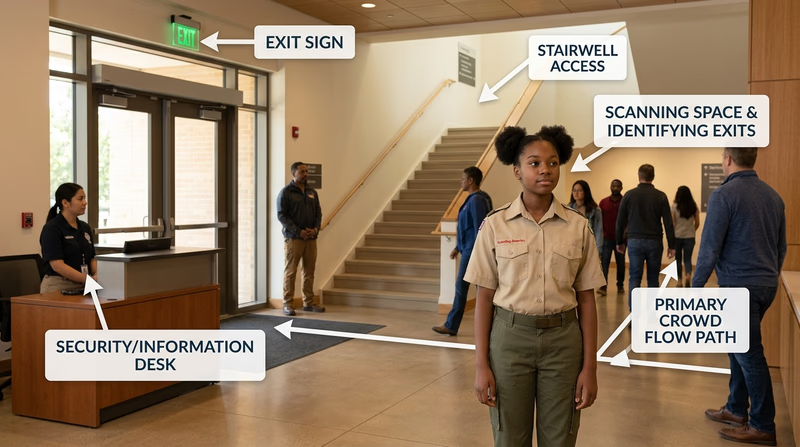
The safest time to find an exit is before you need one. When you enter a hotel, theater, stadium, or large building, look for:
- the nearest exit you came in through
- at least one alternate exit
- stairwells
- places where crowds could bunch up
- staff or security positions
How to exit safely during the emergency
If an alarm sounds, smoke appears, or the crowd shifts suddenly, move with purpose but do not run blindly. Head for the nearest safe exit, not always the most familiar one. In a hotel, use stairs instead of elevators. In a stadium, avoid pushing toward a narrow opening if a safer alternate path is open.
Why early movement matters
Crowds become dangerous when everyone waits too long and then tries to move at once. Delay creates bottlenecks. Early, calm movement gives you more room, better choices, and a lower chance of being trapped by smoke or crowd pressure.
Official Resources
🎬 Video: How to Survive a Stampede (video) — https://youtu.be/KaDcgIx2PlY?si=1EIJSxfDfMlG0AfV
🎬 Video: How to Survive a Burning High Rise (video) — https://youtu.be/P8Naa4pzDdo?si=5Wr7bMJOmXW9p0XG
Requirement 4b
Why Scouts sometimes shelter instead of evacuate
At camp, the outside environment may be the danger. Lightning, tornado warnings, high wind, hail, flash flooding, or wildfire smoke can make open areas unsafe. In those moments, shelter protects people from exposure until the immediate danger passes or leaders organize the next move.
How Scouts should take shelter
Follow camp staff and troop leaders quickly. Go to the designated shelter area, stay with your group, and keep accountability tight so leaders know everyone is present. If you are at a camp that uses weather alerts, know ahead of time what signal means “move now.”
What makes a shelter choice safer
The best shelter depends on the hazard. A sturdy building is usually better than a tent in severe weather. Low ground is bad in a flood. Isolated trees are bad in lightning. An open pavilion may be better than nothing for rain, but not enough for the worst storms.
Official Resources
🎬 Video: Camp Emergency Planning (video) — https://www.youtube.com/shorts/no3dR86WRss
Requirement 4c
The basic response priorities
The most widely taught framework is often summarized as run, hide, fight or avoid, deny, defend. The exact words may vary, but the priorities are similar:
- Get away if you safely can.
- Hide and stay quiet if escape is not possible.
- Defend yourself only as a last resort when your life is in immediate danger.
What Scouts should actually do
Move away from the threat if there is a safe path. Leave belongings behind. Help others only if doing so does not trap you. Once you are safer, call 911 and give clear information if you can.
If you cannot escape, lock or barricade the room, silence phones, stay low and quiet, and keep away from windows and doors. If law enforcement arrives, follow commands immediately and keep your hands visible.
Official Resources
🎬 Video: How to Respond to an Active Shooter (video) — https://youtu.be/sshDd_AgRAA?si=IRhkIwBLtRN6uqjF
Requirement 4d
What the phrase means
The phrase means suspicious activity should be reported instead of ignored. It is a reminder that ordinary people often notice early warning signs before an emergency grows worse.
What counts as “something”
That might include:
- a bag left in a strange place in a high-security area
- someone forcing a locked door
- threats of violence
- a person acting in a way that suggests immediate danger
- behavior that clearly does not fit the setting and creates a serious safety concern
What “say something” means
It does not mean posting online or confronting the person yourself. It means telling the right person: security, police, school staff, event staff, camp leadership, or another responsible adult who can act.
Official Resources
🎬 Video: If You See Something, Say Something® (video) — https://youtu.be/Lgm5QWD1T3k?si=ABHK45yx-DqYETJh
Public place safety depends on scanning the environment, recognizing early danger, and trusting good judgment. Next, you will focus on a different kind of protection: the rules and reporting systems that keep young people safe in Scouting.
Req 5 — Keeping Scouting Safe
This requirement is about how a safe Scouting culture is built. The policies matter, but so do the habits behind them: clear boundaries, group accountability, speaking up, and reporting concerns instead of trying to handle abuse situations alone.
Requirement 5a
Safeguarding rules are designed to remove secrecy, reduce opportunities for abuse, and make expectations clear. Different trainings and updates may use slightly different wording over time, but the big ideas stay consistent.
Core principles Scouts should understand
- No one-on-one situations in private between an adult and a youth member
- Two-deep leadership and supervision in appropriate settings
- Respect for privacy in showers, restrooms, and changing areas
- Appropriate communication that follows Scouting rules and includes transparency
- Buddy system habits so youth are not isolated
- Boundaries around touch, language, and behavior
A good counselor discussion answer explains that these are not “extra paperwork rules.” They are layers of protection that make unsafe behavior easier to spot and harder to hide.
Official Resources
Youth Protection Policies (video) A Scouting America training video covering core youth protection expectations and safe program boundaries. Link: Youth Protection Policies (video) — https://filestore.scouting.org/filestore/YPSAT/YT%20Mod4%20Final%20Master%20Small.mp4Requirement 5b
The phrase Recognize, Resist, and Report gives you a simple structure:
- Recognize behavior or situations that are wrong, manipulative, secretive, or unsafe.
- Resist by leaving, saying no, refusing secrecy, or getting closer to safe people.
- Report to a trusted adult or official reporting channel right away.
Recognize
Warning signs can include:
- someone asking you to keep contact or favors secret
- gifts, special treatment, or attention that feels manipulative
- repeated attempts to isolate you
- requests for private photos or personal information
- touching, comments, or jokes that cross boundaries
Resist
Resisting does not always mean arguing. It can mean moving toward other people, ending the conversation, blocking contact, refusing a ride, or saying clearly, “No. I am not doing that.”
Report
Reporting matters because unsafe behavior often does not stop on its own. Adults with authority can investigate, protect others, and connect people with the right support.
Requirement 5c
A strong safety culture makes reporting easy to understand. People should know who to tell, what to say, and why quick reporting matters.
Who can report
Anyone can report suspicious behavior: you, another Scout, a parent, a leader, camp staff, or any bystander who notices something concerning.
How reporting can happen
- tell a trusted parent or guardian immediately
- tell a leader or other responsible adult
- use the Scouts First Helpline or the current Scouting America reporting channel
- call 911 if someone is in immediate danger
- report to child protective services or law enforcement when the situation calls for it
What to include when reporting
Give facts, not rumors:
- who was involved
- what happened or was said
- when and where it happened
- whether anyone is in immediate danger now
- whether there may be messages, photos, or witnesses
Good reporting habits
What helps adults respond quickly and correctly- Report early: Do not wait for proof beyond what you honestly observed.
- Be specific: Share facts, dates, places, and exact concerns.
- Protect the person at risk: Stay with them or get them to a safe adult if needed.
- Do not spread it as gossip: Tell the people who need to act.
The same clear thinking you used for hazards and home planning also matters here. Next, you will apply it to personal safety and reducing the risk of assault in different situations.
Req 6 — Avoiding Assault Risks
This requirement uses an inherited-action pattern. The main verbs are avoid and prevent, so each section below is organized around choices that lower risk before a situation turns dangerous. None of this shifts blame to a victim. Responsibility always belongs to the person who chooses to harm someone. Your job is to learn the habits that make you harder to target and quicker to act.
Requirement 6a
How to lower the chance of being targeted
Street assaults often depend on speed, surprise, and isolation. Criminals look for people who seem distracted, boxed in, or easy to approach without being noticed.
Good prevention habits include:
- walk with purpose and awareness
- keep your head up instead of staring at your phone
- stay in well-lit, populated areas
- avoid shortcuts through isolated places
- keep one ear free so you can hear what is around you
- trust your instincts if a person or place feels wrong
How to respond early
If someone is following you, changing direction to match you, or closing distance in a way that feels wrong, act early. Cross the street, enter a business, move toward other people, or call for help. Early action usually works better than waiting for more proof.
What makes a safer route
A slightly longer route with open businesses, lighting, and visible people is often the safer choice. Safety is not about the shortest distance. It is about reducing isolation and increasing your options.
Official Resources
🎬 Video: Muggers Reveal How They Target Their Victims (video) — https://youtu.be/aQdCVTon3HQ
Requirement 6b
How to stay aware in a busy social setting
Restaurant events, team banquets, dances, and celebrations can feel safe because they are public. But distractions, noise, crowding, and people coming and going make it easier to lose track of friends or miss warning signs.
Prevention habits for public events
- arrive with people you trust
- know how you are getting home before the event starts
- keep your phone charged
- do not leave food or drinks unattended
- pay attention if someone is trying to separate you from your group
- leave early if the mood or behavior around you changes in a bad way
Use your group on purpose
Friends are a safety system. Check in with each other. If someone seems uncomfortable, help them leave the conversation or move to a different space. If a person is pressuring someone, trying to isolate them, or interfering with their ride home, that is a red flag.
Requirement 6c
Prevention starts with boundaries and planning
A safe dating or party situation depends on respect, communication, and the freedom to say no at any time. Pressure, isolation, manipulation, intoxication, and secrecy make situations less safe.
Habits that reduce risk
- make your own transportation plan before you go
- stay connected with a friend or trusted adult
- avoid being isolated with someone you do not fully trust
- keep control of your drink and do not accept mystery substances
- leave immediately if someone ignores your boundaries
- understand that consent must be clear, willing, and ongoing
What to remember about consent and pressure
Consent is not silence, fear, pressure, or being too impaired to think clearly. If someone tries to guilt, corner, or pressure you, that is a warning sign. Respect looks like listening, slowing down, and stopping when asked.
Personal safety depends on awareness, boundaries, and acting early. Next, you will move into online safety, where criminals and abusers often use the same tactics — distraction, pressure, secrecy, and false trust.
Req 7 — Smart Online Safety
Online safety is real-world safety. A stolen password can drain money. A fake message can steal an account. A shared photo can damage trust, reputation, and mental health. This requirement uses an inherited-action structure because each topic asks you to discuss how a different kind of digital risk works and how to lower it.
Requirement 7a
How online crimes usually start
Most online crimes do not begin with a movie-style hacker attack. They start with a trick: a fake message, a fake login page, a fake giveaway, or pressure to click fast before you think.
Habits that reduce your chances of becoming a victim
- use strong, unique passwords or passkeys
- turn on two-factor authentication where possible
- do not click links just because the message feels urgent
- log in through the real app or bookmarked site instead of message links
- share less personal information publicly
- update devices and apps so known security holes get patched
Official Resources
Protect Your Personal Information From Hackers and Scammers (website) FTC guidance on passwords, personal information, device security, and scam prevention. Link: Protect Your Personal Information From Hackers and Scammers (website) — https://consumer.ftc.gov/protect-your-personal-information-hackers-scammers#keep🎬 Video: Passkeys Explained in Under 4 Minutes (video) — https://youtu.be/bdp8RdjV6PU?si=MPYq7d0la_3KVSuX
Requirement 7b
Scams usually target emotion first
Financial scams often work by making you excited, scared, embarrassed, or rushed. Once emotion takes over, people stop checking details.
Common examples
- fake online stores with prices that seem too good to be true
- payment app scams using fake screenshots or overpayment tricks
- fake charities after disasters
- fake job offers asking for upfront fees or banking information
- romance or friendship scams that slowly lead to money requests
How to spot them earlier
Slow down. Check the sender, website address, reviews, and whether the payment method has buyer protection. Real businesses do not need panic to make a sale.
Official Resources
🎬 Video: Common Online Scams (video) — https://youtu.be/k8UVnkh8i0c
🎬 Video: 10 Common Internet Scams (video) — https://youtu.be/CDhAOvsyw2s?si=42nASL5CjtBBKwru
Requirement 7c
Build layers instead of trusting one tool
Effective online security is not one magic app. It is a stack of habits:
- secure passwords or passkeys
- two-factor authentication
- software updates
- account recovery options you still control
- careful privacy settings
- skepticism toward suspicious links and files
Think of accounts like doorways
Your email account is especially important because it can reset many other accounts. Protecting email well protects the rest of your digital life too.
A strong online security baseline
Simple habits that protect most people from common attacks- Protect the main account: Secure your email first.
- Add a second layer: Use two-factor authentication or passkeys.
- Patch known problems: Install updates on phones, computers, and apps.
- Review what you share: Lock down privacy settings and remove unused apps with access to your accounts.
Official Resources
🎬 Video: Effective Online Security (video) — https://youtu.be/aO858HyFbKI
Requirement 7d
What identity theft is
Identity theft happens when someone uses your personal information to pretend to be you. That might mean opening accounts, making purchases, filing false claims, or taking over an existing account.
How to prevent it
- protect login credentials
- be careful with birth dates, addresses, and school details you share publicly
- do not hand out Social Security numbers or other sensitive information unless the source is verified and the reason is real
- watch for surprise password reset emails, bills, or account alerts
Official Resources
🎬 Video: Preventing Identity Theft (video) — https://youtu.be/kDFeSUUwRnA?si=ncAfMQF1RIdIWetC
Requirement 7e
Why social media gives criminals an advantage
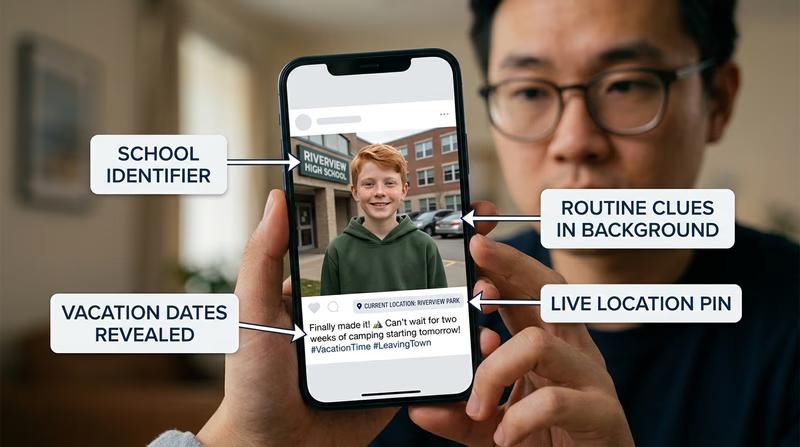
Social media reveals routines, interests, friend groups, schools, locations, and emotional pressure points. That information can help criminals pretend to know you, guess security questions, or choose the best time to scam or approach you.
Safer social media habits
- avoid posting live location details when possible
- think twice before posting schedules or travel plans
- keep friend and follower lists tighter
- be careful with quizzes and trends that collect personal details
- remember that public photos can show addresses, uniforms, or license plates in the background
Official Resources
🎬 Video: How Criminals Use Social Media (video) — https://youtu.be/5bdBvNCBeho?si=bJdF2LM50LG_tm74
Requirement 7f
When online behavior crosses the line
Not every mean message is automatically a crime, but some digital behavior can become criminal depending on what is shared, how often it happens, and whether threats, harassment, coercion, or exploitation are involved.
Examples of risky behavior
- repeated threatening or harassing messages
- sharing private photos without permission
- pressuring someone to send explicit images
- impersonating someone to humiliate or harm them
- using texts or group chats to coordinate harassment or threats
Why this matters
A message sent in ten seconds can have legal, school, and personal consequences that last much longer. Digital evidence also sticks around. Screenshots, cloud backups, and forwarded images make “I deleted it” a weak defense.
Online safety is really about pattern recognition: urgency, secrecy, oversharing, weak boundaries, and false trust. Next, you will use the same kind of practical thinking while moving through cities, vehicles, stations, and airports.
Req 8 — Safer Ways to Travel
Travel safety changes with the vehicle and the setting, but the pattern stays familiar: notice the environment, reduce risk before problems start, and know what to do if something feels wrong. This page uses the inherited-action pattern because each child topic asks for guidelines in a different travel situation.
Requirement 8a
Guidelines that keep pedestrians safer
Cities combine traffic, turning vehicles, bikes, buses, construction, crowds, and distractions. The biggest mistake pedestrians make is assuming drivers see them.
Safer habits include:
- use crosswalks and obey signals
- make eye contact with drivers when possible
- keep your head up and avoid crossing while staring at your phone
- watch for cars turning, not just cars coming straight
- stay visible at night with light clothing or reflective gear
Official Resources
🎬 Video: Pedestrian Safety (video) — https://youtu.be/QUXLT3gcFb8
Requirement 8b
Your safety job as a passenger
Being a passenger does not mean safety becomes someone else’s problem. You still make choices that affect risk.
Good passenger guidelines
- buckle up every time
- avoid distracting the driver
- do not encourage speeding or risky driving
- speak up if the driver is using a phone, acting impaired, or driving recklessly
- arrange another ride if the situation does not feel safe
Official Resources
Passenger Responsibilities for Safety (website) Explains how passengers help a driver stay focused and make safer choices on the road. Link: Passenger Responsibilities for Safety (website) — https://www.fmins.com/blog/how-to-be-a-better-passenger/Requirement 8c
Verify the car before you get in
Rideshare safety starts before the door opens. Check the app, the license plate, the car model, and the driver’s name. Ask, “Who are you picking up?” instead of saying your own name first.
Other useful precautions
- wait in a visible area
- share trip details with a trusted person
- sit in the back seat when possible
- trust your instincts and end the ride if the situation feels wrong
- do not accept a ride from someone who says they are your driver but is not the verified match
Official Resources
Rideshare Safety Tips (website) A practical checklist for verifying rideshare drivers, sharing trip details, and riding more safely. Link: Rideshare Safety Tips (website) — https://riskadvisory.ucsf.edu/tips-stay-safe-while-ridesharing🎬 Video: Ride-Sharing Safety (video) — https://youtu.be/3ElQynt6rV4?si=ZqpLU9aEY7P2SzLY
Requirement 8d
Bus safety starts before boarding
Stand back from the curb, let riders exit first, and watch traffic around the bus. Once on board, choose a safe seat, hold on when standing, and avoid blocking aisles or exits.
During the ride
- stay aware of your stop
- keep bags secure and out of walkways
- follow driver instructions
- be especially careful around doors and steps
Official Resources
🎬 Video: Riding a Bus Safely (video) — https://youtu.be/fbsDdX7auRo?si=KB3o4EPoNUeZc2xQ
🎬 Video: How to Ride a Bus Safely (video) — https://youtu.be/YiI8bnDwkcE
Requirement 8e
Key rail and platform habits
Platforms can feel routine until a rush of people, an arriving train, or a distraction turns them hazardous.
Safer habits include:
- stand behind platform warning lines
- keep clear of doors until riders exit
- watch the gap between the train and platform
- hold handrails on stairs and escalators
- stay alert to your surroundings instead of zoning out with headphones and screens
Official Resources
🎬 Video: How to Ride a Train Safely (video) — https://youtu.be/5w2X_16tuK4
Requirement 8f
Safety habits that matter in air travel
Commercial flying is highly regulated, but passengers still need to pay attention. The safety briefing is not background noise. It tells you where the exits are, how the seat belt works, and what to do if something goes wrong.
Useful guidelines for Scouts and families
- listen to the safety briefing each flight
- know the nearest exits, not just the one you boarded through
- keep your seat belt fastened when seated
- follow crew instructions immediately
- keep aisles and under-seat areas clear enough for evacuation
- charge devices and store bags the way the crew directs
Official Resources
🎬 Video: Air Travel Do Not Do's (video) — https://youtu.be/vsfudxcksHI
The travel safety pattern
Questions that help in almost any travel setting- What are the exits? Know how you would leave quickly.
- Who is in charge? Drivers, transit staff, flight crews, and camp leaders give instructions for a reason.
- What are the biggest hazards here? Traffic, doors, crowds, platforms, or confusion.
- What would I do if the situation changed fast? Thinking early keeps you from freezing later.
You have now worked through home, public, personal, digital, and travel safety. The last badge requirement asks you to choose a future direction: safety as a career or safety as part of service and everyday life.
Req 9 — Choose Your Safety Path
For this requirement, you choose exactly one option. One path helps you research a safety-related profession. The other helps you explore how safety knowledge can shape service, volunteer work, or a long-term hobby. Both are useful. The best choice depends on whether you want to focus on a job path or a practical life path.
Your Options
- Req 9a — Safety Careers: Research one safety-related career in detail, including training, cost, salary, job duties, and advancement. This option helps you practice career research and see how safety becomes a profession.
- Req 9b — Safety in Service and Lifestyle: Explore how safety knowledge connects to volunteer service, an active hobby, or a long-term lifestyle choice. This option is great if you are more interested in helping people, serving outdoors, or building practical experience first.
How to Choose
Choosing your option
Think about what kind of exploration will be most useful to you right now- If you like researching jobs and future plans: Option 9a is a better fit because it asks for detailed career information such as education, salary, and advancement.
- If you like hands-on service or outdoor action: Option 9b may fit better because it connects safety knowledge to volunteering, rescue support, parks, and community work.
- What you will gain from 9a: A clearer picture of how professionals build a career in safety, risk management, inspection, health, emergency response, or training.
- What you will gain from 9b: A clearer picture of how safety habits can grow into meaningful service, responsibility, and community leadership even before you choose a career.
Both paths ask you to discuss your findings with your counselor. That means your goal is not to collect random facts. Your goal is to explain why the path is interesting, what it requires, and whether you can imagine yourself doing it.
Req 9a — Safety Careers
This option is really about learning how a professional solves safety problems for a living. That could mean preventing workplace injuries, inspecting buildings, investigating accidents, training employees, designing safer systems, or helping communities prepare for emergencies.
Good career ideas to research
Safety touches a lot of fields, so your chosen career might be something like:
- occupational safety specialist
- fire inspector
- emergency manager
- industrial hygienist
- construction safety manager
- public health and safety educator
- risk manager
- transportation safety investigator
What to find out
Your counselor is not just looking for a job title. You should be able to explain:
- what the person actually does day to day
- what training, certificates, or college programs are common
- what the training costs might be
- what job prospects look like in that field
- what salary range is typical
- how someone moves forward in the career over time
Strong career research questions
Use these to build a solid discussion with your counselor- Training: Do people enter this field through college, certification, military service, apprenticeships, or on-the-job training?
- Work setting: Is the person in an office, on job sites, in schools, in hospitals, or out in the field?
- Main job duties: Are they inspecting, training, planning, responding, analyzing, or enforcing rules?
- Advancement: What can this career grow into after five or ten years?
Ways to research well
An internet search is a start, but better research compares more than one source. The strongest versions of this requirement often include one of these:
- an interview with someone in the job
- a visit to a workplace
- notes from multiple trustworthy sources such as government labor sites, company or agency pages, and career databases
If you interview someone, ask what surprised them most about the work. Their answer may give you a much better feel for the job than salary numbers alone.
Official Resources
🎬 Video: Wondering How To Get Qualified To Work in Safety?! (video) — https://youtu.be/zumgPs4PAiA
🎬 Video: Building Safety Careers (video) — https://youtu.be/MT9yVrlSn7M?si=TKjtM1VAhMXmou99
If you decide a formal career path is not your favorite route, the next option shows another direction: using safety skills in service, volunteering, and everyday life.
Req 9b — Safety in Service and Lifestyle
Safety skills are not only for professionals. They also matter to people who volunteer, lead outdoor groups, coach youth, patrol trails, assist at events, or make preparedness part of daily life. This option asks you to picture what safety looks like when it becomes part of who you are, not just what job you do.
Possible directions to explore
You might research paths such as:
- volunteer search and rescue support
- community emergency response teams (CERT)
- park or trail volunteering
- camp health and safety support roles
- event safety volunteering
- outdoor leadership with extra training in first aid, weather, and risk management
What to research
Even volunteer and hobby paths still require preparation. Look into:
- training or certifications you would need
- equipment or uniform costs
- time commitment
- what organizations support the activity
- what beginners can realistically do first
- what long-term involvement could look like
Turn interest into goals
This requirement becomes stronger when you separate short-term and long-term goals.
- Short-term goals might include taking first-aid training, joining a local service group, attending a preparedness workshop, or volunteering at a park event.
- Long-term goals might include becoming a wilderness trip leader, joining mountain rescue support, serving in community emergency planning, or building a lifestyle centered on preparedness and helping others.
Official Resources
🎬 Video: Volunteers in Mountain Rescue (video) — https://youtu.be/SfFb2D-3H2s
🎬 Video: Safety Tips for Serving as Park Volunteer (video) — https://youtu.be/ZlgAJHEWmeg?si=-sKGTI3ErflGOuA_
By this point, you have explored safety as a skill, a habit, a community responsibility, and a possible future path. The Extended Learning page will take you beyond the requirements into how safety systems are designed and improved in the real world.
Extended Learning
Congratulations!
You have finished a badge that can change how you move through the world. Once you start thinking in terms of hazards, risk, planning, and early action, you cannot really turn that off again — and that is a good thing. Safety knowledge makes you more useful to your family, your troop, and the people around you.
Safety Culture: The Rules Behind the Rules
Strong safety is not just about one careful person. It comes from a safety culture — a group habit where people notice problems, speak up early, and treat small warnings seriously.
In a weak safety culture, people say things like “We’ve always done it this way” or “It’s probably fine.” In a strong safety culture, people ask better questions:
- What changed?
- What could go wrong here?
- Did we rush this?
- Who has not been briefed yet?
- Are we relying on luck instead of a plan?
Troops can build safety culture too. Good examples include checking weather before departure, reviewing buddy assignments, inspecting gear before use, and treating youth protection rules as non-negotiable.
Near Misses: Learning Before Someone Gets Hurt
A near miss is an incident that could have caused injury or damage but did not — maybe because someone caught it in time or because luck helped.
Examples:
- a tent stake nearly trips someone in the dark
- a trailer coupler was not latched correctly but gets noticed before departure
- a stove almost tips because the table is uneven
- a rider almost gets into the wrong rideshare car but double-checks the plate first
Near misses are valuable because they show where the system is weak before an actual injury happens. Smart teams talk about them without embarrassment and ask, “What fix would keep that from happening next time?”
Human Factors: Why Good People Still Make Bad Choices
People do not become unsafe only because they do not care. Often, they make mistakes because of human factors such as fatigue, distraction, hurry, social pressure, overconfidence, or confusion.
That matters because the best safety systems do not depend on perfect people. They use checklists, labels, backup plans, buddy checks, barriers, and training to help ordinary people make safer choices even on a bad day.
Think about how many parts of Scouting already work this way:
- swim checks before aquatics
- tool circles and axe-yard rules
- medication control by adults when needed
- duty rosters and meal plans
- head counts before leaving a site
Those systems exist because memory and attention are not perfect.
Preparedness for Community Service
One powerful way to grow after this badge is to become the person who helps a group get organized before problems start. That might mean:
- helping your troop review emergency contacts and meeting plans
- making a weather-readiness checklist for a campout
- organizing a home emergency kit update with your family
- supporting a community cleanup with better hydration, tool, and traffic plans
- taking additional first-aid or emergency preparedness training
Preparedness work can look quiet from the outside, but it often prevents the very emergencies nobody remembers because they never happened.
Real-World Experiences
Visit a local fire station or emergency operations center
See how professionals plan for incidents before alarms go off. Ask how they practice communication, equipment checks, and response roles.
Attend a CERT or preparedness workshop
Many communities offer disaster readiness classes for ordinary residents. These programs show how neighborhoods organize before and after emergencies.
Shadow a building or workplace inspection
With permission and an adult, learn how inspectors look for hazards most people miss. You may never look at exits, wiring, or storage the same way again.
Lead a troop safety review before an outing
Help create a weather, gear, transport, and communication checklist for a real event. That turns badge knowledge into leadership.
Organizations
National Fire Protection Association (NFPA)
A leading organization for fire codes, prevention education, and home fire safety resources.
Ready.gov
Federal preparedness guidance for families, disasters, evacuation planning, and emergency kits.
Occupational Safety and Health Administration (OSHA)
Offers workplace safety guidance, career information, and examples of how safety rules protect workers.
National Center for Missing & Exploited Children
Provides resources on child safety, online exploitation prevention, and reporting concerns.
Cybersecurity and Infrastructure Security Agency (CISA)
Shares practical advice on cybersecurity, suspicious activity awareness, and protecting systems and communities.