Req 2 — Home Safety Plans
This requirement is about turning your home into a safer place on purpose. You will look at the injuries and fires that happen most often, then build two plans families actually need: how to get out of a burning building and how to leave or shelter during a disaster.
Requirement 2a
Most home injuries come from ordinary moments: carrying laundry down stairs, reaching for a pan, stepping on clutter in the dark, or using the wrong tool in a hurry. Familiar places can trick people into relaxing their attention.
Common causes of home injuries
Some of the biggest categories are:
- Falls — from stairs, loose rugs, toys on the floor, slick tubs, or climbing on furniture
- Cuts — from kitchen knives, broken glass, box cutters, and tools
- Burns — from hot pans, boiling water, curling irons, heaters, and outlets
- Poisoning — from cleaners, medication mistakes, carbon monoxide, and unsafe storage
- Strains and crush injuries — from lifting the wrong way or fingers caught in doors and drawers
Prevention starts with design and habits
A safer home usually comes from small repeatable actions:
- Keep walkways clear.
- Wipe up spills fast.
- Store medicines and chemicals where small children cannot reach them.
- Use step stools, not chairs.
- Turn pot handles inward.
- Keep sharp tools stored properly.
- Replace burned-out lights so people can see stairs and entries clearly.
Quick Home Injury Scan
Simple things that prevent many common injuries
- Floors and stairs: Clear clutter, secure rugs, and make sure handrails are solid.
- Kitchen: Keep handles turned in, knives stored safely, and towels away from burners.
- Bathrooms: Use non-slip mats and clean up water quickly.
- Storage: Lock or separate medicines, cleaners, and sharp tools.
Official Resources
Seven Common Home Injuries (website) A simple overview of frequent home injuries and the habits that prevent them. Link: Seven Common Home Injuries (website) — https://healthtalk.unchealthcare.org/7-common-injuries-that-happen-at-home/ Home Accident Statistics (website) Statistics that show which home accidents happen most often and where people get hurt. Link: Home Accident Statistics (website) — https://www.rubyhome.com/blog/home-accident-stats/Requirement 2b
Fireworks combine flame, explosive force, flying debris, and crowds. That makes them dangerous even when they look fun and familiar. A sparkler may seem harmless, but it burns hot enough to cause serious skin injury. Larger fireworks can tip over, misfire, or send flaming material into dry grass, roofs, or people.
The dangers include:
- Burns to hands, face, and eyes
- Fires in homes, brush, vehicles, and clothing
- Hearing damage from close explosions
- Loss of control when fireworks launch in the wrong direction
- Crowd injuries when people panic or move suddenly
Official Resources
🎬 Video: Fireworks Safety (video) — https://youtu.be/8HxuUMoJyGA?si=bmAF8-rKBe0A1g1v
Requirement 2c
Home fires often start from ordinary routines: cooking left unattended, dryers clogged with lint, space heaters too close to blankets, candles burning in the wrong place, or overloaded outlets. Most of these are preventable.
Common causes
- Cooking — especially stovetop cooking left unattended
- Heating equipment — space heaters, fireplaces, wood stoves
- Electrical problems — damaged cords, overloaded power strips, bad wiring
- Smoking materials and open flame — candles, matches, lighters
- Laundry equipment — lint buildup in dryers and vents
Prevention habits that matter
- Stay in the kitchen when frying or broiling.
- Keep anything that can burn away from stoves and heaters.
- Test smoke alarms monthly.
- Replace damaged cords instead of taping them.
- Clean the dryer lint trap every load.
- Blow out candles before leaving the room.
Official Resources
5 Causes of Home Fires (website) The National Fire Protection Association explains the main causes of home fires and how to reduce them. Link: 5 Causes of Home Fires (website) — https://www.nfpa.org/news-blogs-and-articles/blogs/2020/12/17/most-home-fires-result-from-five-general-causesRequirement 2d
This part is where safety stops being theory. You are not just saying homes can have hazards. You are proving you know how to find them.
When you do your inspection, move room by room. Do not rush. Look up, down, and behind things. Ask yourself:
- What could make someone fall?
- What could start a fire?
- What could poison or burn someone?
- Are exits blocked?
- Are alarms, lighting, and emergency supplies easy to find?
Take notes as you go. A strong checklist review does more than say “looks good.” It points to specific hazards and specific fixes.
Official Resources
Home Safety Checklist (PDF) A checklist you can use with an adult to inspect each area of a home for hazards. Link: Home Safety Checklist (PDF) — https://filestore.scouting.org/filestore/Merit_Badge_ReqandRes/Requirement%20Resources/Emergency%20Preparedness/E%20Prep%20Checklists%20Home%20Safety%20%231%20%23%202.docx.pdf Home Safety Checklist (PDF) An updated home safety inspection checklist with practical categories to review together. Link: Home Safety Checklist (PDF) — https://filestore.scouting.org/filestore/Merit_Badge_ReqandRes/Requirement%20Resources/Emergency%20Preparedness/Home%20Safety%20Checklists%20%231%20%23%202%2001%202026.pdfRequirement 2e
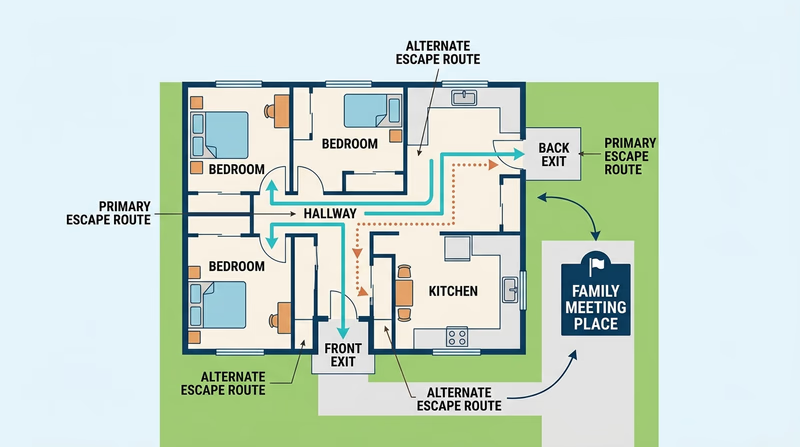
Plan escape routes from every room
A good fire-escape plan gives every sleeping area two ways out if possible. That might mean a bedroom door and a window, or a hallway route and another nearby exit. Draw the layout clearly so someone can understand it fast.
Choose one outdoor meeting place
Families waste precious time when people scatter outside and then start looking for each other. Pick one meeting place everyone knows, such as:
- the mailbox
- a tree at the edge of the yard
- a neighbor’s driveway
- the far end of the parking lot in an apartment complex
Practice the drill
A plan is only useful if people can follow it quickly. Practice moving out without stopping for pets, phones, shoes, or valuables. The goal is to get out, stay out, and meet at the agreed place.
Official Resources
Home Fire Escape Planning (website) Step-by-step advice for creating and practicing a family fire-escape plan. Link: Home Fire Escape Planning (website) — https://www.nfpa.org/education-and-research/home-fire-safety/escape-planning#safety-tips🎬 Video: Demonstration of Safely Escaping a House Fire (video) — https://www.youtube.com/watch?v=zeiN_A-OSt8&t=2s
Requirement 2f
Build the plan around your real local hazards
A good family emergency plan fits where you live. Families in wildfire areas may need fast evacuation and smoke protection. Families in tornado country need shelter locations. Coastal families may need hurricane plans. Flood-prone neighborhoods need routes that avoid low roads.
Your plan should answer:
- When do we leave or shelter?
- Who gets notified first?
- Where do we meet if separated?
- What route do we take?
- What if phones do not work?
- Who grabs pets, medication, and important documents?
Assemble or inspect the kit
An emergency supplies kit is not random camping gear thrown in a bin. It should support your family for the first stage of the emergency.
Common items include:
- water
- nonperishable food
- flashlight and extra batteries
- first-aid supplies
- medications
- weather radio or phone chargers/power banks
- copies of key documents
- hygiene supplies
- pet supplies if needed
What makes a useful family emergency kit
Think about what your family would actually need in the first 24–72 hours
- Basic survival: Water, food, light, and warmth.
- Medical needs: Prescriptions, glasses, inhalers, or other essential items.
- Communication: Chargers, battery packs, emergency contacts, and a written meeting plan.
- Local conditions: Masks for smoke, warm clothes for winter, rain gear for storms, or sturdy shoes for debris.
Be ready to explain how the plan and kit work together
Your counselor may ask, “How would your family actually use this?” Be ready with a clear example. If wildfire threatens your area, who grabs the kit, who loads pets, which route you take, and where you regroup? If a tornado warning is issued, where do you shelter and what supplies are already there?
Official Resources
Checklist for a Family Emergency Evacuation Kit (PDF) A checklist for building or inspecting the supplies your family would need during an evacuation. Link: Checklist for a Family Emergency Evacuation Kit (PDF) — https://filestore.scouting.org/filestore/Merit_Badge_ReqandRes/Requirement%20Resources/Emergency%20Preparedness/Family%20Emergency%20Kit%20Checklist%2001%202026.pdf🎬 Video: Wildfire Evacuation Planning (video) — https://youtu.be/EOXSpBkH6zE?si=TgfY5UUhvGwcB8SP
🎬 Video: How to Shelter in Place (video) — https://youtu.be/4NbejEMQ6cg
By now you have practiced the most important home safety habit: looking for problems before they become emergencies. Next, you will shift from accidents to intentional harm by learning about crime prevention and home security.