Salesmanship Merit Badge — Complete Digital Resource Guide
https://merit-badge.university/merit-badges/salesmanship/guide/
Introduction & Overview
Overview
You notice salesmanship almost every day: someone recommends a menu item, a cashier explains a rewards program, a troop raises money with popcorn, or a company convinces a store to carry a new product. Good sales is not about tricking people. It is about understanding what someone needs, explaining value clearly, and building trust.
This merit badge teaches skills that go far beyond business. You will learn how to listen, research, plan, present, follow up, and communicate with confidence. Those same skills help in school, leadership, fundraising, job interviews, and nearly every career path.
Then and Now
Then
People have been selling goods for as long as people have traded with each other. Ancient merchants carried cloth, spices, tools, and grain from one town to another. In small communities, the seller often knew the buyer personally, so reputation mattered. If a merchant exaggerated, delivered poor quality, or treated customers badly, word spread fast.
By the late 1800s and early 1900s, sales became a major profession in the United States. Traveling salespeople brought products to farms, towns, and growing cities. Catalog companies like Sears helped families compare products without visiting a big city store. As factories produced more goods, businesses needed skilled salespeople to explain why one product solved a customer’s problem better than another.
Now
Modern sales happens everywhere: retail stores, websites, school fundraisers, service businesses, software companies, and video calls between companies in different countries. Some salespeople work face-to-face. Others sell by phone, email, chat, or online meetings. Many use data, customer reviews, and market research to understand what buyers need before the first conversation even starts.
What has not changed is the human part. Customers still want honesty, clear information, respect, and a product or service that actually helps them. The tools are more advanced now, but trust is still the heart of good salesmanship.
Get Ready!
This badge gives you chances to do real selling, not just read about it. You will compare different kinds of sales, make a plan, give a presentation, interview professionals, and try a real sales project. Come ready to talk to people, take notes, practice out loud, and learn from what works.
Kinds of Salesmanship
Retail Sales
Retail sales happens when a business sells directly to the person who will use the product. Think of a clothing store, sporting goods shop, bakery, or Scout fundraiser table. Retail selling often moves quickly. The salesperson needs to greet customers, answer questions, compare options, and close the sale without being pushy.
Business-to-Business Sales
Business-to-business, or B2B, sales happens when one company sells to another company. That might be office furniture sold to a school district, food products sold to a grocery chain, or software sold to a hospital. B2B sales usually involve more research, higher prices, and more decision-makers.
Service Sales
Sometimes the thing being sold is not a physical item at all. It is a service such as lawn care, pet watching, tutoring, car washing, or website design. In service sales, the customer is buying your time, effort, reliability, and results. That means trust and follow-up matter even more.
Fundraising Sales
Scouts often see sales through fundraising. Tickets, camp cards, discount cards, and merchandise all involve explaining a purpose along with a product. In fundraising, the customer is not just buying an item. They are also supporting an event, a trip, or a program they believe in.
Next Steps
You are about to start with the big picture: what salespeople really do and how they help both customers and the economy. That foundation will make the rest of the badge much easier to understand.
Req 1 — What Great Salespeople Actually Do
This requirement covers two big ideas every Scout should understand before trying to sell anything:
- what a salesperson is responsible for
- how sales work differently when the customer is a person or a business
A good salesperson does much more than ask for money. They learn what the customer needs, explain choices clearly, answer questions honestly, and help the customer decide whether the product or service is a good fit.
Requirement 1a
A salesperson’s job starts long before the moment of purchase. Think about a Scout trying to sell camp cards, a worker helping someone choose boots at an outdoor store, or a company representative introducing a new product to a school district. In each case, the salesperson has to understand the product, listen carefully, and match the offer to what the customer actually needs.
Core responsibilities of a salesperson
A strong salesperson usually has several responsibilities at the same time:
- Learn the product or service well so answers are accurate.
- Listen to the customer instead of giving the same speech to everyone.
- Explain value clearly by connecting features to benefits.
- Be honest about price, limits, timing, and expectations.
- Complete the sale correctly with the right order, paperwork, or payment.
- Follow up afterward if questions or problems come up.
The word feature means something a product has. The word benefit means how that feature helps the customer. For example, “water-resistant fabric” is a feature. “Keeps your gear drier in light rain” is the benefit.
How salespeople serve customers
Good sales service feels helpful, not pushy. A salesperson serves customers by saving them time, reducing confusion, and helping them avoid poor choices. If a customer needs hiking shoes for rocky trails, the best salesperson does not just point to the most expensive pair. They ask questions: How often will you hike? What terrain? Any past foot problems? What budget?
That kind of service matters because customers usually know their problem better than they know the available solutions. A salesperson can bridge that gap.
What customers want from a salesperson
These habits build trust fast- Attention: The salesperson listens before recommending.
- Clarity: The explanation is simple and accurate.
- Respect: The customer is not rushed or pressured.
- Honesty: Limits and tradeoffs are explained clearly.
- Reliability: The order, promise, or service is handled correctly.
How sales helps stimulate the economy
Sales helps the economy move because it connects products and services with the people who need them. When customers buy useful things, businesses earn revenue. That revenue helps them pay workers, buy supplies, rent buildings, invest in new ideas, and serve more customers.
A simple chain looks like this:
- A business creates a product or service.
- A salesperson helps customers understand and buy it.
- The business earns income.
- Workers, suppliers, delivery companies, and other businesses also get paid.
- Those people and businesses spend money elsewhere.
That is one way money keeps circulating through the economy.
Official Resources
🎬 Video: Sales Representative Duties and Responsibilities (video) — https://youtu.be/bpuVvUZnWxE
A simple example
Imagine two Scouts selling tickets to a troop pancake breakfast. One says, “Do you want to buy tickets?” The other says, “Our troop is raising money for summer camp, and the ticket includes breakfast on Saturday from 8 to 10. Would you like to support us or come eat with us?” The second Scout is serving the customer better because the message is clearer and more useful.
Requirement 1b
This part compares two major kinds of selling.
A consumer salesperson sells directly to the person who will use the product or service. A business-to-business salesperson, often shortened to B2B, sells to another company, school, nonprofit, or agency.
Consumer sales
Consumer sales often happens in stores, online chats, fundraising tables, or short service conversations. The customer is usually deciding for themselves or their family. The sale may happen quickly, sometimes in just a few minutes.
Examples include:
- shoes sold in a sporting goods store
- movie tickets sold at a counter
- lawn care sold to a neighbor
- Scout popcorn sold to a family friend
Business-to-business sales
B2B sales often takes longer. The buyer may be purchasing for many people, spending more money, or comparing multiple vendors. A B2B salesperson may need meetings, proposals, samples, pricing discussions, and follow-up over several weeks or months.
Examples include:
- a food company selling snacks to a school district
- a paper supplier selling to an office complex
- a software company selling tools to a hospital
- a uniform company selling to a sports league
| Category | Consumer Sales | Business-to-Business Sales |
|---|---|---|
| Typical buyer | An individual or family | A company, school, or organization |
| Decision speed | Often quick | Often slower |
| Number of decision-makers | Usually one or two | Often several |
| Sales process | Shorter and simpler | More research and follow-up |
| Main focus | Personal use and convenience | Cost, performance, long-term value |
Official Resources
🎬 Video: Understanding B2C vs B2B for Beginners (video) — https://youtu.be/XEVR9zIbMiw
Why this comparison matters
Later in the badge, you will plan and present a sale. The right approach depends on the kind of customer. A neighbor choosing whether to hire you to wash a car is making a different kind of decision from a store owner deciding whether to carry a new product line.
In Req 2, you will look at what good salespeople do before and after the actual sale so they can serve customers well.
Req 2 — Research, Product Knowledge, and Follow-Up
This requirement is a strong example of an inherited-action pattern. The parent requirement gives the action — explain why it is important — and each child requirement gives a specific habit. Together, they show that good selling is mostly preparation, learning, and follow-through.
Requirement 2a
Why market research matters
A salesperson who skips market research is basically guessing. Market research means learning about the people you hope will buy, what they need, what they care about, what competitors already offer, and what problem your product or service solves.
If you are selling car-washing service in your neighborhood, research might mean noticing how many families have cars, what nearby wash options exist, what price people already pay, and what matters most to them: convenience, price, or careful work. If you are selling fundraiser tickets, research might mean learning which families usually attend, what date works best, and what message makes the event feel worth supporting.
What market research helps you avoid
Market research helps a salesperson avoid:
- trying to sell something nobody needs
- offering the wrong price or package
- using a message that does not connect
- targeting the wrong audience
- promising value the customer does not care about
Quick market research questions
Ask these before trying to sell- Who is the customer? Be specific.
- What problem do they need solved?
- What choices do they already have?
- Why would they choose this product or service?
- What price or effort feels reasonable to them?
Official Resources
🎬 Video: Market Research The Secret Ingredient for Business Success (video) — https://youtu.be/CqaFYgRGDmo
A Scout-sized example
If your troop plans to sell tickets to a spaghetti dinner but most families in the area are already busy that same night, the event may struggle even if the food is great. Good research helps you spot that problem early.
Requirement 2b
Why product knowledge matters
Customers can tell quickly whether a salesperson really knows the product. If you only know the name and price, you will struggle to answer even simple questions. Product knowledge helps you explain features, compare options, answer concerns, and recommend the right fit.
What a salesperson should know
Before trying to sell, you should know:
- what the product or service does
- who it is best for
- what makes it different from other choices
- what it costs
- how long it lasts or how it is delivered
- any important limits or conditions
For a service, this also includes how the work will be done and what the customer should expect afterward.
Official Resources
🎬 Video: 3 Keys for Successful Selling Know Your Product (video) — https://youtu.be/FDVR9MoQb44
Requirement 2c
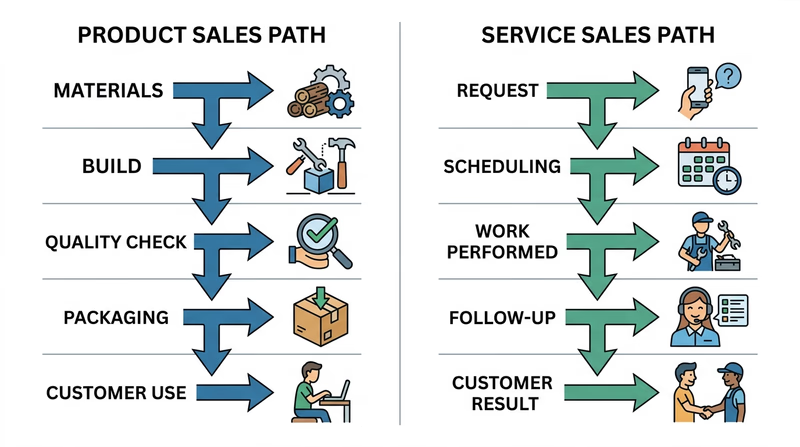
Why seeing the process matters
When a salesperson understands how something is made or how a service is delivered, their explanation becomes more believable. They can answer questions with real details instead of vague claims.
If the product is built in a factory, bakery, workshop, or print shop, seeing the process can teach you about materials, quality checks, timing, and care. If the thing being sold is a service, you may not visit a factory, but you should still understand the steps that create value for the customer.
Benefits are what the customer buys
Customers usually do not buy the process itself. They buy the result. That is why this part of the requirement focuses on the benefits of the service.
For example:
- lawn care service benefits = saved time, cleaner appearance, less physical work
- pet watching benefits = peace of mind while away
- car washing benefits = convenience and a cleaner vehicle
- fundraiser ticket benefits = support for a cause plus a fun event
Why this matters in conversation
A salesperson who understands the behind-the-scenes work can explain why the price is fair, why the timeline makes sense, and why the result has value.
Requirement 2d
Why follow-up matters
Many people think the sale ends when the money changes hands. Good salespeople know that follow-up is part of the job. A short message, phone call, or conversation after the sale shows professionalism and helps fix problems before they grow.
What good follow-up does
Following up can:
- confirm the customer got what they expected
- give the customer a chance to ask questions
- solve small problems early
- build trust for future sales
- create positive word of mouth
For a Scout selling a service, this might sound like, “Did the yard look the way you hoped? Is there anything I should do differently next time?” For a store or business sale, it might mean checking whether the product arrived on time and is working as promised.
Official Resources
🎬 Video: Why Is Following Up Important (video) — https://youtu.be/DMfH_03nR0o
Bringing the four parts together
These four habits work as a sequence:
- research the customer and market
- learn the product or service deeply
- understand how it is made or delivered
- follow up after the sale
If you skip any one of those, the whole sales process gets weaker. In Req 3, you will turn that preparation into a real sales plan.
Req 3 — Build a Sales Plan
A sales plan is like a trail map for selling. Without one, you may know the destination but still wander around. With one, you can explain who your customer is, where you will sell, what message you will use, and how you will know whether the effort worked.
In this badge, a sales territory means the group of people or the area where you will try to sell. That could be a neighborhood, a school event, a troop fundraiser table, a local business district, or another group your counselor approves.
What a strong sales plan includes
A simple sales plan should answer these questions:
- What are you selling?
- Who is most likely to buy it?
- Where will you reach those customers?
- What customer need does it meet?
- What message will you use?
- What price or offer are you presenting?
- How will you follow up?
Sales plan outline
Use these sections in your written plan- Product or service: Name it and explain it in one or two sentences.
- Target customer: Describe who is most likely to buy.
- Sales territory: Define the place, event, or group you will focus on.
- Customer need: Explain the problem solved or value offered.
- Sales approach: Describe how you will start conversations and present the offer.
- Pricing and goals: State the price and what success looks like.
- Follow-up: Explain what happens after the sale.
Start with the customer, not the product
A weak plan starts by saying, “Here is what I want to sell.” A strong plan starts by asking, “Who needs this, and why would they care?” That question connects directly to Req 2a and Req 2b. If you already understand the market and the product, your plan becomes much easier to write.
Territory matters
Two Scouts could sell the same thing in two different places and get very different results. If your territory includes a busy school event, you may use a short, energetic message. If your territory is a neighborhood service business, you may need a polite introduction, a clear flyer, and a follow-up plan.
That is why territory belongs in the written plan. It affects your message, timing, and expectations.
Presenting the plan
When you present your sales plan, your counselor is likely listening for three things:
- Is the plan organized?
- Does it fit the real customer and territory?
- Can you explain why you made those choices?
Be ready to explain not just what is in the plan, but why it makes sense.
Sales Plan Worksheet Resource: Sales Plan Worksheet — /merit-badges/salesmanship/guide/sales-plan-worksheet/Official Resources
🎬 Video: How to Write Your Marketing Plan (video) — https://youtu.be/pFG_Q7e14AA
A simple example framework
If the assigned product were tickets to a troop spaghetti dinner, a strong plan might say:
- target customer = families and neighbors who want an easy dinner and want to support Scouts
- territory = church members, families in the troop, and nearby neighbors
- message = convenient meal plus support for troop activities
- follow-up = reminder before the event and thank-you afterward
That is the kind of clear thinking your counselor wants to see. In Req 4, you will turn planning into an actual presentation.
Req 4 — Give a Sales Presentation
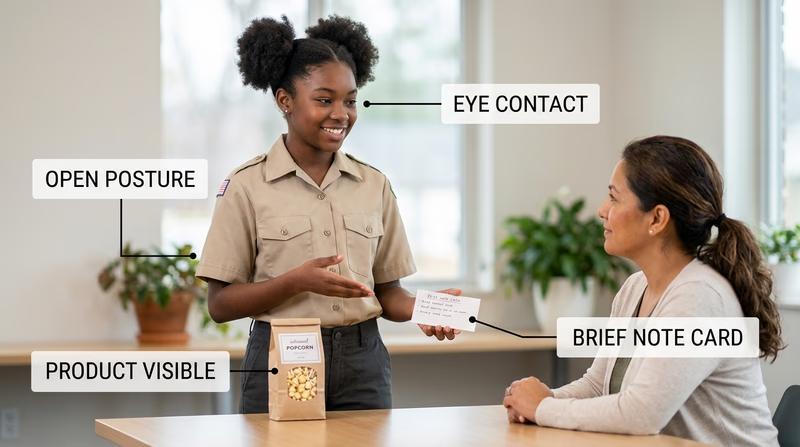
A sales presentation is not just a speech. It is a conversation designed to help someone understand why a product or service may be worth choosing. The best presentations are clear, short, honest, and focused on the customer’s needs.
If you have ever heard someone ramble about features without explaining why any of them matter, you already know what a weak presentation feels like. Your job is to do the opposite.
A simple structure that works
Most good sales presentations move through four stages:
- Open with the customer’s need
- Explain the solution clearly
- Show the value
- Ask for the sale or next step
That structure works whether you are selling fundraiser tickets, a service like dog walking, or a product your counselor assigns.
Open with a problem or goal
Start by showing that you understand what matters to the customer. For example:
- “If you want an easy dinner and also want to support local Scouts, this event does both.”
- “If your weekends are busy, this lawn service can save you time.”
- “If your team needs durable water bottles for camp, this model holds up well and is easy to clean.”
That approach feels more helpful than opening with, “Let me tell you all about this product.”
Focus on benefits, not just features
Customers care about features only when those features connect to a benefit.
| Feature | Benefit |
|---|---|
| Reusable insulated bottle | Keeps drinks cold longer |
| Ticket includes meal and drink | Makes the event easy and complete |
| Weekly lawn service | Saves time and keeps the yard consistent |
Practice sounding natural
A presentation should sound prepared, not memorized. If you try to memorize every word, you may sound stiff. If you prepare only a few points, you are more likely to sound confident and conversational.
Be ready for questions
Questions are usually a good sign. They mean the customer is thinking seriously. Prepare for likely questions about:
- price
- timing
- quality
- who the product is for
- refund or change options
- what makes it different from other choices
Closing the presentation
Closing does not mean pushing. It means helping the customer take the next step. That could be:
- “Would you like two tickets?”
- “Would next Saturday work for your yard service?”
- “Should I show you the option that fits your budget best?”
Official Resources
🎬 Video: How to Give Effective Sales Presentations (video) — https://youtu.be/8eo01Wlkd4o
Connecting back to the badge
Req 3 taught you to plan. This requirement asks you to speak. If your plan was thoughtful, your presentation will be much easier because you already know your customer, your message, and your goal.
Next you will choose a real-world sales project and put these ideas into action.
Req 5 — Choose Your Sales Project
You must choose exactly one option for this requirement. Each option gives you real practice with planning, talking to customers, handling money or pricing, and reviewing what happened afterward.
Your Options
- Req 5a — Support a Scout Fundraiser: Help your unit sell merchandise or event tickets. You will practice short customer conversations, teamwork, and cause-based selling.
- Req 5b — Sell a Neighborhood Service: Offer a service like mowing, pet watching, or car washing. You will practice setting expectations, doing the work, and following up afterward.
- Req 5c — Try Retail Selling: Earn money through retail selling. You will see how product display, customer questions, and transaction flow work in a retail setting.
How to Choose
Choosing the best option for you
Think about time, setting, and what you want to learn- Time available: Req 5a may fit an event schedule. Req 5b may take several appointments. Req 5c depends on access to a retail setting.
- Who you will talk to: Req 5a often means many short conversations. Req 5b usually means fewer but more detailed conversations. Req 5c may mean helping walk-in customers one at a time.
- What you will gain: Req 5a builds quick communication and fundraising skills. Req 5b builds trust, follow-up, and service selling. Req 5c builds product explanation and in-store customer service.
- Recordkeeping: All three options need a cost sheet. Choose the one where you can realistically track money, supplies, or time clearly.
| Option | Best for Scouts who want to… | Main challenge |
|---|---|---|
| 5a | work with a troop or event | stand out in quick customer interactions |
| 5b | run their own small service sale | manage quality and customer satisfaction |
| 5c | learn how retail selling works | explain products clearly in the moment |
Your cost sheet matters
The requirement says to keep a record (cost sheet). That means you should track the numbers behind the sale, not just whether someone bought something. Your counselor will likely want to see what was sold, what it cost, what money came in, and what the result was.
Sales Project Cost Sheet Resource: Sales Project Cost Sheet — /merit-badges/salesmanship/guide/sales-project-cost-sheet/One more decision check
Before choosing, ask yourself:
- Do I have access to this kind of sale?
- Can I complete it safely and honestly?
- Can I track the money, effort, and results clearly?
- Will I have a real chance to use the techniques from Req 1 through Req 4?
Once you choose, commit to doing that one path well.
Req 5a — Support a Scout Fundraiser
Fundraiser sales are often a Scout’s first real sales experience. You are not just offering an item. You are also explaining a purpose: camp, equipment, activities, travel, or another troop goal. That makes this option a good place to practice short, clear, confident selling.
What makes fundraiser sales different
In a fundraiser, customers may care about two things at once:
- the product or event itself
- the cause it supports
That means your message should explain both. Instead of saying only, “Would you like to buy this?” you can say, “This helps our troop earn money for camp, and the ticket also gets you dinner on Saturday.”
Prepare before you start
Know these details before talking to anyone:
- what is being sold
- the price
- where and when the event happens, if applicable
- how payment works
- what the money supports
- any deadlines or delivery plans
Fundraiser selling checklist
Be ready with these facts before your first conversation- Purpose: What is the troop raising money for?
- Offer: What exactly does the customer get?
- Price: How much does it cost?
- Timing: When is the event, delivery, or deadline?
- Payment: Cash, check, app, or another approved method?
Short conversations still need skill
Fundraiser sales often happen quickly outside a store, after a meeting, or at a community event. You may have only a few seconds to connect. A strong fundraiser pitch is brief and clear:
- greeting
- one-sentence explanation
- direct ask
- thanks, whether they buy or not
Keep a good record
Your cost sheet should track what you sold, how much money came in, and any related costs or unsold items if those apply. Clear records show that you treated the fundraiser seriously.
What to share with your counselor
When you discuss your experience, talk about:
- what message worked best
- what customers asked most often
- what was harder than expected
- how you handled rejection politely
- what you would do differently next time
If you want more independence and a stronger follow-up component, compare this option with Req 5b, where you sell a service directly to neighbors.
Req 5b — Sell a Neighborhood Service
Selling a service is different from selling a product because the customer is buying your work, reliability, and results. They cannot inspect a box on a shelf before saying yes. They have to trust that you will do the job well and finish what you promised.
Define the service clearly
Before offering the service, decide exactly what is included.
For example, “car wash” could mean:
- outside wash only
- outside wash plus wheels
- outside wash, wheels, and interior vacuum
If you do not define the service clearly, customers may expect more than you planned to provide.
Set expectations before the sale
Be clear about:
- what work you will do
- how long it should take
- how much it costs
- what supplies are included
- when you can do the work
That clarity protects both you and the customer.
Before you offer a service
Know the details before knocking on a door or sending a message- Scope: Exactly what is included?
- Price: Flat price, hourly price, or per-job price?
- Supplies: Who provides soap, bags, rake, or other materials?
- Schedule: When can you do the work?
- Quality standard: How will you know the job is finished well?
The sale is only half the job
In service sales, the work itself becomes part of your reputation. If you arrive late, rush the job, or ignore instructions, even a strong sales pitch will not matter much. This is the option where follow-up matters most because the customer has now seen the result.
Follow up after the work
This requirement specifically asks you to determine the customer’s satisfaction. That can be simple and polite:
- “Did the yard look the way you hoped?”
- “Was there anything you wanted done differently?”
- “Would you want this service again?”
The goal is not to fish for compliments. The goal is to learn whether the service met expectations.
Safety still matters
Choose a service you can do safely, with the right tools, clothing, and adult guidance when needed. Do not take on work that is beyond your age, ability, or counselor approval.
What to discuss with your counselor
When you report back, include:
- how you found the customer
- how you explained the offer
- what price you chose and why
- what the job actually involved
- what the customer said afterward
- what you learned about selling yourself and your work
This option often gives the best practice for follow-up, which connects directly back to Req 2.
Req 5c — Try Retail Selling
Retail selling means helping customers choose and buy products in a sales setting. That might be a shop, stand, booth, school store, or another approved environment. The pace is often faster than service selling because customers may arrive one after another and expect quick answers.
What retail selling teaches
Retail selling is great practice because it combines several skills at once:
- greeting customers
- learning what they need
- recommending options
- answering questions
- handling objections politely
- completing the sale efficiently
Start with observation
If you are new to retail selling, one of the smartest things you can do is observe what customers ask most often. Many questions repeat:
- “How much does this cost?”
- “What is the difference between these two?”
- “Do you have this in another size or color?”
- “How long will it last?”
When you know the usual questions, you can prepare better answers.
The retail environment matters
In retail, the product display, signs, and organization affect the sale. If the area is messy or confusing, customers may leave before asking a single question. If the products are clear and easy to compare, the sale becomes easier.
A strong retail interaction
A helpful retail salesperson usually does three things well:
- notices when a customer may need help
- asks a short useful question
- gives a recommendation without pressure
For example: “Are you looking for something for camping or everyday use?” That question can quickly point the customer toward the right product.
Retail selling habits
Simple things that help customers feel comfortable- Greet politely without crowding the customer.
- Know the products well enough to compare them.
- Listen first before recommending.
- Keep the area organized so choices are easy to see.
- Wrap up efficiently once the customer is ready.
Track your results
Since this requirement says to earn money through retail selling, keep notes on what you sold, what customers asked, and what seemed to help sales happen. Those details will make your discussion with your counselor much stronger.
Connect this option to the rest of the badge
Retail selling uses almost every idea from earlier requirements:
- Req 1 = understand the role of the salesperson
- Req 2 = know the customer and the product
- Req 3 = think ahead about your plan
- Req 4 = present value clearly in person
If you want to learn from professionals next, Req 6 gives you two interview paths that show how sales works in the real world.
Req 6 — Choose an Interview Path
You must choose exactly one interview path for this requirement. Both options teach you how sales works in the real world, but they show it from different sides.
Your Options
- Req 6a — Interview a Sales Professional: Learn directly from someone whose job is selling. You will hear about motivation, customer conversations, sales process, and daily habits from the salesperson’s point of view.
- Req 6b — Interview a Store Owner: Learn from the buyer’s side. You will find out how often owners hear pitches, what they want from sales representatives, and what makes them decide to open an account.
How to Choose
Choosing your interview path
Both options are valuable, but they teach different things- Choose Req 6a if you want to understand daily life in sales and hear how professionals build trust with customers.
- Choose Req 6b if you want to understand how buyers judge sales representatives and make business decisions.
- Choose the easier real contact if one option is much more realistic for you to arrange.
- Think ahead to Req 7 because either interview can help you understand sales as a career.
| Option | Main point of view | What you will gain |
|---|---|---|
| 6a | Seller | insight into motivation, customer conversations, and sales method |
| 6b | Buyer | insight into how professionals judge sales reps and decide what to carry |
Prepare before the interview
No matter which path you choose, do not show up with only the requirement text in your hand. Read the questions ahead of time, think about what each one is really trying to teach, and be ready to ask follow-up questions when the interviewee says something interesting.
🎬 Video: How to Conduct an Interview (video) — https://youtu.be/kO9WcdINoRk
Take notes like a reporter
Bring a notebook or a printed question sheet. Record short quotes, key examples, and anything that surprised you. Good notes will help you explain your interview clearly to your counselor later.
In the next pages, you will see what each interview path is trying to teach you.
Req 6a — Interview a Sales Professional
This page follows an inherited-action pattern. The parent requirement tells you to interview a salesperson, and the numbered parts show what you should learn from that conversation. The goal is not to rush through the questions. The goal is to understand how a real person thinks about the work.
Before the interview
Choose someone who really sells for part of their job or all of it. That could be someone in retail, insurance, real estate, fundraising, wholesale supply, technology, or another field your counselor approves.
Send your request politely. Say who you are, which merit badge you are working on, how long the interview should take, and whether you can meet in person, by phone, or by video.
Requirement 6a1
Why ask about motivation?
This question helps you learn whether the person chose sales because of income, independence, competition, communication, relationship-building, product interest, or another reason. It shows that sales is not one single kind of career story.
What to listen for
Listen for turning points. Did they discover they liked talking with people? Did they start in another job and move into sales? Did they care strongly about the product they were selling?
Requirement 6a2
What this question reveals
This is where you will often hear the best practical advice. Experienced salespeople may mention listening, honesty, patience, preparation, empathy, or confidence. Compare what they say to what you learned in Req 1 and Req 4.
Good follow-up questions
You might ask:
- “What mistakes do beginners make most often?”
- “How do you recover when a conversation goes badly?”
- “How do you know when to stop talking and listen?”
Requirement 6a3
Why process matters
This question shows you the real sales process. Does the person sell face-to-face, online, by phone, or through repeat customers? Is it a quick sale or a long one with multiple meetings? Do they demonstrate the product? Send quotes? Follow up by email?
Understanding the process helps you see the difference between simple and complex sales.
Requirement 6a4
Ask questions that show curiosity
Your own questions are your chance to learn something personal and specific, not just complete the checklist. Strong custom questions might include:
- What skills matter most in your job?
- What part of sales is hardest?
- How do you handle rejection?
- What does a successful day look like?
- What should a teenager practice now if they may want to work in sales later?
Interview habits that help
These make you sound prepared and respectful- Ask one question at a time so the interviewee can answer clearly.
- Take notes instead of trusting your memory.
- Use follow-up questions when an answer gets interesting.
- Thank the person afterward for their time and advice.
Pulling the interview together
When you share this with your counselor, do more than list answers. Point out what surprised you, what matched the badge, and what changed your view of sales.
If you want to compare the seller’s point of view with the buyer’s point of view, the next page shows how a store owner may judge sales representatives very differently.
Req 6b — Interview a Store Owner
This option flips the viewpoint. Instead of hearing from the person doing the selling, you hear from the person being approached by sales representatives. That helps you understand what buyers value, what annoys them, and what earns their trust.
Requirement 6b1
Why frequency matters
This question shows how competitive selling can be. A store owner may hear from sales representatives constantly, especially if the store carries products many vendors want to place. That means a salesperson often has to be clear, respectful, and memorable just to get attention.
What to listen for
If the owner says they get approached often, ask what makes one representative stand out from the rest. If they say it happens only sometimes, ask why that may be true in their kind of business.
Requirement 6b2
Good traits sales representatives should have
Owners often value traits like:
- honesty
- product knowledge
- respect for the owner’s time
- prompt follow-up
- clear communication
- listening before pitching
Habits owners usually dislike
Owners often want sales representatives to avoid:
- talking too much without listening
- exaggerating claims
- showing up unprepared
- wasting time on products that are a poor fit
- becoming pushy after hearing no
Official Resources
🎬 Video: Top 5 Traits of Great Sales People (video) — https://youtu.be/OjCnfTSrq1s
Requirement 6b3
What “establish an account” means
To establish an account means to begin an ongoing business relationship. The owner is deciding whether to order from that representative or company now and possibly again in the future.
Factors the owner may consider
The decision may involve:
- product quality
- price and profit margin
- reliability of delivery
- demand from customers
- return policy or support
- professionalism of the representative
This question helps you see that sales is not just personality. It also involves logistics, trust, and business value.
Requirement 6b4
Ask buyer-side questions that go deeper
Try questions like:
- What makes you give a new sales rep a chance?
- What is the fastest way for a rep to lose your trust?
- Do you prefer email, phone, or in-person contact first?
- How do you tell whether a product is really a fit for your customers?
What this interview can teach you
Watch for these themes in the owner's answers- Trust: What earns it and what breaks it?
- Preparation: How much does product knowledge matter?
- Respect: How should reps use the owner’s time?
- Fit: Why do some products get rejected even if they are good?
Use the interview to sharpen your own selling
This option can improve your own sales quickly because you hear directly what buyers appreciate and what they avoid. Many of those answers will connect back to Req 2, especially research, product knowledge, and follow-up.
After learning from professionals, the last requirement asks you to look at sales as a possible career path.
Req 7 — Explore Sales Careers
Sales includes much more than cash registers and cold calls. People work in retail sales, technical sales, real estate, insurance, fundraising, account management, wholesale supply, advertising, recruiting, and many other roles. Some careers are fast-paced and public-facing. Others involve longer relationships and deep product expertise.
This requirement covers two connected tasks:
- describe your own qualifications and experience so far
- talk honestly about how to prepare for a sales role in the future
Requirement 7a
This is like a first draft of a resume or personal summary. You are not expected to have a long job history. Your goal is to show evidence that you are building useful skills.
What counts as qualifications?
For a Scout, qualifications might include:
- communication skills
- leadership roles in your troop
- customer-facing volunteer work
- school classes such as business, marketing, speech, economics, or computer applications
- merit badges that show related strengths
Related merit badges might include Communication, Entrepreneurship, American Business, Public Speaking if your program offers it, and of course Salesmanship.
Keep the statement specific
Instead of writing, “I am hardworking,” prove it with examples:
- “Served as patrol leader and organized menus and duty rosters”
- “Helped sell tickets for a troop event”
- “Completed school projects that required speaking in front of a group”
Include these in your written statement
Short and specific is better than long and vague- Contact and basic identity information if your counselor asks for a resume-style format
- School classes that connect to communication, business, or technology
- Leadership and service experience
- Merit badges and activities that support sales-related skills
- A few strengths backed by real examples
Official Resources
🎬 Video: Easy Guide to Writing a High School Student Resume (video) — https://youtu.be/-z4v-Dw7n50
Requirement 7b
This part is about looking ahead. Different sales roles require different preparation. Some entry-level retail roles provide training on the job. Other roles, such as technical sales or pharmaceutical sales, may require college coursework, industry knowledge, or certifications.
Education and training that can help
Useful preparation can include:
- business, marketing, economics, or communication classes
- writing and speech practice
- customer service jobs or volunteer roles
- learning spreadsheets, presentations, or basic data tools
- product-specific training in a field you care about
Experience matters too
Sales employers often care about proof that you can communicate, stay organized, and work with people. A school club role, troop leadership, retail job, fundraiser, or service business can all build that proof.
Official Resources
🎬 Video: How to become a Highly Paid Salesperson (video) — https://youtu.be/frRl9nrntpM
🎬 Video: Is Sales the Perfect Career for YOU? Career Deep Dive (video) — https://youtu.be/2iQ6clokEPo
Bring your own reflection
By the time you finish this requirement, try to answer these questions for yourself:
- Which kind of sales seems most interesting to me?
- What skills do I already have?
- What skills do I still need to build?
- What is one realistic next step this year?
That reflection is what turns the badge from an assignment into career exploration.
Extended Learning
Congratulations!
You have worked through a badge that most people think they understand until they actually try it. Salesmanship is not just talking. It is preparation, listening, timing, problem-solving, and trust. Once you start noticing those skills in daily life, you will see them everywhere.
Why Trust Beats Pressure
Many weak sellers try to create pressure because they do not know how to create confidence. Strong sellers do the opposite. They lower uncertainty by being clear, accurate, and respectful.
That matters because buying always includes some risk. The customer may wonder:
- Will this work the way I hope?
- Is the price fair?
- Is this person being honest with me?
- What happens if something goes wrong?
Trust answers those questions. Pressure tries to hide them.
If you keep only one lesson from this badge, let it be this: a sale that depends on confusion or pressure is weak. A sale based on trust is much more likely to lead to repeat customers and strong recommendations.
The Psychology of Value
People do not buy based only on price. They buy based on value, which is their judgment of whether the result is worth the money, time, and effort.
That is why a more expensive product can still be the better sale if it lasts longer, solves the problem better, or saves frustration. It is also why a cheaper option may still lose if it feels unreliable.
Learning to explain value is one of the most useful communication skills in life. You use it when asking for support for a fundraiser, proposing an idea to a teacher, or explaining why your patrol should try your plan.
Sales Ethics in the Real World
Sales becomes harmful when people exaggerate claims, hide important details, pressure vulnerable customers, or push products that are a poor fit. That is why ethics matters.
Ethical selling means:
- telling the truth
- being clear about limits
- respecting a no
- recommending the right fit, not just the highest price
- fixing mistakes when possible
This is not just a moral issue. It is also practical. Businesses and people who earn a reputation for honesty tend to last longer.
Communication Skills That Transfer Everywhere
The skills behind salesmanship show up far beyond sales jobs:
- interviews
- leadership roles
- fundraising
- event planning
- customer service
- entrepreneurship
- team projects at school
When you learn to listen carefully, ask good questions, explain value, and follow up reliably, you become easier to work with in almost any setting.
Real-World Experiences
Shadow a local small-business owner
Ask how they attract customers, handle repeat business, and decide what to promote. You will see that sales and operations are closely connected.
Volunteer for a troop or school fundraiser
Try writing the message, organizing the booth, or tracking results. Fundraising is one of the easiest real places to practice ethical salesmanship.
Visit a local chamber of commerce event
Business networking events show how adults introduce themselves, describe value quickly, and build professional relationships.
Help with a school store or concession stand
That setting gives quick feedback on customer questions, product display, pricing, and transaction flow.
Organizations
SCORE
Provides mentoring and free business education for entrepreneurs and small businesses. Great for learning how selling fits into business planning.
U.S. Small Business Administration
Offers practical guidance on market research, planning, and understanding customers. Helpful if salesmanship leads you toward entrepreneurship.
Future Business Leaders of America (FBLA)
A student organization that helps young people practice communication, leadership, business planning, and competitive events.
CareerOneStop
A career exploration site sponsored by the U.S. Department of Labor, with information on sales jobs, training, and skill pathways.
Bureau of Labor Statistics Occupational Outlook Handbook
Reliable career information on sales roles, pay ranges, and expected job growth across different industries.