Req 2 — Research, Product Knowledge, and Follow-Up
This requirement is a strong example of an inherited-action pattern. The parent requirement gives the action — explain why it is important — and each child requirement gives a specific habit. Together, they show that good selling is mostly preparation, learning, and follow-through.
Requirement 2a
Why market research matters
A salesperson who skips market research is basically guessing. Market research means learning about the people you hope will buy, what they need, what they care about, what competitors already offer, and what problem your product or service solves.
If you are selling car-washing service in your neighborhood, research might mean noticing how many families have cars, what nearby wash options exist, what price people already pay, and what matters most to them: convenience, price, or careful work. If you are selling fundraiser tickets, research might mean learning which families usually attend, what date works best, and what message makes the event feel worth supporting.
What market research helps you avoid
Market research helps a salesperson avoid:
- trying to sell something nobody needs
- offering the wrong price or package
- using a message that does not connect
- targeting the wrong audience
- promising value the customer does not care about
Quick market research questions
Ask these before trying to sell
- Who is the customer? Be specific.
- What problem do they need solved?
- What choices do they already have?
- Why would they choose this product or service?
- What price or effort feels reasonable to them?
Official Resources
🎬 Video: Market Research The Secret Ingredient for Business Success (video) — https://youtu.be/CqaFYgRGDmo
A Scout-sized example
If your troop plans to sell tickets to a spaghetti dinner but most families in the area are already busy that same night, the event may struggle even if the food is great. Good research helps you spot that problem early.
Requirement 2b
Why product knowledge matters
Customers can tell quickly whether a salesperson really knows the product. If you only know the name and price, you will struggle to answer even simple questions. Product knowledge helps you explain features, compare options, answer concerns, and recommend the right fit.
What a salesperson should know
Before trying to sell, you should know:
- what the product or service does
- who it is best for
- what makes it different from other choices
- what it costs
- how long it lasts or how it is delivered
- any important limits or conditions
For a service, this also includes how the work will be done and what the customer should expect afterward.
Official Resources
🎬 Video: 3 Keys for Successful Selling Know Your Product (video) — https://youtu.be/FDVR9MoQb44
Requirement 2c
Why seeing the process matters
When a salesperson understands how something is made or how a service is delivered, their explanation becomes more believable. They can answer questions with real details instead of vague claims.
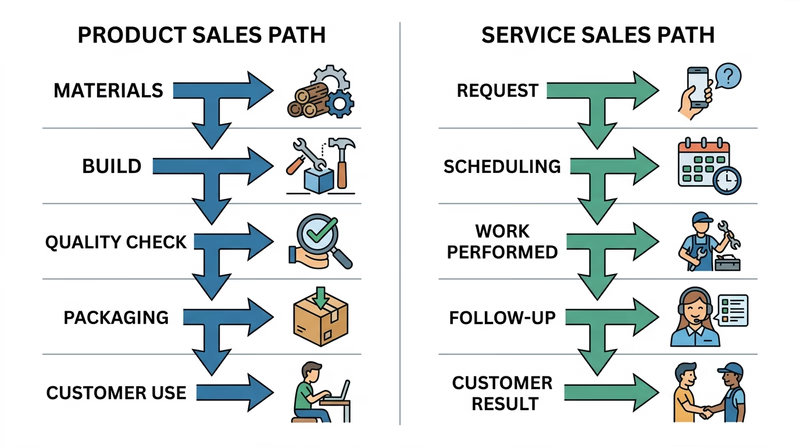
If the product is built in a factory, bakery, workshop, or print shop, seeing the process can teach you about materials, quality checks, timing, and care. If the thing being sold is a service, you may not visit a factory, but you should still understand the steps that create value for the customer.
Benefits are what the customer buys
Customers usually do not buy the process itself. They buy the result. That is why this part of the requirement focuses on the benefits of the service.
For example:
- lawn care service benefits = saved time, cleaner appearance, less physical work
- pet watching benefits = peace of mind while away
- car washing benefits = convenience and a cleaner vehicle
- fundraiser ticket benefits = support for a cause plus a fun event
Why this matters in conversation
A salesperson who understands the behind-the-scenes work can explain why the price is fair, why the timeline makes sense, and why the result has value.
Requirement 2d
Why follow-up matters
Many people think the sale ends when the money changes hands. Good salespeople know that follow-up is part of the job. A short message, phone call, or conversation after the sale shows professionalism and helps fix problems before they grow.
What good follow-up does
Following up can:
- confirm the customer got what they expected
- give the customer a chance to ask questions
- solve small problems early
- build trust for future sales
- create positive word of mouth
For a Scout selling a service, this might sound like, “Did the yard look the way you hoped? Is there anything I should do differently next time?” For a store or business sale, it might mean checking whether the product arrived on time and is working as promised.
Official Resources
🎬 Video: Why Is Following Up Important (video) — https://youtu.be/DMfH_03nR0o
Bringing the four parts together
These four habits work as a sequence:
- research the customer and market
- learn the product or service deeply
- understand how it is made or delivered
- follow up after the sale
If you skip any one of those, the whole sales process gets weaker. In Req 3, you will turn that preparation into a real sales plan.