 Getting Started
Introduction & Overview
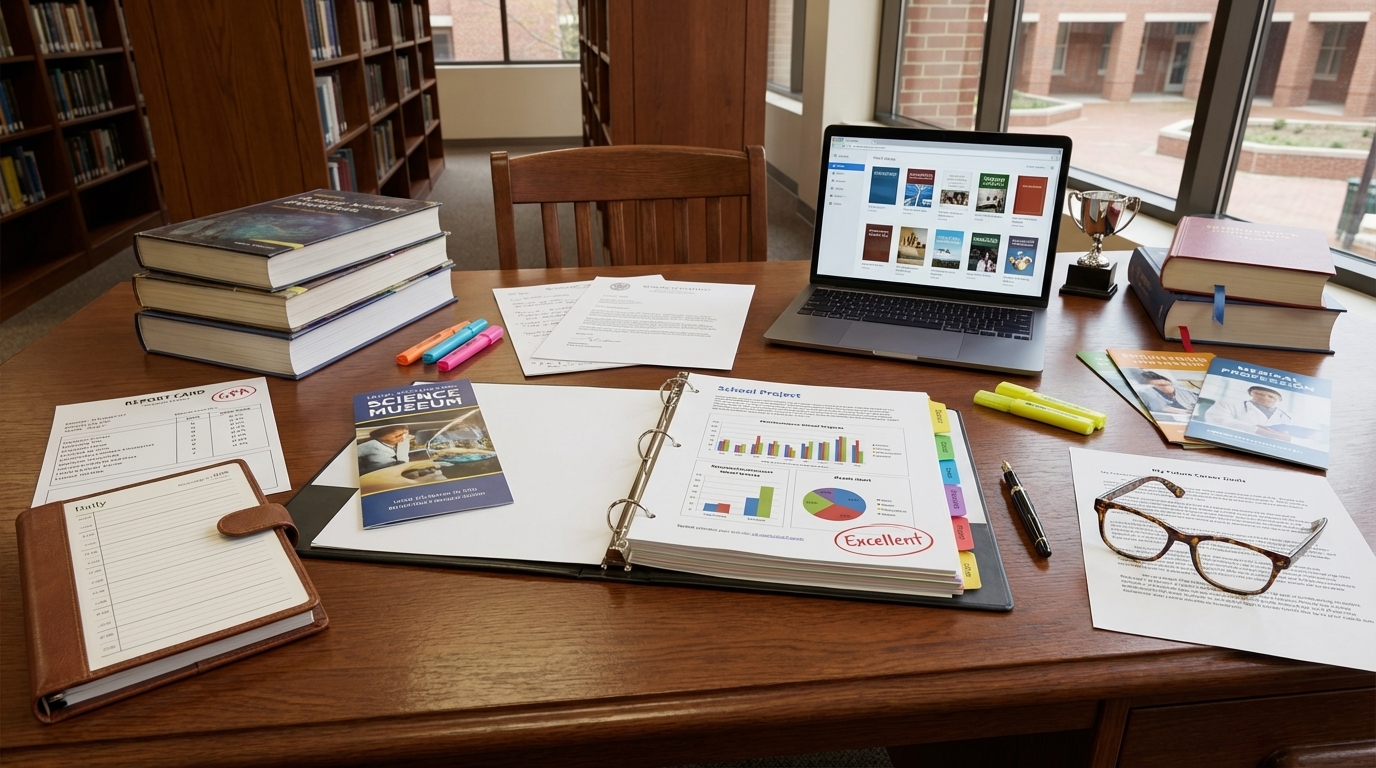
Scholarship is more than getting good grades. It is the habit of taking learning seriously, asking better questions, managing your time, and using what you learn to help shape your future. This merit badge helps you look at school not as a list of assignments, but as training for the kind of person you want to become.
A strong student is not always the one who finds everything easy. Often, it is the one who keeps going, improves, stays organized, and learns from other people and places. In this guide, you will think about grades, time management, teamwork, research, and the connection between school and real life.
Then and Now
Then
For most of history, formal education was available to only a small part of the population. In many places, learning happened through apprenticeships, religious instruction, family traditions, or one-room schools. A young person might learn math by helping with a store ledger, writing by copying letters, and science by working on a farm or in a workshop.
As public education expanded in the 1800s and 1900s, more students gained access to libraries, laboratories, textbooks, and trained teachers. School became one of the main ways communities prepared young people for citizenship, work, and leadership. Scholarship came to mean not only memorizing facts, but showing steady effort, good habits, and a willingness to keep learning.
Now
Today, students learn in more places than ever. A classroom still matters, but so do museums, public libraries, online databases, documentaries, interviews, clubs, and community projects. You can take notes on paper, organize assignments in an app, and watch an expert explain a hard topic from across the world.
That also means scholarship takes judgment. You need to sort strong sources from weak ones, use technology honestly, and choose study habits that actually help you learn. In a world full of information, real scholarship means being curious, organized, and trustworthy.
Get Ready!
This badge asks you to look honestly at how you learn. Some parts may feel easy, like showing a planner or talking about a school activity. Other parts may push you to reflect on your grades, your habits, or where you want your education to take you next. That is the point. Scholarship grows when you pay attention to your own progress.
Kinds of Scholarship
Classroom Scholarship
This is the kind most people think of first: doing assignments carefully, participating in class, studying for tests, and keeping your grades strong. Classroom scholarship is built from small habits repeated over time. Showing up prepared, asking for help early, and reviewing mistakes often matter more than one big burst of effort the night before a test.
Independent Scholarship
Some learning happens because a teacher assigned it. Some happens because you decided to learn more. Visiting a museum, reading extra articles, listening to an expert interview, or exploring a subject at the public library all count as independent scholarship. This badge gives you chances to practice that kind of self-directed learning.
Practical Scholarship
Good students do more than absorb information. They use it. A planner helps you turn deadlines into action. Research skills help you compare sources. Teamwork helps you contribute to projects. Writing helps you explain what you think. Practical scholarship is where school skills become life skills.
Future-Focused Scholarship
Education is not only about this semester. The classes you take, the habits you build, and the interests you explore can open doors later. Whether you are interested in trades, college, the military, entrepreneurship, public service, or something you have not discovered yet, scholarship gives you more choices.
What Strong Scholarship Usually Looks Like
These habits show up again and again throughout this badge
- Consistency: You do the work steadily instead of waiting for panic mode.
- Curiosity: You look beyond the minimum and try to understand how things connect.
- Organization: You keep track of deadlines, notes, and materials.
- Reflection: You notice what helps you learn and what gets in your way.
- Integrity: You use sources honestly and produce work that is truly yours.
You have the big picture. Now it is time to choose how you will show academic progress for Requirement 1.