Scuba Diving Merit Badge — Complete Digital Resource Guide
https://merit-badge.university/merit-badges/scuba-diving/guide/
Introduction & Overview
Scuba diving lets you do something humans were never built to do on our own: breathe underwater long enough to explore a different world. In this badge, you will learn that scuba is not just about cool gear or colorful fish. It is about judgment, training, teamwork, and respect for an environment that can be amazing and unforgiving at the same time.
A good diver stays curious and disciplined. You notice small problems early, follow the plan, and never treat safety like an extra. That mindset will matter in every requirement that follows.
Then and Now
Then
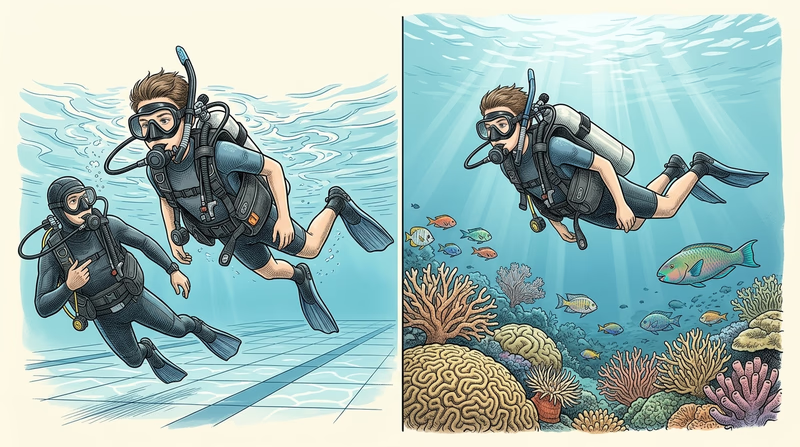
For most of human history, underwater exploration was short, shallow, and risky. Ancient divers collected sponges, pearls, and shells by holding their breath. Later, heavy diving helmets and surface-supplied air hoses let people work underwater longer, but those systems were bulky and expensive.
Modern scuba changed everything in the 1940s, when Jacques Cousteau and Emile Gagnan helped develop the Aqua-Lung. A diver could now carry compressed air on their back and move freely underwater. That turned diving from a specialized job into something ordinary people could learn.
Now
Today, scuba diving supports recreation, science, conservation, photography, rescue work, archaeology, and industry. Divers map reefs, study shipwrecks, inspect bridges, film marine life, and remove trash from underwater habitats. At the same time, training standards and equipment are much better than they used to be.
Even with all that progress, scuba still depends on the same basic truth: the underwater world does not forgive carelessness. Good divers rely on preparation, buddy awareness, slow decision-making, and respect for limits.
Get Ready!
This badge is one of the most hands-on experiences in Scouting. You will talk about first aid, practice emergency thinking, earn a real certification, and connect classroom knowledge to real dives. Come ready to listen carefully, practice patiently, and ask questions when something does not make sense.
Kinds of Scuba Diving
Pool and Confined-Water Training
Every diver starts in a controlled setting. Pools and calm confined-water sites let you learn mask clearing, buoyancy control, regulator recovery, buddy checks, and emergency procedures without currents, waves, or low visibility adding extra pressure.
Open-Water Recreational Diving
This is what most people picture first: reef dives, lake dives, quarry dives, boat dives, and vacation dives. Recreational open-water divers explore for fun, usually within training limits, while using the buddy system and standard safety procedures.
Cold-Water and Low-Visibility Diving
Not every dive happens in tropical blue water. Many divers train in lakes, quarries, rivers, and coastal water where visibility is limited and temperatures are low. These dives require extra attention to exposure protection, communication, navigation, and comfort.
Drift and Boat Diving
Some dives happen where the water is moving. In a drift dive, the current carries divers along while they stay together and follow the plan. Boat diving adds its own skills too: entries, exits, timing, seasickness management, and awareness around propellers and ladders.
Scientific, Conservation, and Professional Diving
Some divers count fish, study coral health, recover artifacts, inspect structures, or teach new students. You will explore some of those career paths in Req 6, but it helps to know from the start that scuba can be a tool for service and science, not just recreation.
Next Steps
The first requirement builds the safety foundation for the entire badge. You will look at diving-specific emergencies, then connect that knowledge to CPR skills you can demonstrate with your counselor.
Req 1 — Dive Safety Starts Here
This requirement covers two safety skills that support everything else in the badge:
- Recognizing dive-related injuries and illnesses before they get worse
- Knowing when CPR is needed and how to prepare for a proper demonstration
A scuba problem rarely starts with a dramatic movie moment. More often, it starts with something small: a diver who is too cold, too tired, breathing too fast, ignoring ear pain, or not paying attention to a buddy. Good divers learn to catch the early warning signs.
Requirement 1a:
Scuba first aid is about two things at once: recognizing what kind of problem is happening and acting early enough to keep it from becoming an emergency. Some dive problems are caused by cold or heat. Some come from pressure changes. Others happen because a diver is worn down before the dive even starts.
Cold, heat, and hydration problems
Hypothermia can happen faster than new divers expect because water pulls heat away from the body much faster than air. A diver may start by shivering, fumbling with gear, or speaking unclearly. The right first-aid response is to end the dive, get the diver dry, remove wet exposure clothing if possible, protect them from wind, and begin gradual warming.
At the other extreme, divers can overheat before they even enter the water. Hauling gear, standing in the sun, and wearing a thick wetsuit on deck or on shore can lead to heat exhaustion, dehydration, and poor decisions. Warning signs include headache, dizziness, nausea, weakness, or unusually heavy sweating. Move the diver to shade, cool them, loosen gear, and help them rehydrate if they are awake and able to drink.
Breathing and pressure problems
Hyperventilation means breathing too fast or too shallow. Anxiety can trigger it before a dive or on the surface. A diver may feel lightheaded, panicky, or tingly. Help them stop the activity, get into a calm position, and slow their breathing. A diver who cannot settle down should not continue with the dive.
Squeezes happen when pressure changes are not equalized. The most common places are the ears, sinuses, and mask area. Pain is an early warning sign, not something to “push through.” A diver with squeeze symptoms should stop descending. If symptoms continue after the dive, they need medical evaluation.
Decompression illness happens when dissolved gases form bubbles in the body after a dive. Signs can include joint pain, unusual tiredness, skin changes, numbness, confusion, or trouble breathing. That is not a “wait and see” problem. Keep the diver at rest, activate emergency help, give oxygen if trained personnel and equipment are available, and follow emergency guidance.
Nitrogen narcosis affects thinking and judgment at depth. A diver may act overconfident, slow, silly, or confused. The fix is not arguing underwater. It is ascending in a controlled way with the buddy and instructor or dive leader following training and the plan.
Early warning signs divers should never ignore
Small symptoms often come before bigger emergencies- Cold stress: Shivering, clumsy hands, or slurred speech.
- Heat stress: Headache, dizziness, nausea, or unusual fatigue.
- Pressure trouble: Ear pain, sinus pain, or mask discomfort during descent.
- Gas-related trouble: Confusion, unusual behavior, numbness, or breathing difficulty after a dive.
- General stress: Panic, motion sickness, or exhaustion that makes a diver less able to follow directions.
Fatigue, overexertion, and motion sickness
Tired divers make bad choices. Fatigue can come from travel, poor sleep, dehydration, or several dives in a short period. Overexertion can happen while swimming against current, climbing a boat ladder in full gear, or struggling at the surface. First aid starts by stopping the work, helping the diver rest, breathing calmly, and getting out of the environment that is causing the stress.
Motion sickness may start before the dive and can leave a diver weak and distracted. A diver who feels miserable on a rocking boat is more likely to rush gear checks or forget simple steps. That is a safety issue, not just an inconvenience.
Aquatic life injuries and minor wounds
Most aquatic life injuries happen because someone touched, grabbed, stepped on, or crowded an animal. Good prevention starts with distance and buoyancy control. For stings, bites, or punctures, get the diver out of the water safely, rinse and protect the wound as appropriate, and seek medical help when symptoms are serious, unusual, or worsening.
Cuts and scrapes may sound minor, but salt water, boat decks, coral, and equipment edges can turn a small wound into a bigger problem. Clean the area, control bleeding, protect the wound, and watch for infection.
American Red Cross — First Aid Steps Trusted first-aid guidance that helps you review symptoms, priorities, and basic care for many injuries and illnesses. Link: American Red Cross — First Aid Steps — https://www.redcross.org/get-help/how-to-prepare-for-emergencies/types-of-emergencies/first-aid.htmlRequirement 1b:
A diver can have a breathing emergency on a boat, dock, beach, or pool deck. That is why CPR belongs in a scuba badge. Your job here is not to become casual about CPR. It is to understand that CPR is used only in a very specific kind of emergency, and that your counselor expects you to demonstrate it correctly on a training manikin.
When CPR is used
CPR is for a person who is unresponsive and not breathing normally. Depending on your training, you may also hear this described as a person who shows no signs of life. You do not start CPR on someone who is talking, coughing, or breathing normally, even if they are scared or weak.
Recognizing the situation means slowing down and checking the basics:
- Is the scene safe enough for you to help?
- Does the person respond when you shout and tap?
- Are they breathing normally, or only gasping?
- Has someone called 911 and brought an AED if one is available?
What your counselor wants you to explain
Your explanation should show judgment, not just memorized words. A strong answer sounds like this: “I perform CPR when the person is unresponsive and not breathing normally. I recognize that by checking for responsiveness, looking for normal breathing, and calling for emergency help and an AED right away.”
That is different from saying, “CPR is what you do in any emergency.” It is not. CPR is for a very specific life-threatening situation.
What the demonstration is really testing
When you demonstrate CPR on a training device, your counselor is looking for calm, correct sequence and solid technique. They want to see that you can:
- recognize the emergency
- call for help or direct someone else to do it
- position your hands correctly
- give steady compressions with proper depth and rhythm according to your training
- use the training device the way you were taught
You do not need to guess at technique. Use the exact method your instructor or counselor approved in training.
American Red Cross — CPR Training Overview of CPR training and why hands-on practice matters for real emergencies. Link: American Red Cross — CPR Training — https://www.redcross.org/take-a-class/cpr/cpr-trainingThe rest of this badge assumes you can stay calm around water, stress, and emergency thinking. Next, make sure your swimming ability is strong enough to support real scuba training.
Req 2 — Swimming Before Scuba
Scuba starts with swimming for a simple reason: the water does not care what kind of tank is on your back. If your mask floods, you lose a fin, the boat drifts, or you need to help a buddy on the surface, basic comfort in the water becomes a safety skill.
The Swimming merit badge gives you that base. It teaches confidence, floating, controlled movement, rescue awareness, and respect for water conditions. Scuba training adds equipment and pressure-related skills on top of that foundation, but it does not replace it.
Why swimming comes first
A strong swimmer is less likely to panic when something unexpected happens. Panic is dangerous in scuba because it can make a diver breathe too fast, ignore the buddy system, bolt upward, or miss simple instructions.
Swimming ability supports scuba in several practical ways:
- you can stay calm on the surface while adjusting gear
- you can move efficiently without wasting energy
- you understand how your body behaves in water
- you have already practiced water safety habits before adding scuba equipment
🎬 Video: How To MASTER Swimming + Water Confidence (Navy SEAL, Air Force Pararescue) — SOFPrepCoach — https://www.youtube.com/watch?v=CqCfZSHw31U
What swimming prepares you to do as a diver
These are the habits that carry into scuba training- Stay relaxed in the water even when you are tired or surprised.
- Control your body position instead of thrashing or fighting the water.
- Use energy wisely so you do not exhaust yourself before the dive is done.
- Respect safety systems such as buddy awareness, supervision, and clear signals.
What your counselor is really checking
This requirement is not asking you to compare badges. It is checking whether you have completed the right preparation in the right order. By the time you discuss later scuba requirements, your counselor should know that you already have proven basic water ability through the Swimming merit badge.
That matters because later requirements assume you can focus on dive judgment, ecosystems, and certification experiences without still struggling with basic water confidence.
How to use this requirement well
If you have not earned Swimming yet, treat it as part of your scuba preparation, not as a delay. The more natural the water feels to you, the easier it is to pay attention to breathing, buoyancy, buddy checks, and underwater communication later.
If you already earned it, think back to the parts that will matter most for scuba: controlled breathing, floating, surface swimming, and staying calm while following directions.
Scouting America — Aquatics Overview of Scouting aquatics programs and the safety systems that support swimming and water activities. Link: Scouting America — Aquatics — https://www.scouting.org/health-and-safety/aquatics/ Scuba Diving Merit Badge Pamphlet The official pamphlet for this badge, useful for reviewing how swimming readiness connects to scuba training. Link: Scuba Diving Merit Badge Pamphlet — https://filestore.scouting.org/filestore/Merit_Badge_ReqandRes/Pamphlets/Scuba%20Diving.pdfWith that water foundation in place, you are ready to look at the code of conduct that guides safe diver behavior above and below the surface.
Req 3 — The Scuba Diver's Code
Scuba safety is not only about gear and skills. It is also about habits. The Scuba Diver’s Code is a short way of saying, “This is how responsible divers think before, during, and after a dive.” If you can explain why each point matters, you are much closer to thinking like a real diver.
The Scuba Diver’s Code
Most dive accidents do not happen because one rule was missing from a poster. They happen because someone rushed, skipped a check, ignored limits, separated from a buddy, or kept going when conditions said stop. The code exists to prevent that chain of mistakes.
A Scout:
- maintains good mental and physical fitness for scuba diving.
- keeps dive skills sharp through continuing education.
- seeks professional orientation before diving at unfamiliar dive locations.
- seeks training before attempting specialized types of diving, such as night diving, cavern and cave diving, wreck diving, and deep diving.
- adheres to the buddy system throughout every dive.
- uses and is familiar with complete, well-maintained, and reliable equipment.
- always dives no deeper than the recommended depth for their certification level, experience, and Scouting America age requirement.
- always follows the time limits listed by special dive tables or a dive computer for a particular depth.
- is a S.A.F.E. diver—Slowly Ascends From Every dive—and makes a safety stop at 15 feet for three minutes at the end of each dive before surfacing.
- breathes properly while diving, never holding a breath or skipping breathing.
- knows and obeys local diving laws and regulations, including fish and game laws and dive-flag laws.
- understands and respects aquatic life, considers how human interactions affect it, and dives carefully to protect fragile aquatic ecosystems.
Why each guideline matters
Your counselor will want more than a recitation. Be ready to explain how each point prevents a real problem in the water, on the boat, or at the dive site.
Fitness and sharp skills
A diver who is sick, exhausted, dehydrated, overheated, or distracted is more likely to make mistakes. In scuba, small mistakes can build fast. Physical readiness is not about looking athletic. It is about having the attention, energy, and calm breathing needed to follow the plan.
The code also says to keep dive skills sharp through continuing education. That matters because skills fade if you do not use them. Refreshers, supervised practice, and additional training help divers react correctly instead of hesitating when something goes wrong.
Orientation, training, and limits
A diver should not treat unfamiliar water like a surprise adventure. Local professionals know site-specific hazards such as current, surf entry problems, boat traffic, low visibility, or fragile habitat zones. Seeking orientation before diving a new place helps you avoid mistakes that local divers already know how to prevent.
The code also warns divers to get training before trying specialized diving such as night, cavern, cave, wreck, or deep diving. Those environments add risks that entry-level training does not fully cover. Good divers build experience one step at a time instead of guessing.
Buddy system and reliable equipment
A buddy is not just a person nearby. A buddy is part of your safety system. If something goes wrong, help is close only if the pair stays aware, communicates clearly, and follows the same plan.
Equipment matters for the same reason. A mask, regulator, BCD, weights, and gauges only help if you understand them, maintain them, and know they are working before the dive starts. Gear problems are easier to solve on land or at the surface than while descending.
Depth, time, ascent, and breathing rules
The code’s limits on depth and bottom time exist because pressure changes affect both the body and the available margin for error. Divers should stay within the recommended depth for their certification, experience, and Scouting America age rules, and they should follow the limits shown by dive tables or a dive computer for the depth they are diving.
The S.A.F.E. reminder matters because a controlled ascent reduces the risk of decompression problems. The safety stop at 15 feet for three minutes adds another layer of protection at the end of the dive.
Breathing properly is just as important. A diver should never hold a breath or skip breathing. Steady breathing supports control, reduces panic, and helps prevent serious injury during ascent.
Laws, regulations, and environmental respect
Good divers follow more than personal preference. They also obey local diving laws and regulations, including fish and game rules and dive-flag laws. Those rules protect divers, boaters, wildlife, and the site itself.
Touching, chasing, collecting, or damaging underwater life is not just bad manners. It can injure the diver, harm the habitat, stir up visibility, and ruin the experience for everyone else. Respect for aquatic life is part of dive safety because careful divers protect both themselves and the ecosystem around them.
A useful way to discuss the code
If your counselor asks why a guideline matters, avoid vague answers like “because safety is important.” Instead, connect the rule to what actually happens in a dive. For example, orientation matters because unfamiliar entry points and current patterns can surprise visitors. Following depth and time limits matters because the body is affected by pressure whether a diver feels it or not.
That kind of answer shows understanding, not memorization.
Scuba Diving Merit Badge Pamphlet Review the badge's official guidance as you prepare to discuss the Scuba Diver's Code with your counselor. Link: Scuba Diving Merit Badge Pamphlet — https://filestore.scouting.org/filestore/Merit_Badge_ReqandRes/Pamphlets/Scuba%20Diving.pdfHow to explain the Scuba Diver's Code well
Move from slogans to real safety meaning- Name the rule in plain language. Say what the diver should do.
- Connect it to a real risk. Explain what problem it helps prevent.
- Give a dive example. Buddy separation, rushed entries, skipped checks, unfamiliar sites, or poor ascents are strong examples.
- Show the chain reaction. One good habit often prevents several different problems.
The code tells you how to behave like a responsible diver. Next, you will connect that mindset to the formal training path that leads to open-water certification.
Req 4 — Earning Open Water Certification
This is the requirement where scuba stops being mostly preparation and becomes real diver training. An Open Water certification is not a classroom report. It is a structured course that combines knowledge, confined-water skills, and open-water dives with a qualified instructor.
What Open Water certification usually includes
Although training agencies have their own systems, most entry-level Open Water courses include the same big pieces:
Knowledge development
You learn how pressure affects the body, why equalization matters, how to avoid rapid ascents, how the buddy system works, and how to plan simple dives within entry-level limits.
Confined-water practice
This is where you build skills in a pool or other controlled water. You practice mask clearing, regulator recovery, buoyancy control, entries and exits, emergency responses, and buddy procedures until they become more natural.
Open-water dives
After pool practice, you apply those skills in a real open-water setting such as a lake, quarry, or ocean site. This is where conditions start to matter more: visibility, current, temperature, entries, exits, and underwater navigation all feel more real.
🎬 Video: How to Get Scuba Certified — PADI — https://www.youtube.com/watch?v=PCcTAS53Inc
What helps a new diver succeed in certification
These habits make training smoother and safer- Show up rested and hydrated. Fatigue makes learning harder and stress worse.
- Listen carefully the first time. Scuba skills build step by step.
- Ask questions early. Confusion underwater is much harder than confusion in briefing.
- Practice calmly, not fast. Smooth skills are safer than rushed skills.
- Respect limits. If a skill or condition feels overwhelming, say so.
What recognized training means
This requirement does not ask you to earn just any card from anywhere. It asks for certification through an organization recognized by Scouting America’s scuba policy. That matters because quality training depends on qualified instruction, standard procedures, supervised skills, and a clear system for entry-level diver limits.
Your counselor will not expect you to become an expert on every agency. They will expect you to understand that recognized certification means your training followed accepted standards rather than informal advice from a random person with gear.
What can feel hardest for beginners
Many new divers assume the hardest part will be breathing underwater. Sometimes it is. But just as often, the harder part is slowing down enough to stay calm while doing several things at once: watching depth, monitoring buoyancy, staying with a buddy, and listening for the next instruction.
That is normal. Certification is designed to help you build that control one layer at a time.
Scuba Diving Merit Badge Pamphlet The badge's official pamphlet helps you review the certification path and the training expectations behind this requirement. Link: Scuba Diving Merit Badge Pamphlet — https://filestore.scouting.org/filestore/Merit_Badge_ReqandRes/Pamphlets/Scuba%20Diving.pdfWhat success looks like
Success in certification does not mean looking fearless. It means looking coachable, careful, and consistent. A certified open-water diver knows their entry-level limits, follows instructions, uses the buddy system, and treats safety as part of every dive.
That same awareness matters when you look at where divers actually go. Next, you will shift from diver training to the underwater environments divers may experience.
Req 5 — Aquatic Ecosystems
A dive site is more than “water with stuff in it.” It is a living system. An ecosystem is a community of living things interacting with one another and with the nonliving parts of their environment, such as temperature, sunlight, salinity, depth, current, and seafloor shape.
For a diver, ecosystems matter because they shape everything you see and feel underwater: visibility, animal life, plant life, water movement, and even the kind of hazards or conservation concerns at the site.
Four aquatic ecosystems divers might experience
Coral reefs
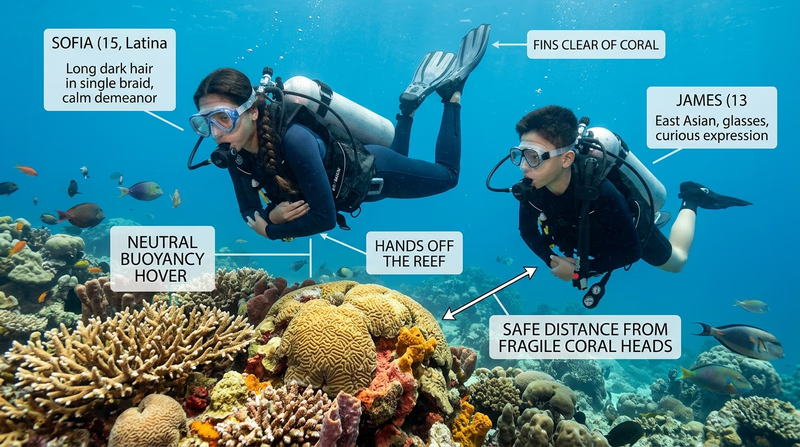
Coral reefs are some of the most colorful and crowded ecosystems on Earth. Reef-building corals create hard structures that shelter fish, invertebrates, and many other organisms. Warm, clear, relatively shallow salt water is common for reef systems.
For divers, reefs often mean rich wildlife and beautiful scenery, but also delicate habitats. A careless fin kick can break living coral or stir up sand that reduces visibility.
Kelp forests
Kelp forests grow in cooler coastal water where large brown algae anchor to rocky bottoms and stretch upward toward sunlight. They create a vertical habitat that can feel almost like an underwater forest, with fish, invertebrates, and marine mammals using different layers of the water column.
Divers in kelp forests often notice movement, shadows, and changing visibility. The ecosystem can feel dramatic and alive, but it also requires calm movement and good awareness so you do not tangle gear or lose track of direction.
Freshwater lakes and quarries
Not every ecosystem is salt water. Lakes, ponds, and flooded quarries are aquatic ecosystems too. They may include fish, plants, algae, insects, crayfish, and seasonal changes that strongly affect visibility and temperature.
For many Scouts, this may be the most realistic training environment. Freshwater dive sites often teach divers how different ecosystems can feel from tropical images in magazines. The life may be quieter and the visibility lower, but the ecology is still real and worth studying.
Seagrass beds, mangroves, and shallow coastal nurseries
In many coastal areas, shallow habitats act like nurseries for young fish and invertebrates. Seagrass beds slow water movement, trap sediment, and provide shelter. Mangrove roots create a maze where small marine life can hide and feed.
These ecosystems may not look as dramatic as a reef wall, but they are extremely important. Many larger animals depend on them during early life stages.
What to notice when describing an aquatic ecosystem
These details help you move beyond just naming the habitat- Water type: Freshwater or salt water?
- Temperature and light: Warm and bright, or cold and dim?
- Structure: Coral, rock, roots, plants, sand, or open water?
- Typical life: What kinds of animals and plants use the habitat?
- Diver impact: How could a diver accidentally damage it or disturb it?
How divers fit into ecosystems
A diver is a visitor. That means your job is to observe without damaging what you came to see. Good buoyancy, careful finning, no collecting, and respectful distance from animals all protect the site.
The best divers also understand that ecosystems connect to each other. Sediment washing off land can affect seagrass and reefs. Water temperature shifts can stress coral. Pollution in a river can affect a lake or estuary. When you describe four ecosystems to your counselor, show that you understand each one as a system, not just a backdrop.
NOAA Ocean Service Explore reliable background on coral reefs, coasts, habitats, and the living systems divers may encounter. Link: NOAA Ocean Service — https://oceanservice.noaa.gov/A strong counselor explanation
Your counselor will probably be happiest with descriptions that compare the ecosystems instead of listing four names and stopping. For example, a coral reef is usually warm, bright, and structurally complex, while a quarry may be cooler, darker, and shaped more by geology and freshwater plants. Those differences affect what divers see, how they move, and what environmental care matters most.
Next, you will bring the badge back to people by exploring the many jobs that use scuba skills in the real world.
Req 6 — Careers Below the Surface
This requirement asks you to look past the fun part of diving and see the work behind it. Scuba careers are broader than many Scouts expect. Some professionals teach new divers. Some protect reefs. Some use diving as one tool inside a much bigger science, safety, or industrial job.
Three strong career paths to compare
Dive instructor
A dive instructor teaches students in classrooms, pools, and open water. This job requires deep comfort with dive skills, strong communication, patience, and the ability to spot mistakes early.
Typical preparation includes:
- progressing well beyond entry-level certification
- completing rescue-level and professional-level dive training
- learning how to teach skills in a safe sequence
- logging significant dive experience in different conditions
Marine biologist or underwater field researcher
Some scientists use scuba to collect data, survey reefs, photograph species, measure habitats, or monitor environmental change. In this path, scuba is usually part of a larger science career, not the whole job.
Typical preparation includes:
- strong science classes, especially biology and environmental science
- college study in biology, marine science, ecology, or a related field
- field methods, data collection, and careful observation skills
- dive training suited to research or scientific fieldwork
Public safety, rescue, or commercial support diver
Some divers support search operations, inspections, maintenance, construction, or other high-responsibility tasks. These jobs usually demand much stricter procedures, specialized equipment, and extra training beyond recreational scuba.
Typical preparation includes:
- advanced or specialty dive training
- comfort in cold, dark, or task-heavy conditions depending on the job
- agency-specific or employer-specific instruction
- physical fitness, calm judgment, and a strong safety culture
🎬 Video: 5 SCUBA Jobs that can take you anywhere in the world 🌎 // SCUBA diving careers — Ocean Scholar — https://www.youtube.com/watch?v=DmKPYSH0gOA
What to bring to your counselor discussion
Research details that make your answer stronger- Three different careers with a clear sentence about what each person actually does.
- Education needed such as certifications, college programs, or specialized schools.
- Training and experience beyond the minimum starting point.
- Your personal reaction to one path: what attracts you, what sounds hard, and why it might fit you.
How to choose one career for deeper research
Pick a career that lets you say something real. “It sounds cool” is a weak reason. A stronger reason sounds like this: maybe you like teaching and helping nervous beginners succeed, or maybe you enjoy biology and want work that combines science with field time. Maybe you prefer the precision and teamwork of inspection or rescue operations.
Your counselor will usually be more interested in a thoughtful answer than in the most dramatic career.
American Red Cross — Volunteer Opportunities A reminder that many safety and service careers start with volunteering, training, and helping in organized programs. Link: American Red Cross — Volunteer Opportunities — https://www.redcross.org/volunteer/volunteer-opportunities.htmlExplaining why a profession interests you
This final part is about self-knowledge. If a profession interests you, explain what part connects with you:
- teaching people and building confidence
- working outside instead of at a desk
- protecting wildlife and habitats
- solving technical problems with equipment and procedures
- serving people in emergencies
You do not need to commit to a career right now. You only need to show that you can connect the profession’s training and responsibilities to your own interests.
You have now covered safety, water readiness, diver responsibility, certification, ecosystems, and careers. The extended learning page will show you where scuba can take you next.
Extended Learning
Congratulations!
You have finished a badge that asks for more than facts. Scuba Diving requires trust, self-control, careful communication, and respect for a place humans were never meant to enter without help. If you liked this badge, you may have found an activity that can stay with you for many years.
Buoyancy: The Skill That Changes Everything
New divers often focus on breathing underwater because it feels amazing. Experienced divers know the bigger game-changer is buoyancy control — the ability to stay where you want in the water without sinking onto the bottom or kicking upward all the time.
Good buoyancy protects reefs, reduces air use, lowers stress, and makes underwater photography and observation much easier. It also changes how a dive feels. Instead of wrestling the water, you start moving through it smoothly.
If you keep diving after this badge, buoyancy is one of the best skills to practice on purpose.
Navigation and Situational Awareness
Underwater, even a familiar place can look different from one minute to the next. Light changes. Sand gets stirred up. Current shifts. That is why strong divers build situational awareness instead of depending on one landmark.
A good diver notices:
- direction of travel
- depth trends
- air supply and time
- where the buddy is
- what the water is doing now compared with five minutes ago
Navigation is not only about a compass. It is about building a mental picture of the dive while you are still in it.
Conservation Diving and Citizen Science
Many divers eventually discover that scuba can be a service tool. Divers help with reef monitoring, underwater cleanup, invasive species control, species counts, habitat photography, and community science projects.
That work can be especially meaningful because divers see environmental change up close. A damaged reef, ghost fishing line, or trash-covered bottom looks different when you are hovering right above it. Conservation diving turns that experience into action.
Dive Travel and Local Diving Are Different Adventures
Travel diving gets lots of attention, but local diving builds strong habits. A nearby lake, quarry, spring, or coast may not look dramatic in photos, yet it can teach you more about navigation, cold water, visibility, and patience than a perfect vacation reef.
The best divers often do both. Travel expands your idea of what diving can be. Local diving builds discipline.
Real-World Experiences
Visit a local dive shop
Ask how classes are scheduled, what equipment beginners usually rent first, and what local conditions challenge new divers most.
Attend a pool skills night or refresher session
Watching experienced divers practice mask clearing, buoyancy drills, or rescue setups can teach you how much calm repetition matters.
Join an underwater cleanup or conservation event
If you are certified and the event is age-appropriate, this is one of the best ways to connect scuba with service.
Visit an aquarium or marine science center
Pay attention to habitat design, species relationships, and the educational work behind exhibits. It connects directly to Req 5 and Req 6.
Organizations
Scouting America Aquatics
Scouting's aquatics resources connect water skills, policy, and training across many programs.
NOAA Ocean Service
Offers solid background on coasts, reefs, habitats, and ocean science that helps divers understand where they dive.
American Red Cross
Useful for keeping first-aid, CPR, and emergency-response skills strong alongside diving skills.
Scouting America Safety Afloat
Even though scuba has its own training path, this page is a good reminder that water safety systems always matter.