 Getting Started
Introduction & Overview
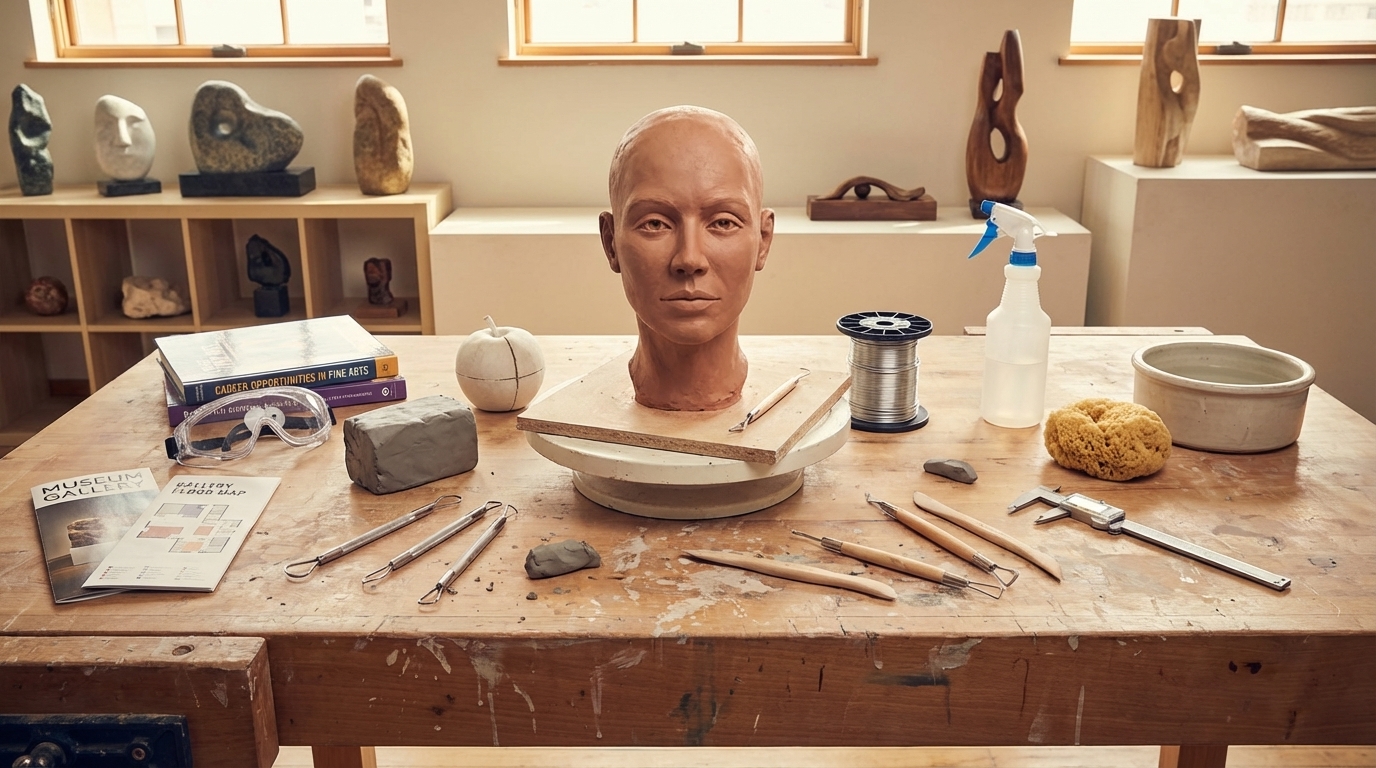
Sculpture is art you can walk around, look over, and sometimes even touch. Instead of working only on a flat surface, sculptors build form in three dimensions using clay, wood, plaster, metal, stone, digital tools, and found objects. This merit badge helps you notice shape, balance, texture, and space—then use your own hands and ideas to turn raw material into something real.
What makes sculpture special is that it connects seeing and making. You learn to observe a face, a fruit, a gallery wall, or a public monument more carefully because you begin thinking like the person who built it. That habit of close looking carries into every requirement in this badge.
Then and Now
Then
People were making sculpture long before they were writing books about it. Early humans shaped bone, clay, stone, and wood into small figures, ritual objects, and tools with decorative meaning. Ancient civilizations used sculpture to honor leaders, tell stories, mark graves, decorate temples, and show what mattered most to their communities.
Over time, sculptors developed many approaches. Some carved away material from stone or wood. Others modeled soft clay and then fired it. Others cast forms in bronze or plaster using molds. Each method asked the artist to think differently about planning, structure, and finish.
Now
Modern sculpture is wider than ever. A sculptor might still model a portrait head in clay, but another might weld steel for an outdoor plaza, carve foam for a movie prop, use 3D software to design a character, or build an installation that changes how people move through a room. Public memorials, museum pieces, playground art, and digital fabrication all belong to the same bigger conversation.
That is one reason Sculpture merit badge is so interesting: it is not limited to one material or one style. It teaches you how artists solve problems in space, how tools change the result, and how visual art can shape the way people feel about a place.
Get Ready!
You do not need to be a “natural artist” to do well here. What you do need is patience, curiosity, and a willingness to revise your work when the first version is not quite right. Sculpture rewards Scouts who keep looking closely, keep adjusting, and keep learning from the material in front of them.
Kinds of Sculpture
Modeling
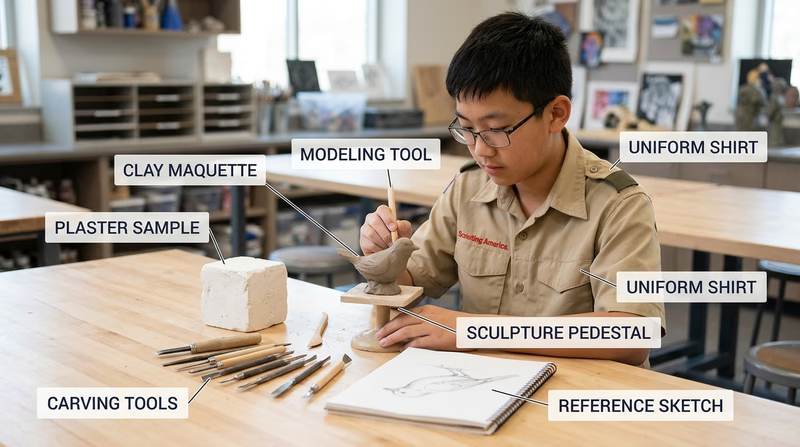
Modeling means shaping a soft material by adding, pressing, pinching, smoothing, and refining it. Clay is the classic modeling material. This approach is forgiving because you can move material around while you work. If a nose is too large or a shoulder sits too low, you can reshape it instead of starting over.
Carving
Carving works the opposite way. You begin with a solid block of wood, plaster, stone, or another firm material and remove what you do not need. That means planning matters. Once material is gone, you usually cannot put it back. Carving teaches patience and tool control.
Casting
Casting lets you make a copy by creating a mold and then filling that mold with another material. This is how a sculptor can repeat a form, preserve a model, or move from a soft original to a harder final version. Requirement 2b gives you a small-scale version of that process.
Assemblage and Construction
Some sculpture is built by joining parts instead of carving or modeling one whole mass. Wire, cardboard, wood, found objects, and metal pieces can all become sculpture when arranged with intention. In this kind of work, balance, structure, and negative space matter just as much as surface detail.
Digital Sculpture
Today, sculptors also work on screens. With 3D modeling software, artists can shape characters, creatures, and forms digitally before printing, machining, or casting them. The tools are different, but the core ideas—proportion, volume, silhouette, and structure—are the same.
Next Steps
Your first requirement is all about studio safety. That may not sound exciting at first, but it is what lets every later project happen well. Before you shape clay, carve plaster, or use tools around dust and sharp edges, you need safe habits.