Req 2c — Art in Public and Community Life
A sculpture looks different when you stand in the same room with it. Size becomes real. Surface texture catches light differently as you move. The artwork takes up space—and sometimes changes the way you feel about the whole room, hallway, plaza, or park around it. This requirement is about more than “going somewhere.” It is about learning how to notice what visual art does to people and places.
The Sculpture pamphlet suggests approaching your visit from several points of view: as the artist showing the work, as the viewer, and as the gallery owner or museum director. That is excellent advice. It reminds you that art spaces are shaped by many decisions—what gets displayed, how it is lit, what people can touch, what story the space is trying to tell, and how viewers are invited to respond.
🎬 Video: How to Visit an Art Museum (video) — https://youtu.be/drrBd1bCiW0?si=K3DwDeSzVPwmYDyy
Before You Go
A strong visit starts with a plan. Find out what kind of place you are visiting and what artwork is there. A museum may focus on preserving and interpreting important works for the public. A commercial gallery is usually trying to sell art. An artists’ co-op gives artists shared space to show work. A studio lets you see art where it is made.
The pamphlet also notes that museums hold artwork for public enjoyment rather than sale, while galleries and co-ops often focus on exhibiting and selling living artists’ work. Knowing that difference gives you more to talk about later.
Questions to carry into your visit
These will help you come back with more than just 'I liked it'
- Which artwork pulled me in first, and why?
- How do size, materials, and placement change the experience?
- What emotions or ideas does the sculpture communicate?
- Who is the intended audience for this space?
- How would this experience change if the same work were shown somewhere else?
What to Notice During the Visit
Look at the sculpture itself
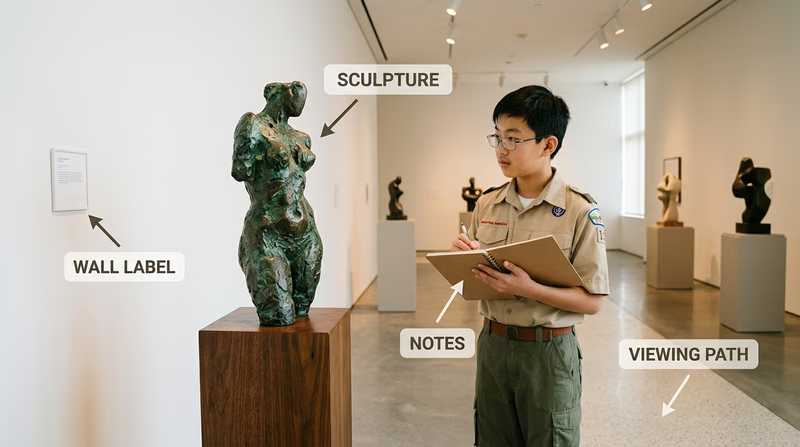
Notice material, scale, color, texture, balance, and evidence of process. Can you tell whether a piece was modeled, carved, cast, assembled, welded, or digitally fabricated? Does the surface invite close viewing or feel more powerful from a distance?
Look at the setting
Sculpture is never seen in a vacuum. Lighting, wall color, labels, pedestals, windows, pathways, and the distance between works all affect how you experience the art. A quiet museum gallery encourages slow looking. A busy studio may show tools, works in progress, and mistakes that never appear in a finished exhibit.
Look at people
How do visitors behave around the work? Do they pause, smile, take notes, whisper, argue, or move on quickly? Public art and gallery art both create conversations, even when those conversations are silent.
Why Visual Arts Matter
The second half of this requirement asks for something bigger than a field trip report. You need to discuss why visual arts matter and how they support social tolerance plus cultural, intellectual, and personal development.
Visual arts build social tolerance
Art lets people encounter lives, beliefs, histories, and perspectives other than their own. A memorial can help viewers think about justice, grief, courage, or public memory. A contemporary sculpture can challenge assumptions about what counts as beauty or whose stories deserve space. When you look carefully at art made by people from different cultures or experiences, you practice empathy and curiosity instead of instant judgment.
Visual arts build cultural understanding
Sculpture carries cultural memory. It can preserve traditional forms, materials, symbols, and community values. Visiting museums or galleries exposes you to ideas that might not appear in your everyday routine. That matters because culture is not just information—it is a way of understanding how people express meaning.
Visual arts build intellectual growth
Good art asks questions. What is the artist trying to say? Why this material? Why this scale? Why this location? Even when you do not fully understand a piece at first, the process of observing, comparing, and interpreting strengthens your thinking skills.
Visual arts build personal growth
Art can make people feel seen, challenged, comforted, unsettled, or inspired. It gives you language for thoughts that may be hard to explain any other way. For a Scout, that can mean growing more confident in your own responses and more respectful of how others respond differently.
How to Report What You Learned
A strong discussion with your counselor usually includes:
- where you went and what kind of place it was
- one or two artworks that stood out
- what materials or methods you noticed
- something you learned about how art is shown or interpreted
- your own thoughts on how visual art helps people and communities
If you kept notes during the visit, this is a great moment to use them. If you are also doing Req 3 later, your visit may give you ideas about careers such as curator, museum educator, gallery owner, conservator, or teaching artist.
You have now looked at both making art and experiencing art. Next, you will decide whether to explore sculpture as a future career path or as a long-term hobby.