Search and Rescue Merit Badge — Complete Digital Resource Guide
https://merit-badge.university/merit-badges/search-and-rescue/guide/
Introduction & Overview
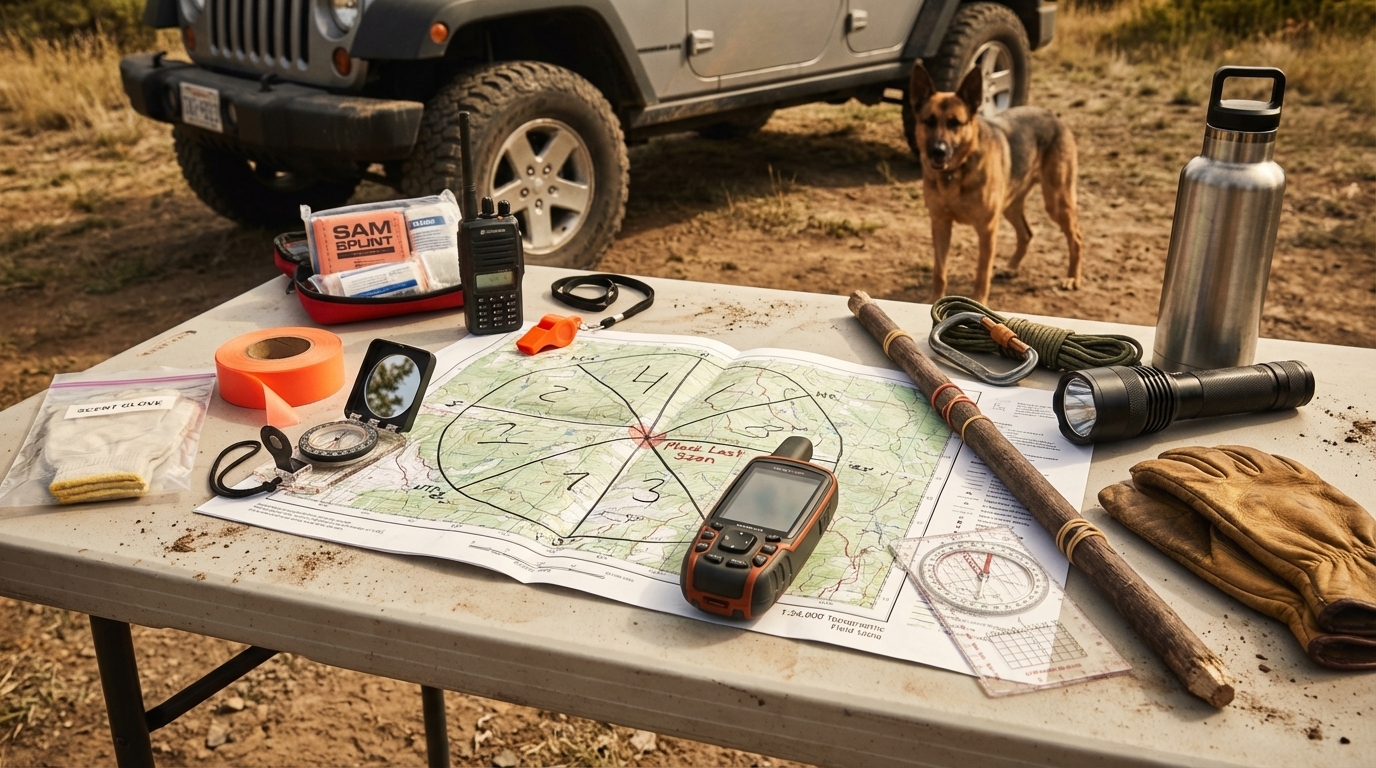
A lost hiker, a missing child, a flood evacuation, or a capsized boat can turn an ordinary day into a race against time. Search and rescue is the work of finding people, protecting rescuers, and bringing order to a confusing situation with planning, observation, and teamwork. This merit badge helps you think like a prepared Scout who can avoid becoming lost and can also understand how trained teams respond when something goes wrong.
Then and Now
Then
Early search parties depended mostly on local knowledge, horses, lanterns, and whatever friends or neighbors could gather quickly.
- Who searched: Family members, neighbors, deputies, and woods workers who knew the local terrain.
- What they used: Hand-drawn maps, whistles, signal fires, and word-of-mouth reports.
- What made it hard: Limited communication, weak weather forecasts, and very little coordination once searchers spread out.
Now
Modern SAR still depends on sharp eyes and strong outdoor skills, but it also uses a clear command system, better maps, GPS tools, radios, weather data, and trained specialty teams.
- Planning matters sooner: Teams build an Incident Action Plan, set objectives, and assign search areas fast.
- Technology helps: GPS apps, locator beacons, drones, and mapping software can narrow the problem.
- Teamwork matters most: Even with modern tools, good searches still depend on clues, discipline, and people who communicate clearly.
Get Ready!
This badge rewards the same habits that make Scouts strong in the outdoors: packing well, noticing details, staying calm, and helping your team. You do not need to become a professional rescuer to learn from SAR. You just need curiosity, care, and a willingness to think clearly when the stakes feel high.
Kinds of Search and Rescue
Wilderness SAR
This is the kind many Scouts picture first: lost hikers, overdue campers, injured climbers, or missing hunters in forests, deserts, mountains, and remote trails. Wilderness SAR depends heavily on navigation, clue awareness, weather judgment, and fitness.
Urban SAR
Urban SAR works in neighborhoods, buildings, streets, storm-damaged areas, and collapsed structures. Searchers may deal with traffic, crowds, unstable debris, and the need to coordinate many agencies at once.
Water SAR
Water incidents can involve lakes, rivers, coastal areas, or floodwaters. Teams think about current, cold water, visibility, tides, flotation, and how quickly a subject can drift away from the original location.
Technical and Disaster Response
Some rescues need rope systems, avalanche training, swiftwater skills, helicopters, or heavy rescue equipment. These are highly specialized jobs with strict training and safety rules.
Specialty Teams
A single incident may involve dog teams, mounted teams, drone pilots, dive teams, snow teams, medical support, and ground searchers. The best SAR operations match the right resource to the right problem.
Now that you know what SAR is and why it takes both prevention and teamwork, start with the field injuries and conditions that can slow a searcher or put a lost person in greater danger.
Req 1a — Field Injuries and Conditions
A search can fall apart fast when one small problem becomes two emergencies. A blister slows a team. A missed tick turns into illness days later. Heatstroke, shock, or a snakebite can turn a searcher into the person who now needs help. This page gives you quick, Scout-level first-aid and prevention guidance for the field problems SAR teams watch closely.
In the First Aid merit badge, you learn these skills in greater depth. Here, focus on how they show up in outdoor searches where weather, terrain, distance, and time all make treatment harder.
Requirement 1a1
Signs and symptoms of dehydration
Thirst, dark urine, headache, tiredness, dizziness, and poor decision-making are early clues. A dehydrated person may become cranky, slow, or clumsy before they admit anything is wrong.
First aid for dehydration
Move the person to shade or a cooler place. Have them rest and sip water or an electrolyte drink slowly. Loosen extra layers and watch for heat illness that may be developing at the same time.
Prevention of dehydration
Drink before you feel thirsty, especially in heat, wind, or dry air. Carry more water than you think you will need, eat salty snacks during long effort, and keep checking teammates for early warning signs.
Requirement 1a2
Signs and symptoms of heatstroke
This is a life-threatening emergency. Warning signs include hot skin, confusion, vomiting, collapse, strange behavior, a rapid pulse, or loss of consciousness.
First aid for heatstroke
Call for emergency help. Move the person to shade immediately and cool them fast with cold water, wet cloths, fans, or ice packs at the neck, armpits, and groin. If the person is not fully alert, do not give food or drink.
Prevention of heatstroke
Plan harder travel for cooler parts of the day, drink often, wear light clothing, and slow down before heat builds up. Searchers who ignore fatigue, heavy packs, and direct sun are much more likely to get into trouble.
Requirement 1a3
Signs and symptoms of hypothermia
Shivering, fumbling hands, slurred speech, confusion, and stumbling are common early signs. Later, the person may stop shivering and become sleepy or hard to wake.
First aid for hypothermia
Get the person out of wind, rain, snow, or cold water. Replace wet clothing with dry layers, insulate the head and torso, and warm the person gradually with blankets or body heat. Give warm drinks only if the person is awake and can swallow.
Prevention of hypothermia
Stay dry, add layers early, eat and drink regularly, and protect yourself from wind. Cold rain at 50°F can be more dangerous than dry snow because wet clothing steals heat fast.
Requirement 1a4
Signs and symptoms of shock
Shock means the body is not moving enough blood to vital organs. Look for pale or cool skin, weakness, restlessness, fast breathing, confusion, and a weak pulse.
First aid for shock
Call for help and treat the cause if you can do so safely. Have the person lie down, protect them from cold or heat, control bleeding, and keep them calm. Do not give food or drink if surgery or vomiting may become an issue.
Prevention of shock
Prevent severe injuries from getting worse, control bleeding quickly, and respond early to heat, cold, dehydration, and allergic reactions before the whole body starts to fail.
Requirement 1a5
Signs and symptoms of blisters
A hot spot, tenderness, redness, or a fluid-filled bubble on the foot or hand can change how a person walks and quickly slow a team.
First aid for blisters
Stop early. Clean and cover the area with moleskin, tape, or a blister pad to reduce friction. Large or badly torn blisters may need more careful dressing, but the key field lesson is to protect the area and keep it clean.
Prevention of blisters
Wear broken-in footwear, dry socks, and shoes that fit. Fix hot spots as soon as they start instead of trying to push through them.
Requirement 1a6
Signs and symptoms of eye injuries
Pain, tearing, blurred vision, redness, light sensitivity, or the feeling that something is stuck in the eye all matter. Any change in vision is serious.
First aid for eye injuries
Do not rub the eye. If loose dirt is present, flush gently with clean water. If an object is stuck in the eye or there is major trauma, protect the eye without pressing on it and get medical help right away.
Prevention of eye injuries
Wear eye protection when needed, avoid snapping branches back into people behind you, and be careful with campfire smoke, dust, and chemicals such as stove fuel.
Requirement 1a7
Signs and symptoms of ankle and knee sprains
Pain, swelling, bruising, and trouble bearing weight are common. A person may also feel the joint is unstable.
First aid for ankle and knee sprains
Rest the joint, cool it if possible, compress it with an elastic wrap if trained to do so, and elevate it when practical. If the person cannot bear weight, the joint looks badly deformed, or pain is severe, stop the mission and seek higher care.
Prevention of ankle and knee sprains
Watch foot placement, slow down on loose rock or roots, keep packs balanced, and use trekking poles when terrain is rough.
Requirement 1a8
Signs and symptoms of bug bites
Most bites cause itching, swelling, and irritation. Ticks add a bigger concern because they can stay attached and spread disease.
First aid for bug bites
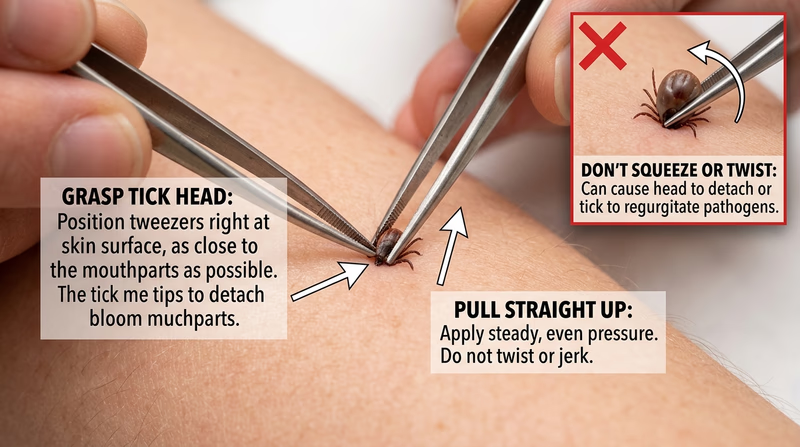
Wash the area, reduce scratching, and use itch relief if available. For ticks, remove them promptly with fine-tipped tweezers by grasping close to the skin and pulling straight out.
Prevention of bug bites
Use insect repellent, wear long sleeves and pants in buggy areas, tuck pants into socks when needed, and do full tick checks after the outing.
Requirement 1a9
Signs and symptoms of bee stings
A normal sting causes pain, redness, and swelling. Trouble breathing, swelling of the face or throat, or widespread hives may mean a severe allergic reaction.
First aid for bee stings
Remove the stinger promptly if it is still present, wash the area, and use a cold pack to reduce swelling. For signs of anaphylaxis, use the person’s prescribed epinephrine if available and get emergency help immediately.
Prevention of bee stings
Do not swat wildly at bees. Watch where you place hands and feet, avoid scented products in the field, and stay clear of nests.
Requirement 1a10
Signs and symptoms of spider bites
Many bites are minor and look like other insect bites. Serious bites may cause stronger pain, cramping, sweating, or a worsening wound.
First aid for spider bites
Wash the area, keep the person calm, and get medical advice if symptoms grow worse or if a dangerous spider may be involved. Save a photo of the spider only if this can be done safely.
Prevention of spider bites
Shake out boots, gloves, and sleeping gear before use. Avoid reaching blindly into woodpiles, rock cracks, and dark storage spaces.
Requirement 1a11
Signs and symptoms of a scorpion sting
Expect immediate pain, tingling, or numbness. In more serious cases, muscle twitching, trouble swallowing, or breathing problems may appear.
First aid for a scorpion sting
Wash the area, apply a cool compress, keep the person still, and get medical help if symptoms are severe or the person is very young, elderly, or medically fragile.
Prevention of a scorpion sting
Check shoes, sleeping bags, and clothing before use in scorpion country. Keep tents zipped and avoid putting hands under rocks or logs without looking first.
Requirement 1a12
Signs and symptoms of a wild mammal bite
Puncture wounds, tearing, bleeding, and crushing injury are common. Rabies exposure is the big follow-up concern even when the wound looks small.
First aid for a wild mammal bite
Wash the wound thoroughly with soap and water, control bleeding, cover it with a clean dressing, and get medical care as soon as possible.
Prevention of a wild mammal bite
Never approach, corner, feed, or try to rescue wild animals yourself. Animals that seem unusually tame, confused, or aggressive deserve extra caution.
Requirement 1a13
Signs and symptoms of a venomous snakebite
Pain, swelling, fang marks, nausea, weakness, and worsening tissue damage may appear. Some bites start mildly and worsen later.
First aid for a venomous snakebite
Call for emergency help. Keep the person calm, limit movement, and keep the bitten area still. Remove rings or tight gear before swelling increases. Do not cut the wound, suck out venom, or apply a tourniquet.
Prevention of a venomous snakebite
Watch where you step or place hands, especially around rocks, logs, and tall grass. Give snakes space and never try to handle one.
Field first-aid habits that matter in SAR
These habits prevent small problems from becoming mission-stopping problems- Stop early: Treat hot spots, chills, or dizziness before they become injuries.
- Protect the patient: Get them out of the heat, cold, wind, or bite zone first.
- Think scene safety: A second injured person helps no one.
- Watch the whole person: Confusion, weakness, and behavior changes can be more important than the obvious wound.
Once you know how injuries and conditions affect people in the field, the next step is understanding how the Scout Basic Essentials help prevent many of these problems before rescuers ever need to respond.
Req 1b — Basic Essentials That Keep You Alive
Most lost-person incidents start with a chain of small mistakes: no light, not enough water, poor navigation, bad clothing choices, or no way to signal. The Scout Basic Essentials break that chain. They are not just a packing checklist. They are a hazard-control system that helps you prevent trouble, stay functional if plans change, and give searchers a better chance of finding you quickly.
A common way to think about the essentials is by function: navigation, sun protection, insulation, illumination, first aid supplies, fire, repair tools, nutrition, hydration, and emergency shelter. Your troop or counselor may group them slightly differently, but the safety idea stays the same: each item covers a predictable outdoor problem.
Match the essential to the hazard
| Essential | Hazard it addresses | How it helps a lost Scout stay safe |
|---|---|---|
| Navigation tools | Wrong turns, poor visibility, confusion | Map, compass, and approved GPS tools help you relocate yourself before the problem grows. |
| Sun protection | Sunburn, overheating, dehydration | Hat, sunscreen, sunglasses, and shade habits reduce heat stress. |
| Insulation | Cold, wind, wet weather | Extra layers help you stay warm even after delays or weather changes. |
| Illumination | Darkness, low visibility, slow travel | A headlamp or flashlight helps you move safely or signal after sunset. |
| First aid supplies | Blisters, cuts, bites, sprains | Small treatments early can keep a bad day from turning into an emergency. |
| Fire | Cold and morale problems | When allowed and safe, fire can add warmth, signaling, and comfort. |
| Repair kit and tools | Gear failure | Tape, cord, and simple tools can fix boots, packs, shelters, and clothing. |
| Nutrition | Fatigue, poor judgment | Extra food helps maintain energy during delays. |
| Hydration | Dehydration, heat illness | Water is one of the first limits in a search situation. |
| Emergency shelter | Exposure to wind, rain, and cold | Even a small tarp, bivy, or space blanket can cut heat loss fast. |
Why these items matter specifically in SAR
A lost Scout usually needs to do three things well: stay safe, stay where rescuers can find them, and avoid turning discomfort into panic. The essentials help with all three.
- They buy time. Extra insulation, water, and shelter help you stay stable long enough for help to arrive.
- They protect decision-making. A fed, hydrated, warmer Scout is more likely to make smart choices.
- They improve visibility. A whistle, light, mirror, and bright gear make you easier to locate.
- They prevent secondary emergencies. Search teams should be looking for one subject, not a subject and an unprepared buddy.
Staying safe before rescuers arrive
A lost Scout does not need to solve the entire situation alone. The better goal is to avoid making the situation worse.
- Stop moving once you realize you are truly lost unless immediate danger forces you to relocate.
- Use insulation and shelter early rather than waiting until you are cold and shaky.
- Ration effort, not necessarily water. Slow down, rest in shade, and reduce sweating.
- Keep signaling tools ready in the open, not buried at the bottom of the pack.
- Make yourself easier to find by staying near clear features when safe and by using signals at the right moments.
Quick self-check before an outing
These questions catch many preventable SAR problems- Can I navigate? I have the right tools and know the route.
- Can I handle weather? My clothing matches the forecast and the backup forecast.
- Can I spend an unplanned night out? I have enough insulation, water, and emergency shelter to stay safe.
- Can I signal? I have light, whistle, and other attention-getting tools where I can reach them quickly.
The Scout Basic Essentials focus on what any individual should carry. Next, shift to the extra safety gear SAR team members pack because they are entering the field to help others in harder conditions.
Req 1c — What Goes in an SAR Pack
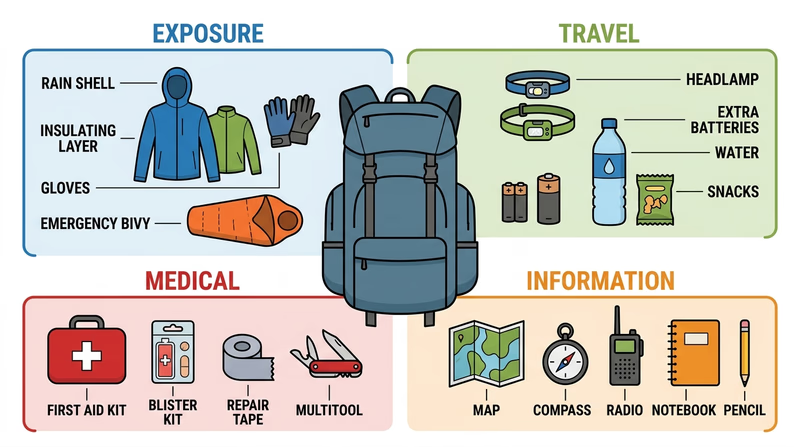
A searcher walks into uncertainty on purpose. That means SAR field packs are built for longer hours, rougher terrain, changing weather, communication needs, patient care, and the chance that the team may need to stay out longer than expected. The pack is really a collection of answers to field hazards.
Think in hazard groups
Exposure hazards
Cold rain, wind, heat, and darkness are common SAR threats because teams often work during ugly weather and after sunset.
Pack answers: extra insulation, rain gear, gloves, hat, emergency bivy or shelter, headlamp with spare batteries, and extra water.
Travel hazards
Loose rock, brush, steep slopes, creek crossings, and long distances wear people down fast.
Pack answers: sturdy boots, trekking poles when appropriate, blister care, tape, repair kit, gloves, and enough food to keep energy steady.
Medical hazards
Searchers may have to treat themselves, teammates, or the subject until a higher level of care arrives.
Pack answers: first aid kit, trauma supplies appropriate to training level, patient insulation, gloves, and notepaper for recording what happened.
Information hazards
A search can fail if the team cannot navigate or report clearly.
Pack answers: map, compass, approved GPS device or app, notebook, pencil, radio, and sometimes flagging or other route-marking tools if local procedures allow.
Time hazards
A short assignment can become an all-day operation if clues appear, weather changes, or the subject is located far from easy access.
Pack answers: extra calories, water treatment if trained and appropriate, spare light, charging options, and backup clothing.
What a field pack is trying to do
Every item should answer one of these questions- Will this keep me functioning? Water, food, layers, and foot care.
- Will this keep me found? Map, compass, GPS, and team communication.
- Will this help me manage an emergency? First aid, shelter, and patient-care basics.
- Will this keep the mission moving? Notebook, repair kit, and batteries.
Why SAR packs include more than a normal day-hike pack
A day hiker mostly plans for self-care. A searcher plans for self-care, team needs, and the possibility of finding a patient. That changes the pack.
For example, a whistle helps a hiker signal. A search team may also carry radios so clues, route changes, or patient information can move back to the command post clearly. A hiker might carry one warm layer. A searcher may need enough insulation to stop, treat someone, and remain on scene without getting cold.
Sample hazard-to-gear matches
| Hazard | Useful SAR gear | Why it matters |
|---|---|---|
| Nightfall during the assignment | Headlamp, spare batteries, reflective items | Keeps the team moving safely and makes signals easier to spot. |
| Sudden weather change | Shell layer, insulation, hat, gloves | Prevents exposure injuries that could stop the mission. |
| Subject needs immediate care | First aid kit, gloves, patient insulation | Helps stabilize the person until evacuation. |
| Team gets separated or rerouted | Radio, notebook, map, compass | Supports clear, accurate communication and navigation. |
| Minor gear failure in rough terrain | Tape, cord, multitool, repair items | A broken strap or boot lace should not become a mission-ending problem. |
Now that you have looked at hazards, first aid, and gear, move to the prevention side of SAR: how Scouts stay found, communicate their position, and make themselves easier to locate.
Req 2 — Staying Found and Getting Found
A search that never has to happen is the best kind. These five skills work together: make a real plan, notice how weather changes that plan, know how to signal, practice using your signaling tools, and understand how locator beacons fit into the bigger rescue system.
- Req 2a: Prevent getting lost by using a trip plan and the buddy system.
- Req 2b: Match your plan to changing weather and time of day.
- Req 2c: Use signals that search teams can actually notice.
- Req 2d: Practice a signaling mirror instead of just talking about it.
- Req 2e: Learn where a Personal Locator Beacon fits in modern rescue.
Requirement 2a
A trip plan is a written answer to the question, “Where are we going, when should we be back, and what should someone do if we are late?” It helps you stay found because it forces you to think ahead. It helps you get found because it gives rescuers a starting point.
A good trip plan usually includes route, destination, departure time, expected return time, who is going, emergency contacts, and any alternate plans. If you change the plan, tell the person holding it. A perfect plan that stays in your backpack does not help anyone.
The buddy system adds a second safety net. Buddies notice if one person is lagging, getting confused, overheating, or wandering off. They also give rescuers better information if someone does go missing.
What belongs in a trip plan
The clearer the plan, the smaller the search area if something goes wrong- Where: Trail, route, destination, and likely turn-around point.
- When: Departure time, checkpoints if useful, and expected return time.
- Who: Everyone in the group plus emergency contacts.
- What if delayed: The time when the home contact should start calling for help.
Requirement 2b
Weather changes where you can travel, how fast you can move, what gear you need, and how visible you will be. A route that feels easy on a cool spring morning can become dangerous in afternoon heat, winter ice, monsoon lightning, or an early sunset.
Seasonal weather affects larger choices: snowpack, swollen creeks, hunting seasons, fire restrictions, heat risk, and daylight hours. Daily weather affects tactical choices: when to start, whether to take exposed ridges, how much water to carry, and whether fog or storms may block visibility.
Page 41 of the merit badge pamphlet warns Scouts to know the weather where they are going and to understand how quickly it can change. That is why trip plans should include forecast checks and backup decisions, not just a destination.
| Condition | Trip-plan change it may require |
|---|---|
| Hot weather | Earlier start, more water, more shade breaks |
| Thunderstorms | Avoid ridges, lakes, and exposed high ground |
| Cold rain | Add insulation, rain gear, and emergency shelter |
| Short winter daylight | Shorter route and firmer turnaround time |
Requirement 2c
A good signal is noticeable, repeatable, and easy to interpret as human-made. Searchers on foot may hear a whistle or see bright fabric. Air crews may notice movement, reflective flashes, or large ground-to-air signals. Water teams may notice color contrast, strobe lights, or paddle and hand motions.
Useful signals include:
- Sound: Whistle blasts carry farther than yelling and use less energy.
- Light: Flashlights, headlamps, or mirror flashes work well in open areas.
- Movement: Waving a bright jacket or tarp can catch attention.
- Ground signals: Large shapes in open terrain can help aircraft see you.
Requirement 2d
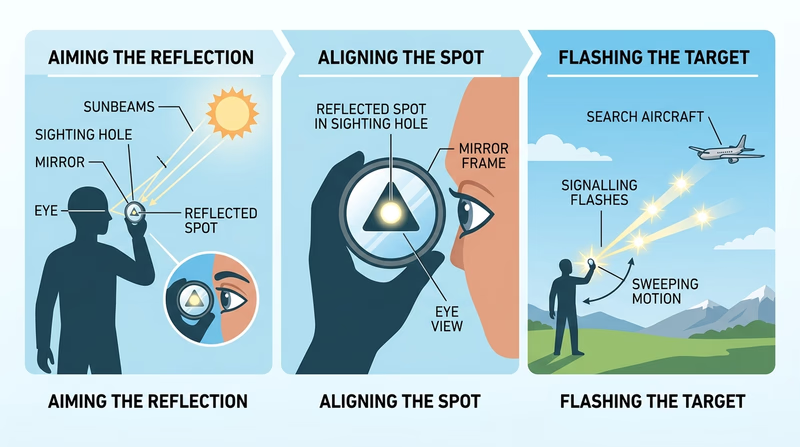
A signaling mirror is one of the best daylight tools for long-distance signaling because the flash can travel much farther than your voice. To use one well, face the sun, make a bright spot with the mirror, and sweep that flash across the target such as an aircraft, distant ridge, boat, or search team.
If your mirror has a sighting hole, hold it near your eye and align the reflected bright spot with the target. If it does not, practice aiming by watching where the reflected light lands. The key is not random waving. You want controlled flashes that pass across the rescuer’s line of sight.
Requirement 2e
A Personal Locator Beacon is an emergency device that sends a distress signal through a satellite system when activated. Unlike a normal text message, it is built for rescue, not everyday communication. Many PLBs also transmit location information from an internal GPS receiver, which helps rescuers narrow the search area faster.
A PLB does not replace judgment, navigation, or a trip plan. It is a last-resort emergency tool for serious situations.
The Air Force Rescue Coordination Center coordinates many inland federal search-and-rescue missions in the United States. In the merit badge pamphlet resources section, the AFRCC appears as one of the key organizations connected to rescue coordination. For a Scout-level explanation, think of AFRCC as part of the system that helps route beacon alerts and connect the right rescue agencies to the incident.
NOAA — Personal Locator Beacons How PLBs work, when to register them, and how they fit into the rescue-alert system. Link: NOAA — Personal Locator Beacons — https://www.sarsat.noaa.gov/emergency-beacons/personal-locator-beacons/ Air Force Rescue Coordination Center Official overview of the inland search-and-rescue coordination center referenced in the merit badge pamphlet. Link: Air Force Rescue Coordination Center — https://www.1af.acc.af.mil/Units/AFRCC/In Req 1b, you looked at the gear that helps you stay safe. Now take that prevention mindset into navigation and map reading, where searchers turn scattered clues into a clear picture of terrain and movement.
Req 3 — Reading the Map Like a Searcher
This requirement is about turning a flat sheet of paper or a phone screen into a search picture. Searchers use maps to understand where the subject was last seen, how far that person could travel, what terrain might slow or attract them, and which boundaries can help contain the search.
- Req 3a: Read the most important information printed on the map.
- Req 3b: Record one location in several coordinate systems.
- Req 3c: Orient the map, take a bearing, and estimate distance and terrain.
- Req 3d: Mark a place last seen and think like a planner about containment.
In the Orienteering merit badge, you build many of these navigation habits in a sport setting. In SAR, the same skills help teams decide where to look first.
Requirement 3a
The 5 D’s help you read the map before you start walking.
| D | What to look for | Why searchers care |
|---|---|---|
| Date | When the map was made or updated | Roads, trails, and buildings may have changed. |
| Description | What area and map type it shows | You need to know whether it is a trail map, topo map, or another format. |
| Details | Symbols, contour lines, water, roads, structures | These clues shape search planning and route choices. |
| Direction / Declination | North references and magnetic declination | Bearings only work if map and compass agree on north. |
| Distance | Scale bar and contour spacing | This tells you how far subjects or teams can actually move. |
Requirement 3b
Latitude and longitude describe a position on the earth using angular measurement. US National Grid uses letters and numbers in square grid form, which many responders find faster to communicate and plot during land operations.
Altitude adds the vertical piece. Two points can share similar map positions but feel very different on the ground if one is deep in a drainage and the other is on a ridge.
A good explanation sounds something like this: latitude and longitude are a global geographic system, while USNG is a grid reference system that breaks the map into easier-to-measure squares. Both can describe the same place, but they look and sound different when spoken over a radio.
Requirement 3c
Orienting the map means turning it so the map matches the real world around you. Once the map is aligned, bearings and terrain features make much more sense.
When you estimate the route between two points, do more than measure straight-line distance. Ask:
- Is there a creek crossing?
- Does the route climb sharply?
- Are there trails, roads, or drainages that could attract a lost person?
- Would brush, cliffs, or swamp slow the team down?
🎬 Video: In and Out Navigation: The Easiest Way to Use a Compass — Coalcracker Bushcraft — https://www.youtube.com/watch?v=mZF-RKJcODQ
Requirement 3d
This is where map reading becomes SAR planning. A place last seen is your starting point. From there, planners think about where the subject could go and what boundaries might stop, channel, or reveal that movement.
Natural boundaries might include rivers, ridges, lakes, cliffs, or canyon walls. Human-made boundaries might include roads, fences, rail lines, neighborhoods, campgrounds, or trailheads.
The merit badge pamphlet explains confinement as creating a search perimeter that likely contains the subject. On page 67, it describes plotting the PLS or LKP, then building a search circle and looking for roads, trails, streams, or ridges that can serve as boundaries.
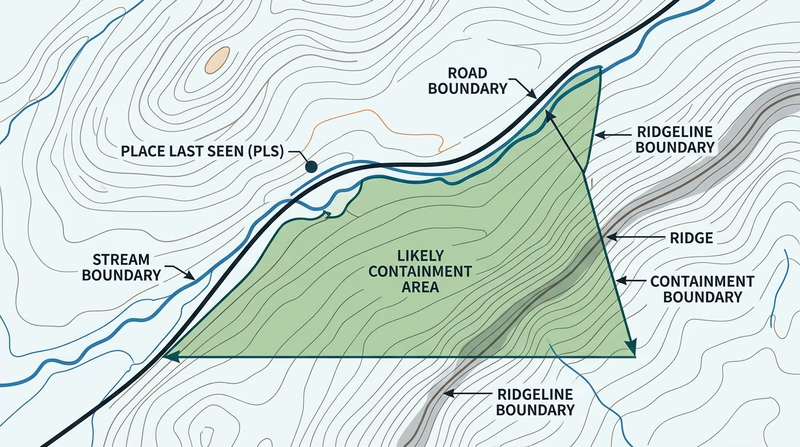
With the map picture in mind, you are ready to see how SAR missions organize people and decisions through the Incident Command System.
Req 4 — How the Command System Works
A search mission can involve deputies, firefighters, park staff, dog teams, medics, air crews, and volunteers. Without a clear system, those people would duplicate work, miss information, and put each other in danger. ICS gives everyone a shared structure.
This requirement covers two big ideas:
- How ICS is organized so one mission can coordinate many moving parts.
- How agencies train and work together before an emergency ever happens.
Requirement 4a
At a Scout-friendly level, ICS has one incident commander at the top and then sections or leaders who handle different parts of the mission. The merit badge pamphlet lists major general-staff areas such as operations, planning, logistics, and finance/administration.
- Operations carries out the field work.
- Planning collects information and builds the plan.
- Logistics gets gear, food, facilities, and support where needed.
- Finance/Administration tracks costs and paperwork when the incident is large enough to need it.
Scouting’s patrol method is not the same system, but there is a useful comparison. In a patrol, everyone has a role, leaders communicate clearly, and the group works toward a shared goal. ICS scales that idea up for emergencies where many teams and agencies need one chain of command.
| Scouting patrol method | ICS comparison |
|---|---|
| Patrol leader | Incident commander or team leader |
| Patrol members with jobs | Sections, units, and assigned resources |
| Shared plan for the outing | Incident objectives and action plan |
| Accountability for everyone | Check-in, assignments, and supervision |
🎬 Video: Introduction to the Incident Command System (ICS) — Justice Institute of British Columbia (JIBC) — https://www.youtube.com/watch?v=P-dPBso2xPM
Requirement 4b
No single agency does everything alone. Local SAR often involves sheriff’s offices, fire and rescue departments, emergency management, park agencies, public works, volunteer SAR teams, and sometimes state or federal partners.
They train together because real incidents do not wait for introductions. Joint training helps them learn each other’s radios, vehicles, maps, command style, medical procedures, and safety rules. It also builds trust, which matters when decisions must be made quickly.
Common training activities include tabletop exercises, mock searches, map and radio drills, evacuation practice, medical refreshers, and after-action reviews.
Why agencies train together
A practice mission teaches more than a written plan- Shared language: Everyone uses the same terms and reporting format.
- Role clarity: Teams know who leads, who searches, and who supports.
- Safer operations: Hazards, routes, and communication problems are discovered before a real incident.
- Faster response: People already know how to plug into the system.
Once you understand the command system, the next question is who actually fills those roles in the field and how different SAR team types match different incidents.
Req 5 — Who Does What on SAR Teams
The words “search and rescue team” sound like one thing, but real SAR uses many team types. Some find clues, some search fast, some care for patients, and some work only in special environments such as swiftwater, snow, or collapsed structures.
This page covers three connected questions:
- What are SAR teams officially trying to accomplish?
- How do wilderness, urban, and water searches differ?
- Which kinds of teams are chosen for different situations?
Requirement 5a
A SAR team’s duty is not just “go look around.” A real team is expected to search assigned areas safely, observe and report clues accurately, communicate with command, help locate the subject, and support rescue or evacuation once the subject is found.
That means searchers must do more than move fast. They must stay disciplined, avoid contaminating clues, follow assignments, and know when to stop and report instead of guessing.
Requirement 5b
| Environment | Main challenges | Common priorities |
|---|---|---|
| Wilderness SAR | Distance, terrain, weather, limited access, navigation | Clue tracking, containment, travel planning, subject survival |
| Urban SAR | Buildings, traffic, debris, crowds, many witnesses | Fast information gathering, structure safety, coordination across agencies |
| Water SAR | Current, depth, cold water, drift, poor visibility | Flotation, last-seen location, drift calculations, specialized rescue skills |
Wilderness SAR often rewards patient map work and clue awareness. Urban SAR depends heavily on witness information, security footage, public coordination, and building safety. Water SAR changes fast because the subject and clues may move with current or wind.
Requirement 5c
Here are more than four common examples. You only need four for the requirement, but knowing a wider range helps you understand how missions are built.
Ground search teams
These are often the backbone of a land search. They look for clues, travel assigned routes, interview people they encounter, and help with hasty or more methodical searches.
K-9 teams
Dog teams are used when scent work, quick area coverage, or article searches may help. Their value depends on time, weather, terrain, and the kind of clue or scent item available.
Mounted teams
Mounted searchers on horses can cover long distances in some terrain and also provide good height for seeing into brush or across open country.
Air teams and drone teams
Aircraft or drones help cover larger areas, scan difficult terrain, or move people and supplies. They are especially helpful where ground access is slow.
Dive or water teams
These teams work when a subject may be in water or when evidence and recovery operations require specialized skills.
Technical rescue teams
Rope rescue, avalanche, cave, collapsed-structure, and swiftwater teams respond where the environment itself is the main danger.
National Association for Search and Rescue National SAR organization with education resources and examples of many search disciplines and team roles. Link: National Association for Search and Rescue — https://www.nasar.org/ Mountain Rescue Association A good example of specialty teams that train for difficult terrain, technical rescue, and mountain response. Link: Mountain Rescue Association — https://mra.org/Now that you know the major team types, move into the vocabulary and planning ideas that searchers use when they talk through a mission.
Req 6 — Choose Four Search Procedure Skills
You must choose exactly 4 options from this requirement.
Each option teaches a different piece of how SAR teams think. Some focus on vocabulary. Some help you understand how a search area is built. Others help you see how information about the missing person shapes the plan.
Your Options
- Req 6a — Search vs. Rescue: Learn the difference between finding someone and getting them safely out. This helps you understand why the mission may change the moment the subject is located.
- Req 6b — PLS and LKP: Understand the two starting points that shape the entire search area. You will learn why solid last-seen information matters so much.
- Req 6c — Clear Communication: See how clear reports, radio discipline, and accurate notes keep teams from wasting time or missing clues.
- Req 6d — Lost Person Behavior: Study how age and behavior patterns affect where teams look first and what tactics make sense.
- Req 6e — Core SAR Terms: Build a vocabulary for urgency, confinement, scent work, clue handling, and common search methods.
How to Choose
Choosing Your four topics
Pick the combination that gives you the clearest picture of how SAR works- Best for mission basics: 6a, 6b, and 6c explain the structure of a search from start to finish.
- Best for search planning: 6b, 6d, and 6e show how the search area, subject profile, and tactics fit together.
- Best for learning field vocabulary: 6c and 6e introduce many of the terms and habits you will hear in real training.
- What you gain: 6a sharpens the mission goal, 6b sharpens your starting point, 6c sharpens teamwork, 6d sharpens prediction, and 6e sharpens your language.
| Option | Time to grasp | Best for | What you gain |
|---|---|---|---|
| 6a | Short | Big-picture understanding | Clear difference between locating and recovering |
| 6b | Short | Map and planning skills | Better search starting point |
| 6c | Medium | Teamwork and leadership | Better reporting and fewer mistakes |
| 6d | Medium | Subject behavior and planning | Better idea of where to look first |
| 6e | Longest | Terms and tactics | A broad vocabulary for real SAR conversations |
Now start with the simplest distinction in the set: the difference between finding the subject and safely recovering the subject.
Req 6a — Search vs. Rescue
People often say “search and rescue” as if it were one job, but the two words describe different parts of the mission.
Search means locating the subject, their clues, or their most likely area. Rescue means helping that person survive, treating urgent problems, and getting them to safety.
A mission may start as a search and become a rescue the moment the subject is found alive and needs medical care, packaging, transport, or evacuation. It may also become a recovery operation if the subject is not alive.
Why the distinction matters
If teams blur these ideas together, they can miss important planning needs.
- A search plan focuses on clues, probability, terrain, and where to deploy teams.
- A rescue plan focuses on patient condition, hazards, equipment, evacuation route, and medical support.
For example, finding an injured hiker in a canyon does not end the mission. It starts a new phase that may need litter teams, rope systems, medics, and a safer route out.
National Association for Search and Rescue Background on the range of search and rescue disciplines, from locating subjects to specialized rescue operations. Link: National Association for Search and Rescue — https://www.nasar.org/Next, learn the two starting-point terms that often shape where a mission begins on the map.
Req 6b — PLS and LKP
The terms look similar, but they are not identical. In the merit badge pamphlet, the PLS is where someone who can positively identify the subject actually saw that person. The LKP may be the same spot, but it can also be the place the subject was known to have been based on evidence instead of direct sight.
Examples of an LKP might include an abandoned vehicle, a trail register, security camera footage, or another piece of solid evidence. That makes LKP broader than PLS.
Why SAR teams care so much
The search area grows from these points. If the starting point is wrong, the search may begin in the wrong place and waste precious time.
- PLS: Best when a witness truly saw the subject.
- LKP: Useful when evidence shows where the subject was, even if nobody saw them there.
- Both matter: Teams compare them to build the most accurate timeline possible.
Simple example
If a ranger saw a hiker at a trail junction at 2:00 p.m., that junction is the PLS. If the hiker’s car is later found at a different trailhead and a timestamped photo shows the hiker there at 2:30 p.m., that later location may become the LKP that matters more for planning.
Questions that help establish PLS or LKP
Good search starts with accurate last-location information- Who saw the subject? A direct witness may support a PLS.
- What evidence exists? Vehicle, register, camera, or tracks may support an LKP.
- When did it happen? The timeline matters as much as the place.
- How certain is the information? Searchers weigh facts differently than guesses or rumors.
Clear starting points only help if people report them well. Next, focus on the communication habits that keep SAR information accurate under pressure.
Req 6c — Clear Communication
Search teams work with scattered clues, moving people, and changing hazards. If information is late, vague, or wrong, teams may search the wrong place, duplicate effort, miss the subject, or create new safety problems.
Effective communication in SAR means more than talking clearly. It means sending the right information, to the right people, in a form they can use.
What good SAR communication looks like
- Accurate: Facts are separated from guesses.
- Brief: Radio time is limited, especially when many teams share a channel.
- Timely: Clues lose value if they are reported too late.
- Repeatable: Coordinates, times, names, and observations can be written down and checked.
- Professional: Calm voices help everyone think better.
A notebook is part of communication too. Good notes preserve times, locations, clue descriptions, weather changes, and witness details. That matters because planning teams build the next decisions from what field teams report.
🎬 Video: Urban Search and Rescue Communications Specialist Training 2015 — FEMA — https://www.youtube.com/watch?v=YE-WG9_IWTc
What poor communication causes
- Search teams cover the same ground twice.
- The planning section works from incomplete or wrong information.
- Safety warnings do not reach the people who need them.
- Valuable clues get contaminated or ignored.
- Evacuation and rescue resources arrive late.
Communication becomes even more powerful when combined with behavior prediction. Next, look at how age and lost person behavior influence where SAR teams search first.
Req 6d — Lost Person Behavior
Search teams do not search every acre the same way. They use lost person behavior to ask, “What is this person likely to do next?” That prediction does not guarantee the answer, but it helps teams decide where to send the first resources.
The merit badge pamphlet explains that teams study the behavior of previous lost people to predict where similar subjects might go. That is a planning tool, not magic. It works best when combined with good interviews, terrain study, weather, and clue reports.
Young child
A young child may wander without understanding that they are lost, may not respond to calls, and may hide, curl up, or stop in a small sheltered place. Search plans for very young children usually focus close to the starting point first, especially near water, brush, vehicles, buildings, playgrounds, and places a child might crawl under or into.
Teenager
On page 56, the pamphlet describes youth ages 13 to 15 as more likely to be exploring, traveling in groups, using trails or shortcuts, heading toward landmarks or high points, and sometimes panicking into poor choices. That means a search plan for a teenager may look farther from the start point than it would for a very young child, with extra attention to trails, ridges, favorite hangouts, and obvious adventure routes.
Adult
Adults usually have stronger judgment, more stamina, and more outdoor tactics than younger subjects, but that does not mean they are easy to find. Search plans for adults often depend heavily on the adult’s experience, physical condition, goals, equipment, and mental state. An overdue, well-equipped group in fair weather may initially be treated with lower urgency than a vulnerable child. An injured, confused, or medically fragile adult may trigger a very urgent response.
How behavior changes the search plan
The subject profile affects tactics, urgency, and where teams look first- Travel distance: Teenagers and adults may range farther than very young children.
- Likely attractions: Children may move toward familiar or interesting places; teens may move toward trails, landmarks, or exploration goals.
- Response to calls: Some young children may not answer even when rescuers are close.
- Urgency: Medical condition, weather, and equipment can raise or lower the urgency for any age group.
If you want more vocabulary for the planning side of SAR, the next option gives you a dozen important terms used in real mission discussion.
Req 6e — Core SAR Terms
This requirement is a vocabulary toolbox for the rest of the badge. These terms show up when teams plan the mission, deploy the first resources, protect clues, and decide how carefully to search.
Requirement 6e1
Urgency means deciding how quickly and aggressively the search must begin. The merit badge pamphlet explains that a well-equipped overdue group in fair conditions may be less urgent than a missing young child or elderly person. Teams consider weather, terrain, medical needs, equipment, experience, and forecast.
Requirement 6e2
Confinement means setting a search perimeter that likely contains the subject and beyond which they are unlikely to pass without being noticed. On page 67, the pamphlet describes using the PLS or LKP, then looking for roads, trails, streams, ridges, and other boundaries that can help hold the search area.
Requirement 6e3
A scent item is an article that can provide a dog’s team with the subject’s odor. The pamphlet gives examples such as clothing or gear the person left behind.
Requirement 6e4
This is a dog trained to search an area for human scent carried through the air rather than following one exact footprint trail. These teams are useful when the subject’s precise path is unknown.
Requirement 6e5
A briefing gives teams the assignment, hazards, objectives, and communication details before they go into the field. A debriefing happens afterward so the team can report where they went, what they saw, what worked, and what still needs attention.
Requirement 6e6
Clue awareness means staying alert for anything that might relate to the subject: prints, broken vegetation, dropped gear, wrappers, voices, or unusual signs in the environment.
Requirement 6e7
Evidence preservation means protecting clues or evidence from contamination or damage. Searchers should avoid trampling, moving, or guessing about possible evidence before the right people assess it.
Requirement 6e8
Tracking means following signs of passage such as footprints, scuffs, bent grass, disturbed soil, or other trace evidence left by movement.
Requirement 6e9
Attraction means drawing the subject toward a safer or more visible place by using sound, light, familiar voices, food smells, or other cues when that tactic fits the situation.
Requirement 6e10
A hasty search is the quick first search that checks high-probability places and likely routes early. The pamphlet describes a hasty team as the first team deployed during a search.
Requirement 6e11
A trail sweep search is a search along trails or likely travel paths, looking for the subject or clues while clearing those linear routes efficiently.
Requirement 6e12
A grid search is a slower, more methodical search pattern used when teams need higher coverage and tighter spacing. It takes more time than a hasty search, but it improves the chance of detecting clues in a defined area.
A useful way to organize these terms
Think of them by mission phase- Before deployment: urgency, briefing, confinement
- Early field work: hasty search, trail sweep search, clue awareness
- Specialized support: scent item, area air scent dog, attraction
- Careful follow-through: tracking, evidence preservation, debriefing, grid search
You have now covered the planning language of SAR. Next, put those ideas together by building and running a practice search with your own team.
Req 7 — Plan and Run a Practice Search
This requirement is where the badge becomes real. You are no longer just talking about clues, maps, and command systems. You are building a small practice mission that uses them. The goal is not to act like a dramatic TV rescue. The goal is to run a safe, organized exercise and learn what good planning feels like in motion.
- Req 7a: Pick a realistic scenario.
- Req 7b: Build a simple Incident Action Plan for the hasty search.
- Req 7c: Give a clear pre-search safety briefing.
- Req 7d: Run the search.
- Req 7e: Debrief honestly and improve.
Requirement 7a
Pick a scenario that is realistic for your group, terrain, and supervision. Good practice scenarios are simple enough to manage but rich enough to test map reading, communication, clue awareness, and team coordination.
Examples:
- A Scout left a campsite for the latrine and did not return.
- A day hiker is overdue on a loop trail.
- A subject was last seen near a picnic area and may have wandered toward a creek.
Requirement 7b
The pamphlet explains that an IAP collects the objectives and supporting information needed for the next operational period. For a Scout practice exercise, your IAP can stay simple, but it should still answer the core questions.
A useful beginner IAP includes:
- Objective: What exactly are you trying to do first?
- Search area: Where will the hasty team go?
- Assignments: Who is searching, observing, navigating, and recording?
- Communications: How will teams report back?
- Safety concerns: Heat, cold, terrain, roads, water, wildlife, or other hazards.
Requirement 7c
Even if your local team or counselor uses different wording, the point of a PAUSE briefing is the same: stop before movement, look at the risk picture, and make sure the team is ready.
A strong Scout-level PAUSE briefing should cover:
- Hazards: Weather, steep ground, water, traffic, poison ivy, ticks, or darkness.
- People: Who is on the team and what each person is doing.
- Gear: Personal essentials, shared gear, first aid kit, map, compass, radios or phones, and light.
- Understanding: Everyone can repeat the objective and the return plan.
- Emergency actions: What to do if someone is hurt or if the team finds the subject.
Requirement 7d
During the search, stay disciplined. Follow the assignment, move at the planned pace, notice clues, and communicate clearly. A good exercise is not about speed alone. It is about staying organized while the situation changes.
Useful habits during execution:
- Keep the team together and accountable.
- Record route, times, clue locations, and terrain notes.
- Report likely clues without contaminating them.
- Recheck boundaries, landmarks, and turn-around times.
Requirement 7e
Debriefing is where the learning becomes permanent. A team that skips the debrief misses half the value of the exercise.
Good debrief questions include:
- What information helped most?
- What slowed the team down?
- Which hazards did we notice too late?
- Did our communication stay clear?
- Would we change the search area, roles, or briefing next time?
What success looks like in a practice SAR exercise
The point is learning, not pretending to be professionals- The scenario was clear enough to plan around.
- The team used a real objective and a real route.
- The briefing covered hazards and gear honestly.
- The debrief produced at least one concrete improvement for next time.
This practice mission shows how SAR can become a future path, too. Next, look at the career and volunteer directions that grow out of the skills you have been learning.
Req 8 — Choose Your Career Path
You must choose exactly one option from this requirement.
This final requirement helps you look past the badge and ask where these skills can lead. One path focuses on a professional career. The other focuses on volunteer service roles that often grow from training, teamwork, and community commitment.
Your Options
- Req 8a — Research an SAR Career: Investigate one real career connected to search and rescue or emergency management, including training, costs, pay, duties, and advancement.
- Req 8b — Volunteer Response Paths: Explore how the badge could prepare you for volunteer work on a disaster relief team, wilderness rescue team, or ski patrol.
How to Choose
Which option fits you best?
Pick the path that matches what you most want to learn- Choose 8a if: You want to compare job duties, education, salary, and long-term career options.
- Choose 8b if: You want to see how ordinary people grow into skilled volunteers who serve their communities.
- What you gain from 8a: A clearer picture of one profession and the steps needed to enter it.
- What you gain from 8b: A realistic view of service, training, and short-term goals you can start building now.
| Option | Focus | Best for | What you gain |
|---|---|---|---|
| 8a | Career research | Scouts thinking about jobs and education | A detailed picture of one profession |
| 8b | Volunteer pathways | Scouts interested in service and practical next steps | A plan for building experience over time |
Finish the badge by looking first at the career-research path.
Req 8a — Research an SAR Career
This requirement is really about learning how a field works, not just choosing a dream job. Search and rescue touches many professions: law enforcement, emergency management, fire and rescue, aviation, dispatch, park services, medicine, weather, mapping, and logistics. Your job is to pick one and study it like an investigator.
Good career choices to research
- Emergency manager
- Park ranger
- Firefighter or rescue technician
- Sheriff’s deputy in a county with SAR duties
- Flight paramedic or rescue pilot
- Dispatcher or emergency communications specialist
- Wilderness EMT or paramedic
- GIS or mapping specialist in emergency management
What to collect in your research
A strong report answers the same categories named in the requirement:
- Training and education: What degrees, certifications, or academies are typical?
- Costs: Tuition, gear, testing fees, travel, or licensing expenses.
- Job prospects: Is the field growing? Is it competitive?
- Salary: What pay range is common in your area or nationally?
- Job duties: What does the person actually do day to day?
- Advancement: What are the next steps after entry-level work?
Questions to ask in an interview
Use these if you speak with a real professional- What training mattered most when you started?
- What surprises people about this job?
- What parts are exciting, stressful, or physically demanding?
- What should a teenager do now to prepare for this path?
How to discuss why the career interests you
Do not stop at “it sounds cool.” A better answer connects the career to something real about you.
Examples:
- You like solving problems under pressure.
- You enjoy map work, weather, or logistics.
- You want a job that mixes outdoor work with service.
- You are drawn to medicine, aviation, communications, or leadership.
If you want to think less about professions and more about service roles you could grow into over time, the next page explores the volunteer side of the SAR world.
Req 8b — Volunteer Response Paths
Not every SAR path begins with a full-time job. Many communities rely on volunteers who build skill gradually through training, exercises, and service. This option is about seeing how the badge could become the beginning of that path.
Three volunteer directions to compare
Disaster relief team
This path often involves shelter operations, logistics, communications, damage assessment support, and community response after storms, floods, fires, or other disasters.
Wilderness rescue team
This path usually demands strong outdoor skills, navigation, physical fitness, clue awareness, and steady teamwork in rough terrain.
Ski patrol
This combines mountain travel, first aid, risk awareness, and public service in winter conditions. Many patrol roles require significant medical and on-snow training.
🎬 Video: Volunteers Need to Know This Before Joining A Search and Rescue Team — Emhance International Responder Development® — https://www.youtube.com/watch?v=dMD9OudzeXs
What to research
For each path, look at:
- Training or certifications required
- Age limits or parent-permission rules
- Gear costs and travel costs
- Time commitment for training and callouts
- The organization that supports the work
Turning interest into goals
Use one short-term goal and one long-term goal- Short-term goal: Build fitness, take first-aid training, improve navigation, or attend a public safety open house.
- Short-term goal: Interview a volunteer or visit a training event with permission.
- Long-term goal: Join a volunteer organization when age requirements allow.
- Long-term goal: Earn certifications that make you useful to a team, not just interested in one.
You have reached the end of the main badge flow. The next page goes beyond the requirements and shows you where SAR connects to deeper training, real experiences, and organizations doing this work every day.
Extended Learning
Congratulations!
You have completed a badge that sits right at the intersection of outdoor skill, leadership, and service. Search and rescue teaches you to prevent emergencies when possible, respond calmly when they happen, and respect the teamwork required to bring people home safely. Those lessons stay useful whether you become a volunteer, a professional responder, or simply a better-prepared Scout on every outing.
Deep Dive: Search Planning After the First Hour
The first hour of an incident often feels urgent and fast, but good SAR does not stay chaotic for long. After the first wave of interviews and hasty actions, teams start thinking in layers: where the subject is most likely to be, which terrain slows movement, where clues are most likely to survive, and how tired searchers will become over time.
That is where ideas such as probability of area and probability of detection begin to matter. One asks where the subject is most likely to be. The other asks how likely your chosen search method is to actually find the subject if the subject is there. Those are not identical questions. Smart teams keep adjusting both.
Deep Dive: Why Clues Matter More Than Distance
New Scouts sometimes imagine SAR as covering huge areas as fast as possible. In reality, one good clue can be worth more than miles of random walking. A footprint, fresh wrapper, witness statement, dropped item, or track in wet soil can narrow the mission dramatically.
That is why clue awareness and evidence preservation matter so much. A rushed team that tramples a clue may erase the very detail that would have moved the search in the right direction.
Deep Dive: Fitness, Judgment, and Human Factors
The best SAR teams are not made only of the strongest hikers. They are made of people who can stay calm, notice details, communicate clearly, and avoid creating new problems. Fatigue, cold, heat, hunger, and stress can damage judgment long before someone collapses.
That is one reason the badge spends so much time on prevention, essentials, and briefings. Human factors are part of SAR. A tired searcher can miss a clue, take a wrong bearing, or make an unsafe choice.
Real-World Experiences
Attend a county emergency management open house
Many counties host preparedness fairs, severe-weather events, or public-safety demonstrations. These events let you see command-post tools, response vehicles, and how agencies explain emergency plans to the public.
Take part in a map-and-compass field day
Ask your troop, camp staff, or local outdoor club whether they run navigation practice events. Search planning makes much more sense when you have to orient a map and make decisions outdoors.
Visit a state park or ranger station
Rangers often think about lost visitors, weather hazards, trail safety, and communication limits every day. A visit can show you how prevention and response fit together in the real world.
Take a first-aid or CPR course beyond the badge
SAR depends on patient care after the subject is found. More medical training gives you a stronger foundation for future rescue, public-safety, and service roles.
Observe a public safety exercise
Some agencies allow the public or youth groups to observe drills, preparedness days, or mock incident exercises. Watching a briefing and debrief in person makes ICS much easier to understand.
Organizations
National Association for Search and Rescue (NASAR)
A major SAR education organization that supports training, standards, and public-safety awareness.
Air Force Rescue Coordination Center
The inland federal coordination center referenced in the merit badge pamphlet resources for many search-and-rescue situations in the United States.
Federal Emergency Management Agency (FEMA)
Provides training, ICS resources, preparedness guidance, and emergency-management education used across the country.
Mountain Rescue Association
A strong example of specialized rescue organizations working in steep and difficult terrain.
National Ski Patrol
Supports mountain safety, outdoor emergency care, and volunteer patrol service in winter environments.