Req 2 — Staying Found and Getting Found
A search that never has to happen is the best kind. These five skills work together: make a real plan, notice how weather changes that plan, know how to signal, practice using your signaling tools, and understand how locator beacons fit into the bigger rescue system.
- Req 2a: Prevent getting lost by using a trip plan and the buddy system.
- Req 2b: Match your plan to changing weather and time of day.
- Req 2c: Use signals that search teams can actually notice.
- Req 2d: Practice a signaling mirror instead of just talking about it.
- Req 2e: Learn where a Personal Locator Beacon fits in modern rescue.
Requirement 2a
A trip plan is a written answer to the question, “Where are we going, when should we be back, and what should someone do if we are late?” It helps you stay found because it forces you to think ahead. It helps you get found because it gives rescuers a starting point.
A good trip plan usually includes route, destination, departure time, expected return time, who is going, emergency contacts, and any alternate plans. If you change the plan, tell the person holding it. A perfect plan that stays in your backpack does not help anyone.
The buddy system adds a second safety net. Buddies notice if one person is lagging, getting confused, overheating, or wandering off. They also give rescuers better information if someone does go missing.
What belongs in a trip plan
The clearer the plan, the smaller the search area if something goes wrong
- Where: Trail, route, destination, and likely turn-around point.
- When: Departure time, checkpoints if useful, and expected return time.
- Who: Everyone in the group plus emergency contacts.
- What if delayed: The time when the home contact should start calling for help.
Requirement 2b
Weather changes where you can travel, how fast you can move, what gear you need, and how visible you will be. A route that feels easy on a cool spring morning can become dangerous in afternoon heat, winter ice, monsoon lightning, or an early sunset.
Seasonal weather affects larger choices: snowpack, swollen creeks, hunting seasons, fire restrictions, heat risk, and daylight hours. Daily weather affects tactical choices: when to start, whether to take exposed ridges, how much water to carry, and whether fog or storms may block visibility.
Page 41 of the merit badge pamphlet warns Scouts to know the weather where they are going and to understand how quickly it can change. That is why trip plans should include forecast checks and backup decisions, not just a destination.
| Condition | Trip-plan change it may require |
|---|---|
| Hot weather | Earlier start, more water, more shade breaks |
| Thunderstorms | Avoid ridges, lakes, and exposed high ground |
| Cold rain | Add insulation, rain gear, and emergency shelter |
| Short winter daylight | Shorter route and firmer turnaround time |
Requirement 2c
A good signal is noticeable, repeatable, and easy to interpret as human-made. Searchers on foot may hear a whistle or see bright fabric. Air crews may notice movement, reflective flashes, or large ground-to-air signals. Water teams may notice color contrast, strobe lights, or paddle and hand motions.
Useful signals include:
- Sound: Whistle blasts carry farther than yelling and use less energy.
- Light: Flashlights, headlamps, or mirror flashes work well in open areas.
- Movement: Waving a bright jacket or tarp can catch attention.
- Ground signals: Large shapes in open terrain can help aircraft see you.
Requirement 2d
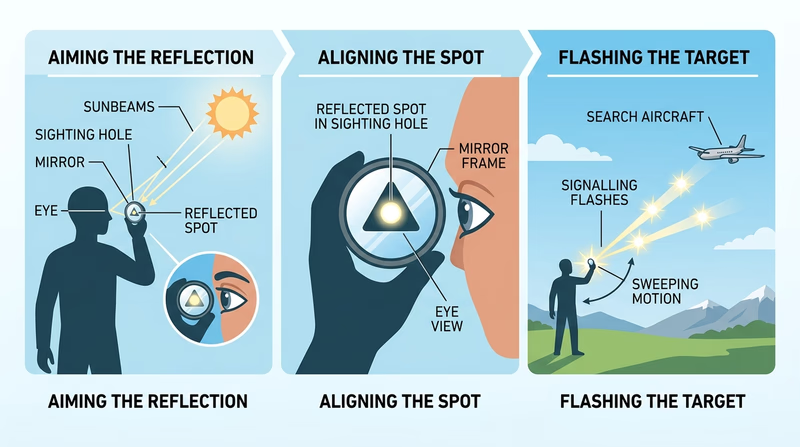
A signaling mirror is one of the best daylight tools for long-distance signaling because the flash can travel much farther than your voice. To use one well, face the sun, make a bright spot with the mirror, and sweep that flash across the target such as an aircraft, distant ridge, boat, or search team.
If your mirror has a sighting hole, hold it near your eye and align the reflected bright spot with the target. If it does not, practice aiming by watching where the reflected light lands. The key is not random waving. You want controlled flashes that pass across the rescuer’s line of sight.
Requirement 2e
A Personal Locator Beacon is an emergency device that sends a distress signal through a satellite system when activated. Unlike a normal text message, it is built for rescue, not everyday communication. Many PLBs also transmit location information from an internal GPS receiver, which helps rescuers narrow the search area faster.
A PLB does not replace judgment, navigation, or a trip plan. It is a last-resort emergency tool for serious situations.
The Air Force Rescue Coordination Center coordinates many inland federal search-and-rescue missions in the United States. In the merit badge pamphlet resources section, the AFRCC appears as one of the key organizations connected to rescue coordination. For a Scout-level explanation, think of AFRCC as part of the system that helps route beacon alerts and connect the right rescue agencies to the incident.
NOAA — Personal Locator Beacons How PLBs work, when to register them, and how they fit into the rescue-alert system. Link: NOAA — Personal Locator Beacons — https://www.sarsat.noaa.gov/emergency-beacons/personal-locator-beacons/ Air Force Rescue Coordination Center Official overview of the inland search-and-rescue coordination center referenced in the merit badge pamphlet. Link: Air Force Rescue Coordination Center — https://www.1af.acc.af.mil/Units/AFRCC/In Req 1b, you looked at the gear that helps you stay safe. Now take that prevention mindset into navigation and map reading, where searchers turn scattered clues into a clear picture of terrain and movement.