Req 1b — Safe Gun Handling Rules
These rules are universal. They apply to shotguns, rifles, handguns, air guns, and muzzleloaders. They apply whether the firearm is loaded, unloaded, on a range, in a home, or in transit. Memorize them, internalize them, and follow them every single time.
The Four Universal Rules
1. Treat every firearm as if it is loaded. Never assume a gun is unloaded. Every time you pick up a firearm—even one you just set down—check its condition. Open the action, look into the chamber, and verify it is clear. This habit prevents the most common type of firearms accident: the one that begins with “I didn’t know it was loaded.”
2. Always point the muzzle in a safe direction. A “safe direction” means a direction where, if the gun were to fire, no person would be injured and no property would be damaged. On a range, that means downrange. At home, that means away from people, walls with people on the other side, and windows. This is the single most important rule: if the muzzle is always pointed safely, nothing else can cause a tragedy.
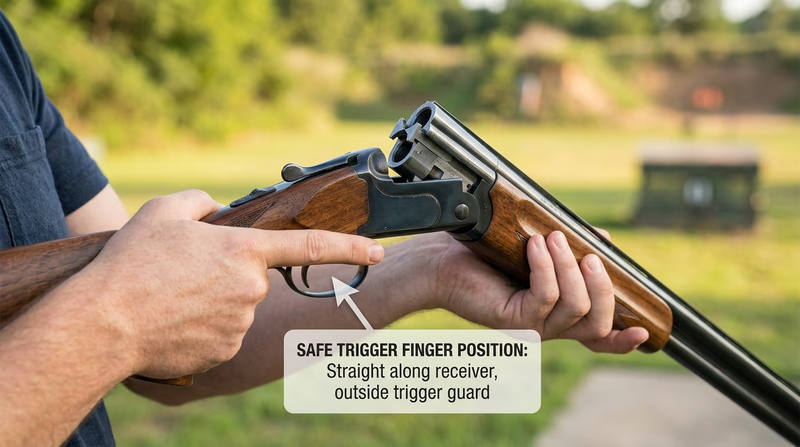
3. Keep your finger off the trigger until you are ready to shoot. Your finger rests along the side of the receiver or the trigger guard—never inside the guard—until the instant you have made the decision to fire and have the target in your sight. This prevents unintentional discharges caused by stumbling, flinching, or being startled.
4. Be sure of your target and what is beyond it. Before you fire, you must positively identify your target and know what lies behind and around it. Shotgun pellets can pass through a clay target and continue traveling. In a hunting scenario, you must see the entire animal clearly—never shoot at sound, movement, or a shape you cannot identify.
Why All Four Rules Work Together
Each rule is a backup for the others. If you break one rule but follow the remaining three, no one gets hurt. Accidents happen when two or more rules are violated at the same time. That layered protection is what makes these rules so effective—but only if you follow all of them, all the time.
The Counselor Conversation
Be ready to state all four rules from memory and explain the reasoning behind each one. Your counselor may present a scenario—“You’re walking through a field and you trip”—and ask which rules protect you and the people around you.