Req 2A-c — Parts of a Shotgun Shell
A shotgun shell (also called a shotshell) is a self-contained unit of ammunition. Unlike a rifle cartridge that fires a single bullet, a shotshell fires a charge of many small pellets. Understanding each part helps you select the right ammunition and recognize problems.
The Parts, from Base to Top
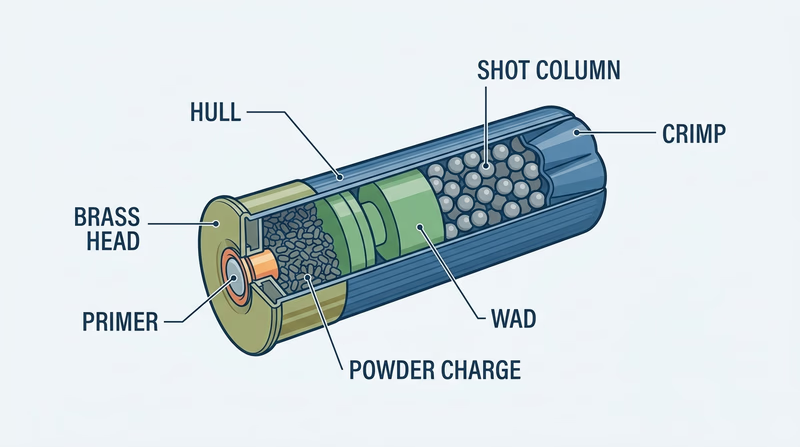
Brass Head (Base)
The metal base of the shell. It contains the primer pocket and reinforces the hull where chamber pressure is highest. The gauge marking and shell length are stamped here.
Primer
A small, impact-sensitive cap pressed into the center of the brass head. When the firing pin strikes the primer, it detonates and sends a flash of flame into the powder charge. This is what initiates the entire firing sequence.
Powder Charge (Propellant)
Smokeless powder sits above the primer. When ignited by the primer flash, it burns rapidly and produces expanding gases. The amount and type of powder determine the shell’s velocity and pressure.
Wad
A plastic cup-and-piston assembly between the powder and the shot. The wad serves three functions:
- Seals gas pressure behind the shot column so expanding gases push the shot forward instead of leaking past it.
- Cushions the shot during the initial acceleration, reducing pellet deformation.
- Holds the shot together as it travels down the bore, releasing it at the muzzle.
Shot (Payload)
The projectiles themselves—small spherical pellets made of lead, steel, bismuth, tungsten, or other materials. Shot size is designated by a number: smaller numbers mean larger pellets (No. 2 shot is bigger than No. 8 shot). Larger pellets carry more energy per pellet but provide fewer pellets in the pattern.
Crimp
The folded closure at the top of the hull that holds everything inside. When the powder ignites, pressure forces the crimp open and releases the wad and shot. Most modern shells use a star crimp (folded inward) rather than a roll crimp.
Hull (Case)
The plastic (or sometimes paper) tube that holds all the components together. Hulls are color-coded by manufacturer and type, but color is not a reliable indicator of gauge—always read the markings on the brass head.
How It All Works Together
Trigger pull → firing pin strikes primer → primer ignites powder → expanding gases push wad and shot forward → crimp opens → wad separates from shot after leaving the muzzle → shot spreads into a pattern.
The Counselor Conversation
Be ready to identify all parts on a cutaway shell or diagram and explain the function of each. Your counselor may hand you a live shell and ask you to point to where each component is located.