Req 2A-d — Shotgun Gauges
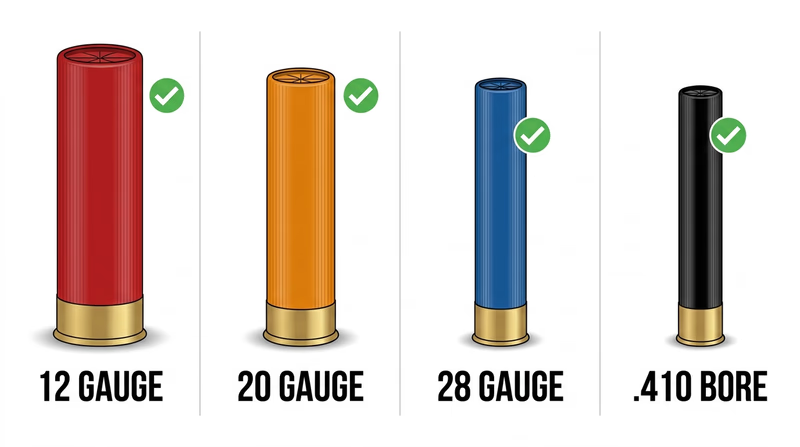
“Gauge” is how shotgun bore diameter is measured. The system dates back centuries: the gauge number equals the number of lead balls of that bore diameter it takes to make one pound. A 12-gauge bore fits a lead ball weighing 1/12 of a pound. A 20-gauge bore is smaller—it fits a ball weighing 1/20 of a pound. Lower gauge number = larger bore.
The one exception is the .410, which is measured in caliber (inches of bore diameter), not gauge.
Common Gauges
| Gauge | Bore Diameter | Typical Use |
|---|---|---|
| 10 gauge | 0.775" | Waterfowl (less common today) |
| 12 gauge | 0.729" | Most versatile; trap, skeet, sporting clays, hunting |
| 16 gauge | 0.662" | Upland hunting (niche but loyal following) |
| 20 gauge | 0.615" | Youth and smaller-framed shooters, upland hunting |
| 28 gauge | 0.550" | Skeet, sporting clays (sub-gauge events) |
| .410 bore | 0.410" | Small game, introductory shooting |
Choosing a Gauge for a Purpose
For clay target sports (trap, skeet, sporting clays): The 12 gauge is the standard. It throws the most shot, produces the densest patterns, and gives you the best chance of breaking targets. Most ranges and competitions are built around the 12 gauge. The 20 gauge is a good second choice for youth shooters who find 12-gauge recoil uncomfortable.
For upland bird hunting (pheasant, quail, grouse): The 12 or 20 gauge are the most popular. The 20 gauge is lighter to carry over long walks, produces less recoil, and is effective at typical upland distances (under 40 yards). The 16 gauge is a traditional favorite in this role.
For waterfowl hunting (ducks and geese): The 12 gauge dominates because it throws enough non-toxic shot (steel or bismuth) to produce effective patterns at the longer distances waterfowl require. Some hunters use 10 gauge for geese.
For a youth shooter or beginner: A 20 gauge or .410 generates less recoil, making it easier to develop good fundamentals without flinching. However, the .410’s small shot charge makes breaking targets harder—so many instructors prefer starting youth on a 20 gauge for clay target work.
Why Gauge Matters for Safety
Never fire ammunition of a different gauge in a shotgun. A 20-gauge shell can slide partway down a 12-gauge barrel, creating a catastrophic obstruction if a 12-gauge shell is then loaded and fired behind it. Always verify that the ammunition matches the gauge stamped on the barrel.
The Counselor Conversation
Be ready to name at least four gauges, explain the gauge numbering system, and recommend a specific gauge for two or three different scenarios with your reasoning.