Req 2A-j — Shooting Moving Targets
This is the scored shooting exercise—where you put everything together. You must hit at least 12 out of 25 clay targets in two separate 25-target groups, for a minimum of 50 shots total. The two groups do not have to be shot back-to-back.
The Four Fundamentals of Shotgun Shooting
Unlike rifle shooting, where you aim using sights on a stationary target, shotgun shooting requires you to track and lead a moving target. The four fundamentals work together as a single fluid motion:
1. Position (Stance)
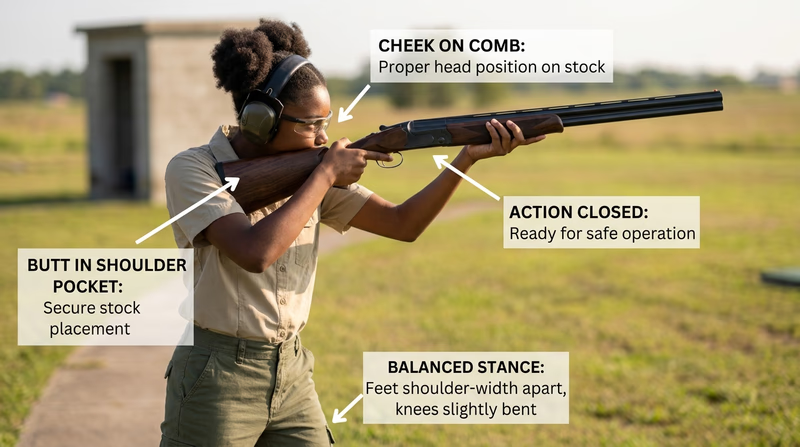
Stand with your feet about shoulder-width apart, with your lead foot (left foot for right-handed shooters) slightly forward. Your weight should be slightly forward, on the balls of your feet. Keep your knees slightly bent and your upper body leaning slightly toward the target. This athletic stance lets you rotate your whole body smoothly.
2. Mount
Bring the stock to your cheek and shoulder in one smooth motion. The comb of the stock contacts your cheek first, then the buttpad seats into the pocket of your shoulder. A consistent mount puts your eye in the same position relative to the barrel every time—this is what makes pointing accurate.
3. Vision (Eyes on the Target)
Keep both eyes open and focused on the target—not the barrel, not the bead. Your eyes should track the clay target the same way they track a ball thrown to you. The barrel stays in your peripheral vision. If you shift your focus to the barrel, you will lose the target’s speed and trajectory.
4. Movement (Swing and Lead)
Start the gun moving with the target before you mount. As you mount, accelerate the barrel past the target (this creates “lead”—the distance ahead of the target where you need the shot to be when it arrives). Fire while the gun is still moving and continue the swing after the shot. This follow-through prevents you from stopping the gun at the instant of firing, which is the most common cause of misses.
The Scoring Standard
- Two groups of 25 targets each.
- Hit at least 12 out of 25 in each group.
- The groups do not need to be shot consecutively.
- A minimum of 50 total shots must be fired.
- Shooters must shoot in rounds of 25, though the rounds do not have to happen on the same day.
Twelve out of twenty-five is a more demanding standard than the old 5-of-15 benchmark, so consistency matters. Most Scouts who struggle are stopping the gun, rushing the mount, or shifting focus from the target to the barrel.
Target Setup Rules
Your counselor and range officer will manage the target setup, but you should understand the rules:
- Targets may be thrown by a hand trap, manual mechanical trap, or on a standard trap or skeet field.
- On a trap field, you shoot from station 3 with the trap set to throw straightaway targets.
- On a skeet field, shoot from station 7, low house.
- All targets should be thrown at a reasonable speed, in the same direction, and climbing after release.
- Use an age-appropriate 12-, 16-, or 20-gauge target shotgun with commercially manufactured ammunition only. Reloads are not permitted in Scouting America range and target activities.
Tips for Success
- Focus on the target, not the score. Worrying about your count causes tension, which disrupts your mount and follow-through.
- Follow through on every shot. Keep the gun moving after you pull the trigger, even if you think you missed.
- Breathe. Take a breath before calling for each target. Tension and held breath cause jerky movements.
- Accept misses. Even experienced shooters miss. Focus on the process, and the hits will come.
🎬 Video: How to Shoot Trap | Shotgun Tips with Gil Ash — NSSF—The Firearm Industry Trade Association — https://www.youtube.com/watch?v=yOcxjSEDPmk