Req 2B-m — Shooting Moving Targets
This is the scored shooting exercise for the muzzleloading option. The scoring standard and the four fundamentals are the same as Option A, but shooting a muzzleloader adds unique challenges: a longer lock time (the delay between pulling the trigger and the shot leaving the barrel), more recoil, and the need to reload between every shot.
The Four Fundamentals (Review)
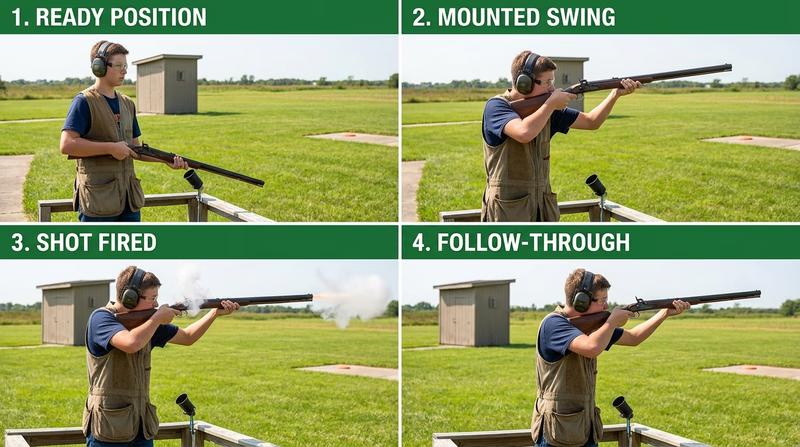
The four fundamentals of shotgun shooting apply identically to muzzleloading:
1. Position (Stance)
Feet shoulder-width apart, lead foot slightly forward, weight on the balls of your feet, knees slightly bent. This athletic stance lets you rotate your body smoothly to track the target.
2. Mount
Bring the stock to your cheek and shoulder in one smooth motion. The comb contacts your cheek first, then the buttpad seats into the pocket of your shoulder. Consistency is everything—if the mount changes, the point of impact changes.
3. Vision (Eyes on the Target)
Both eyes open, focused on the target. Do not look at the barrel or the bead. Track the clay target the way you would track a ball thrown to you.
4. Movement (Swing and Lead)
Start the gun moving with the target. Accelerate past it to establish lead. Fire while still moving. Follow through—keep swinging after the shot.
Muzzleloading-Specific Challenges
Longer lock time: From the moment you pull the trigger, the hammer must fall, the cap must fire, the flame must travel through the flash channel, and the powder must ignite. This takes longer than a modern shotgun’s firing sequence. You must maintain your swing through this entire delay. If you stop the gun at the trigger pull, you will miss behind.
Recoil: Black powder loads in a 12-gauge muzzleloader can produce significant recoil. A solid, consistent mount absorbs recoil better than a loose one. Lean into the gun.
Reload time: After each shot, you must reload—powder, wads, shot, over-shot card, cap. This takes 30–60 seconds even for experienced shooters. Use the time to relax, breathe, and mentally rehearse the fundamentals before calling for your next target.
The Scoring Standard
- Two groups of 15 targets each.
- Hit at least 5 out of 15 in each group.
- The groups do not need to be shot consecutively.
- A minimum of 30 total shots must be fired.
Because of the longer lock time and slower reloading, 5 out of 15 is a solid achievement with a muzzleloader. Focus on smooth, consistent fundamentals rather than trying to force hits.
Tips for Success
- Maintain your swing. The number-one cause of misses with a muzzleloader is stopping the gun at the trigger pull because of the longer lock time. Trust the process and keep moving.
- Focus on the target, not the score. Counting hits and misses during a string breaks your concentration.
- Stay relaxed between shots. Reloading time is recovery time. Breathe.
- Trust your preparation. If you have loaded correctly and the gun is functioning, the fundamentals will get you hits.