Req 2a2 — Outdoor Ice & Ice Rescue
Outdoor ice skating on ponds, lakes, and rivers is a tradition with real risks that indoor rink skating does not have. You need to understand what to check before anyone steps on natural ice — and what to do if someone falls through.
Preparations for Outdoor Ice Skating
Check ice thickness. Thickness is the most important safety factor. Clear, blue-black ice is the strongest; white or opaque ice has air bubbles and is weaker. Snow-covered ice is unpredictable — snow insulates and slows freezing, and may hide weak spots.
| Ice Thickness | Safe Use |
|---|---|
| Less than 4 inches | Stay off |
| 4 inches | One person on foot (skating) |
| 5–7 inches | Small group of people on foot |
| 8–12 inches | Snowmobile or ATV |
| 12+ inches | Small vehicle |
Check thickness by drilling or chiseling test holes every 150 feet across the area you plan to use. Do not rely on one measurement — ice thickness varies across a body of water.
Check for hazards below the surface. Springs, inlets, outlets, and currents beneath the ice weaken it. Avoid areas near running water, docks, bridge pilings, or spots where people or animals have been walking (they may have broken through and refrozen).
Never skate alone. Always skate in groups with a buddy system, within sight of shore, and let someone onshore know your plan and expected return time.
Carry rescue equipment. Before anyone skates, have these items at the ice’s edge: a throw rope or ring buoy, a long branch or ladder, and a first-aid kit. Cell phones should be waterproofed in a pocket close to your body (warmth keeps batteries alive in cold).
Dress appropriately. Wear insulating layers and a life jacket under an outer layer if ice is marginal. Ice picks (a pair of pointed handles on a lanyard worn around the neck) can help a person self-rescue by stabbing the ice edge to pull themselves out.
Plan your escape. Know where the nearest warm shelter, vehicle, or building is before you skate. Hypothermia can set in faster than people expect.
How to Make an Ice Rescue
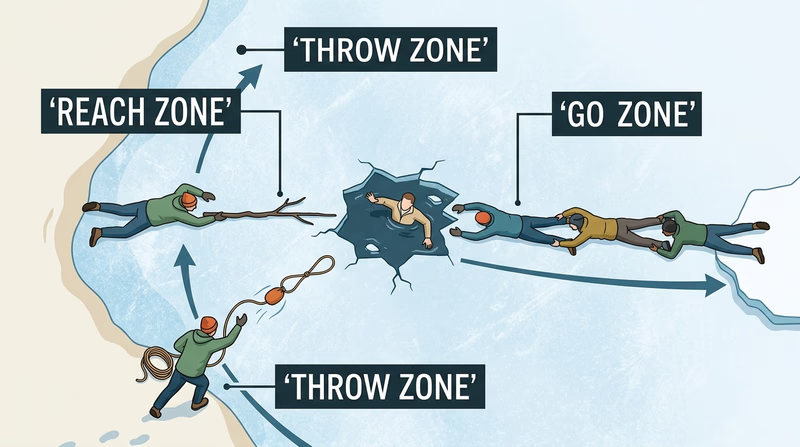
When someone falls through the ice, the instinct to run toward them is wrong — the same weak ice that failed for them can fail for you. Use the Reach-Throw-Go method and always put your own safety first.
Reach. Stay on solid ice near shore. Lie flat to distribute your weight. Extend a rope, branch, belt, ladder, jumper cables, or any long object to the victim. Have them kick to the ice surface and pull them out horizontally.
Throw. If you cannot reach them directly, throw a rope, ring buoy, or tied-together clothing items to the victim. Have them wrap it under their arms and pull.
Go (with caution). As a last resort, form a human chain — rescuers lie flat and grip each other’s ankles, extending the chain toward the victim. Never stand when approaching a victim on weak ice.
After the rescue. Treat for hypothermia immediately — get the victim to a warm, dry environment, remove wet clothing, and wrap in blankets. Call 911 or activate emergency services. Even someone who seems fine after a cold-water immersion should be evaluated medically.
Official Resources
🎬 Video: How To Know if Ice Is Safe To Walk On (video) — https://youtu.be/KmYeulVH8IE
🎬 Video: Test Ice Thickness (video) — https://youtu.be/BWLvW-d5jBY
🎬 Video: How to Save Someone Who Falls Through Ice (video) — https://youtu.be/yVXJQq41tTA