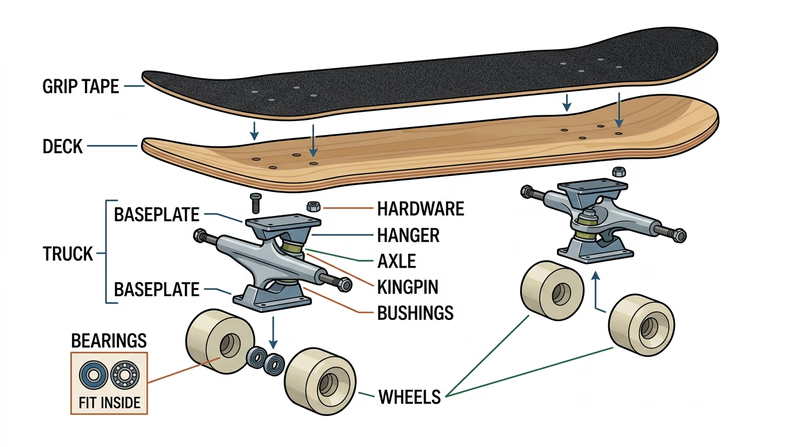
Req 2d6 — Skateboard Anatomy
Before you build a board in Requirement 2d7, you need to know every part and what it does. Your counselor wants you to explain each component clearly.
The Complete Skateboard
Deck The wooden platform you stand on. Most street decks are 7–8.5 inches wide and made from 7–9 plies of Canadian maple glued together with alternating grain direction for strength and flex. The nose is the front (usually narrower or more pointed); the tail is the rear (usually wider or more square). The concave is the slight cup across the width — it lets your feet feel the edges and helps with board control. Decks are typically coated with grip tape on top.
Grip Tape A sandpaper-like adhesive layer applied to the top of the deck. Grip tape provides traction for your shoes, helping you keep your feet on the board during tricks.
Trucks Two metal axle assemblies mounted on the underside of the deck (one under the nose, one under the tail). Each truck consists of:
- Baseplate — the flat mounting plate screwed to the deck
- Hanger — the T-shaped metal bar that holds the axle
- Axle — the rod running through the hanger that the wheels attach to
- Kingpin — the large bolt running through the center of the truck that holds the hanger to the baseplate; its tightness controls truck responsiveness
- Bushings — soft polyurethane cushions around the kingpin that absorb turning pressure; softer = easier turning, harder = more stable
Wheels Four polyurethane wheels (one on each end of each truck axle). Measured in diameter (50–60mm for street; 55–65mm for park/vert) and hardness (durometer rating — 78A–101A; softer = more grip and smoother ride; harder = faster and better for tricks on smooth surfaces).
Bearings Two per wheel, eight total. Ball bearings inside the wheel hub allow wheels to spin. Rated ABEC-1 through ABEC-9 (higher = more precision) or by the industry’s own “Bones Reds” style standard.
Hardware Eight bolts and eight nuts (four per truck) that mount the trucks to the deck. Standard hardware is 7/8" for most setups; longer hardware (1"–1.25") accommodates risers.
Risers (optional) Hard plastic pads placed between the truck baseplate and the deck to raise the board height. Risers reduce wheel bite (wheels touching the deck during sharp turns) and can soften the ride slightly.