Small-Boat Sailing Merit Badge — Complete Digital Resource Guide
https://merit-badge.university/merit-badges/small-boat-sailing/guide/
Introduction & Overview
Small-boat sailing teaches you how wind, water, and judgment work together. It is part science, part teamwork, and part feel. When a sailboat moves well, it is not because the sailor is forcing it. It is because the sailor notices what the wind is doing and responds at the right time.
Then and Now
Then
For thousands of years, small sailboats were practical tools. People used them to fish, carry cargo, travel between islands, and train young sailors before trusting them with larger craft. A sailor who could read clouds, trim a sail, and bring a boat home safely had a skill people truly depended on.
Now
Today, small-boat sailing is still practical, but it is also a sport, a teaching tool, and a lifelong hobby. Camps, yacht clubs, school teams, and community programs use dinghies and other small craft to teach balance, weather awareness, teamwork, and responsibility on the water.
Get Ready!
You do not need to be bigger than the wind to sail well. You need to stay calm, pay attention, and make steady choices. This guide will help you understand what your counselor expects before you ever sheet in and leave shore.
Kinds of Small-Boat Sailing
Dinghy sailing
A dinghy is a small sailboat, often light enough to launch from a beach or ramp. Dinghies react quickly to wind shifts and crew movement, which makes them great teaching boats. Because they are small and responsive, they also teach respect for balance and trim fast.
Daysailing
Daysailing means going out for a short trip and returning the same day. This is the kind of sailing most Scouts picture first: launching from a dock or beach, following a short course, practicing maneuvers, and coming back in before conditions change too much.
Racing and skill-building sailing
Some small boats are used for racing. Racing teaches quick decision-making, clean boat handling, and sharper awareness of the rules of the road. Even if you never race, practice on a small sailboat still builds many of the same habits.
Cruising and seamanship training
Some small keelboats and training craft are used to teach seamanship that carries into larger boats. On these boats, Scouts learn that knots, float plans, weather checks, and good communication matter just as much as making the boat go fast.
Before you take the helm, you need the safety mindset that supports every skill in the badge.
Req 1 — Safety, Injuries & Safety Afloat
This opening requirement gives you the safety mindset for the whole badge. It covers three connected ideas: the hazards you are most likely to meet while sailing, the injuries and illnesses that can happen on the water, and the Safety Afloat system that Scouting uses to reduce preventable risk.
Requirement 1a
A small sailboat feels peaceful right up until something changes fast. Wind shifts, the boom swings, a squall builds, or someone loses balance during a maneuver. Your counselor wants you to think like a sailor before things go wrong, not after.
A four-step way to talk about hazards
Hazard Thinking for Sailors
The verbs in the requirement matter- Anticipate: Notice what could go wrong before it does.
- Prevent: Take actions that lower the chance of the problem.
- Mitigate: Reduce the damage if the problem still happens.
- Respond: Know what to do once the incident begins.
Common small-boat sailing hazards
Wind and sudden weather changes. Wind is the engine of the boat, but it is also the source of many sailing problems. Gusts can overpower beginners, push the boat onto its side, or make docking harder than expected.
Boom strikes and moving gear. The boom can swing suddenly during a tack or jibe. Sheets under load can also snap across the cockpit or pinch fingers.
Capsize risk. Many training sailboats are designed to be capsizable. That makes them useful learning boats, but it also means Scouts must be ready for getting wet and staying calm.
Cold water and exposure. Water temperature matters as much as air temperature. Falling into cool water can steal strength and clear thinking fast.
Sun, heat, and dehydration. Hours on reflective water can make sunburn and heat stress build faster than you expect.
Collision and grounding. Shallows, docks, swimmers, paddlers, moored boats, and other traffic all demand attention.
What good answers sound like
A strong answer to your counselor connects each hazard to a response. For example, if you mention a boom strike, also explain how to prevent it by warning the crew, watching the boom during maneuvers, and keeping your head low during a jibe. If you mention capsize, explain how life jackets, buddy awareness, supervision, and calm capsize recovery reduce the danger.
Requirement 1b
This requirement is about recognizing trouble early and responding before a smaller problem becomes a bigger emergency.
Prevention of common sailing injuries and illnesses
- Blisters: Wear sailing gloves if appropriate, keep ropes from sawing across bare skin, and make sure footwear fits well.
- Cold-water shock and hypothermia: Dress for water temperature, not just air temperature. Avoid cotton in cool conditions.
- Dehydration and heat illness: Drink before you feel thirsty, use shade breaks when possible, and wear sun-protective clothing.
- Sunburn: Reapply sunscreen and remember that water reflects sunlight upward.
- Sprains and strains: Move carefully in the boat, keep your center of gravity low, and avoid jumping from dock to boat.
Symptoms to recognize early
- Blisters: hot spot, rubbing, tender skin, raised fluid-filled area.
- Cold-water shock: gasping, panic, fast breathing, poor control in the first moments after immersion.
- Hypothermia: shivering, clumsiness, slurred speech, confusion, unusual tiredness.
- Dehydration: thirst, headache, dizziness, dark urine, weakness.
- Heat-related illness: cramps, nausea, heavy sweating, weakness, confusion, or in severe cases hot skin and altered thinking.
- Sunburn: red, hot, painful skin; later blistering in severe cases.
- Sprains and strains: pain, swelling, reduced motion, weakness, or pain during use.
First aid that fits these conditions
For blisters, reduce friction, cover the area, and avoid making the rubbing worse.
For cold-water shock, focus first on flotation, calm breathing, and reaching safety. For hypothermia, remove wet clothing, insulate the person, warm the core gently, and get medical help for moderate or severe cases.
For dehydration and milder heat illness, move the person to shade, cool them down, and give fluids if they are awake and alert. Severe heat illness is an emergency.
For sunburn, get out of direct sun, cool the skin, and avoid more exposure. For sprains and strains, rest the injury, cool it, and stop activity until the person can be assessed.
American Red Cross — First Aid Steps Trusted first-aid guidance for common injuries and illnesses, including when to get more advanced care. Link: American Red Cross — First Aid Steps — https://www.redcross.org/get-help/how-to-prepare-for-emergencies/types-of-emergencies/first-aid.htmlRequirement 1c
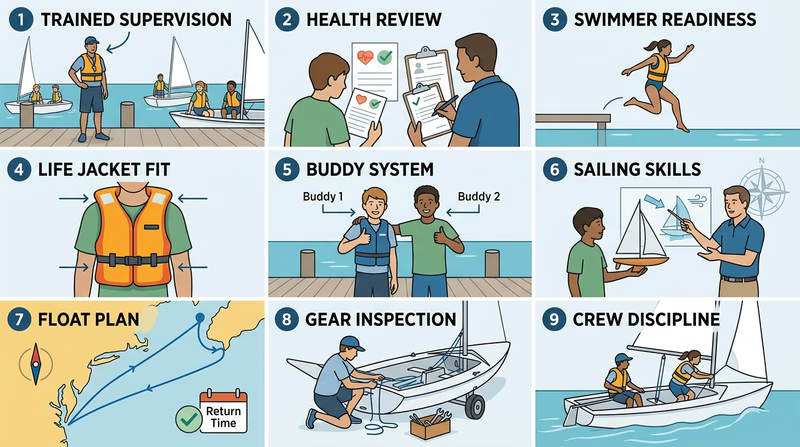
Safety Afloat is the safety system behind every Scout boating activity. In sailing, it matters because small boats react quickly to weather, balance changes, and crew decisions. The policy gives structure to those decisions before the boat even launches.
The nine points of Safety Afloat
1. Qualified supervision
A trained adult age 21 or older supervises the activity and accepts responsibility for safety. In sailing, that means someone with both Safety Afloat training and practical judgment about the boats and conditions.
2. Personal health review
Leaders need to know about medical issues, medication needs, or physical limits that matter on the water.
3. Swimming ability
Sailing includes capsize and overboard risk. Everyone must have honest swimming classification for the activity.
4. Life jackets
Correctly fitted life jackets belong on sailors when the activity requires them. On small boats, that is a major layer of protection, not an optional extra.
5. Buddy system
Each sailor has a buddy, and the group keeps track of every person.
6. Skill proficiency
People build up to conditions they can handle. Beginners do not start in strong wind just because the schedule says it is sailing day.
7. Planning
The route, weather, launch site, emergency plan, and float plan are thought through ahead of time.
8. Equipment
Boats, sails, lines, personal flotation, and rescue gear must match the activity and be in good condition.
9. Discipline
Everyone follows instructions, stays alert, and avoids horseplay. Sailing gets unsafe fast when people ignore commands during maneuvers.
Explain Safety Afloat Like a Sailor
Turn policy into on-the-water examples- Supervision: Who is in charge if conditions worsen?
- Swimming ability: Why is the swimmer test required before advanced drills?
- Planning: What should be in your float plan and weather check?
- Equipment: How do you know the boat and safety gear are ready?
- Discipline: Why do quick responses matter during a tack, jibe, or capsize?
You now have the safety foundation for the badge. Next, prove you are ready for the water itself with the swimmer test requirement.
Req 2 — Swimmer Test Readiness
A sailor plans to stay in the boat, but smart sailors prepare for the moment something goes wrong. A capsize, a slip at the dock, or a rescue drill can put you in the water fast. That is why this requirement comes early. Your counselor needs to know that you can stay calm and function in the water before you begin the badge’s hands-on sailing work.
Why this matters in sailing
Small-boat sailing happens in an environment where wind, waves, and gear can change the situation quickly. If you end up overboard or beside a capsized boat, panic makes every decision worse. The swimmer test helps prove that you can move with control, manage your breathing, and finish a demanding task even when you are tired.
The test is also part of the bigger Safety Afloat system you studied in Req 1. Swimming ability is one of the nine points because boating safety depends on honest skill assessment.
How to Prepare for the Swimmer Test
Steady effort matters more than speed- Know the sequence: Ask your counselor or aquatics staff to review the full test before you begin.
- Use smooth strokes: Splashing wastes energy.
- Pace the early part: Do not burn yourself out trying to impress anyone in the first few lengths.
- Practice treading water when tired: The finish still counts.
- Be honest: If you need more practice, say so and train for it.
What your counselor wants to hear
A strong discussion of this requirement is not just, “I passed.” Explain why the swimmer test belongs in a sailing badge:
- it prepares you for capsize and rescue drills
- it supports buddy-based boating activities
- it lowers panic risk during a real emergency
- it proves you are ready for more advanced on-the-water skills
Passing the swimmer test clears you for the badge’s sailing drills. Next, make sure you can name and understand the boat itself.
Req 3 — Know Your Boat
You cannot handle a sailboat well if every part of it is just “that rope” or “that pole.” This requirement is about knowing what the boat is called and what each part actually does. When your counselor says “ease the mainsheet” or “watch the tiller,” you should know immediately what that means.
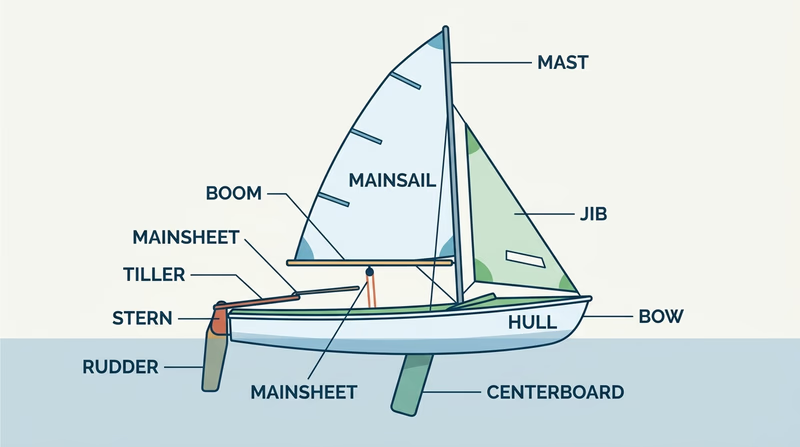
The main parts most Scouts should know
Hull
The hull is the body of the boat. It provides flotation and shape. In a small sailboat, the hull is also where crew movement matters most. Leaning too far one way changes balance and performance.
Bow and stern
The bow is the front of the boat. The stern is the back. Sailors use these words because “front” and “back” get confusing fast when people are moving around and giving directions.
Port and starboard
Port means the left side when you face the bow. Starboard means the right side. Learn these early. They are part of the language of safe communication afloat.
Mast, boom, and sails
The mast holds the sails up. The boom supports the bottom edge of the mainsail and swings across the boat during maneuvers like tacking and jibing. The mainsail is the primary sail on most training boats. If your boat is a sloop, it also has a jib at the front.
Rudder, tiller, and centerboard
The rudder helps steer the boat. The tiller is the handle connected to the rudder. On many training boats, you steer by pushing or pulling the tiller. The centerboard or daggerboard helps the boat resist sideways sliding and makes sailing upwind possible.
Standing rigging and running rigging
Standing rigging supports the mast and usually stays in place. Running rigging includes the lines you adjust, such as halyards and sheets. A halyard raises a sail. A sheet controls a sail’s angle to the wind.
A simple way to explain functions
When you describe your boat to your counselor, group parts by job:
Explain the Boat by Function
A clean way to organize your answer- Float and balance the boat: hull, centerboard or daggerboard.
- Hold the sail plan up: mast, stays, shrouds.
- Catch and control the wind: mainsail, jib, boom, sheets.
- Steer the boat: rudder, tiller.
- Keep people safe and organized: hiking straps, flotation, bailer, painter, and other small-boat gear.
Tailor your answer to the actual boat you sail
A Sunfish, Optimist, Flying Scot, Laser, or other training boat may not have the same exact hardware. That is fine. What matters is that you can describe the major parts on your boat and explain what they do.
U.S. Coast Guard Boating Safety Reliable boating-safety background that helps you connect boat parts with safe operation on the water. Link: U.S. Coast Guard Boating Safety — https://www.uscgboating.org/Once you know the boat, the next step is planning the trip around safety, weather, and gear before you launch.
Req 4 — Planning, Weather & Gear
This requirement is the pre-launch discipline of sailing. It covers the safety system Scouting expects, the local rules that keep boats from colliding, the weather judgment that keeps a fun day from becoming an emergency, the float plan someone on shore depends on, and the clothing and gear that keep you working well on the water.
Requirement 4a
This is the full policy framework behind safe sailing. You already saw the nine points in Req 1. Here, the goal is to discuss them confidently before the boat ever leaves shore.
The nine points in a sailing context
- Qualified supervision — someone trained and responsible is in charge.
- Personal health review — leaders know who has health issues that matter on the water.
- Swimming ability — sailors are honestly classified for water competence.
- Life jackets — fitted, worn, and appropriate to the activity.
- Buddy system — no one is alone or unaccounted for.
- Skill proficiency — sailors are not pushed into conditions beyond their training.
- Planning — route, weather, float plan, and emergency response are thought through.
- Equipment — the boat and its safety gear are inspected and ready.
- Discipline — people follow directions immediately and avoid horseplay.
Discuss Safety Afloat Before Launch
What your counselor wants to hear- Name the point clearly.
- Connect it to a real sailing action.
- Explain why it matters before getting underway.
Requirement 4b
The rules of the road are the shared system boaters use to avoid confusion and collision. They cover who gives way, how to behave in channels and traffic areas, and how to operate legally on the waters where you sail.
For your counselor discussion, think in two layers:
- general boating navigation rules that help boats avoid one another
- local or state rules such as life-jacket laws, age or training requirements, restricted areas, and local launch rules
A strong answer explains that local laws vary, so sailors must check the rules for the exact place where they boat.
U.S. Coast Guard Navigation Rules A federal source for navigation rules that help boaters understand right-of-way and collision avoidance. Link: U.S. Coast Guard Navigation Rules — https://www.navcen.uscg.gov/navigation-rules-amalgamatedRequirement 4c
Sailing performance and sailing safety are tied together. The same wind that makes the boat move also decides how hard the boat heels, how quickly the sails load up, and how much recovery time you have when something goes wrong.
Water conditions that matter
Chop, boat wakes, current, shallow water, and crowded sailing areas can all change how the boat handles. A small dinghy that feels simple on flat water can become much harder to steer cleanly in waves or gusts.
Weather hazards that matter
Thunderstorms, fast-moving fronts, dropping temperature, strong gusts, and reduced visibility all make sailing riskier. Weather changes also affect judgment: tired, cold, wet sailors make worse decisions.
Heavy wind and performance
In stronger wind, the boat may heel harder, weather helm may increase, maneuvers happen faster, and mistakes get punished sooner. What feels exciting in a controlled setting can become unsafe if the crew is overloaded or undertrained.
Requirement 4d
The key skill here is early recognition. Good sailors notice the day changing before the storm is overhead.
Warning signs to watch for
- building dark clouds, especially tall thunderheads
- sudden wind shifts or gustier conditions
- a fast temperature drop
- distant thunder
- flattening light, haze, or visibility changes
- whitecaps increasing on the water
What to do when weather worsens
If heavy winds build or a storm approaches, shorten the problem immediately. Head for the safest landing or protected water, reduce sail if appropriate for the boat and supervision available, secure loose gear, and follow the adult leader’s decision without delay.
National Weather Service Official forecasts, alerts, and local weather information that help sailors assess storm and wind risk. Link: National Weather Service — https://www.weather.gov/Requirement 4e
A float plan is the message you leave with someone on shore so they know where you are, what boat you are using, when you expect to return, and what to do if you do not check in.
A typical float plan should include:
- names of sailors and adult leaders
- type of boat being used
- launch location
- planned route or sailing area
- start time and expected return time
- emergency contact information
- what the shore contact should do if you are overdue
Requirement 4f
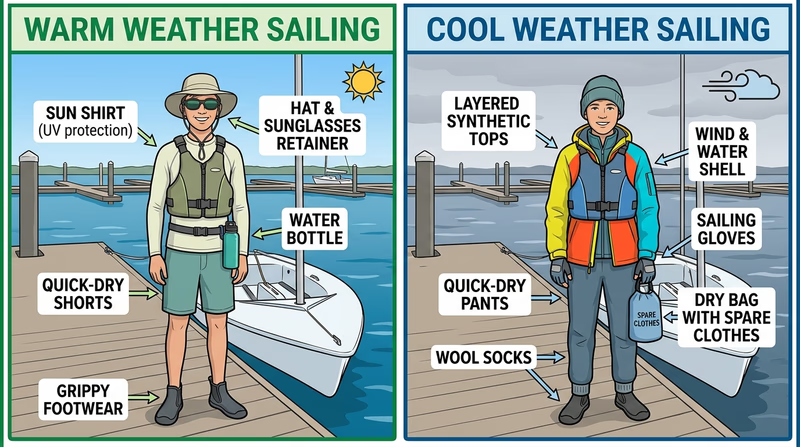
Sailing clothing is about function first. You need gear that helps you move, stay warm enough or cool enough, grip wet surfaces, and avoid preventable problems like sunburn or cold stress.
Warm-weather choices
Think sun shirt or quick-drying layers, hat, sunscreen, closed-toe footwear with grip if required by the activity, water bottle, and clothes that still work when wet.
Cool-weather choices
Add insulating synthetic or wool layers, a wind-blocking shell, extra dry clothes, and gear that protects hands and feet from staying cold and wet. Avoid cotton in cooler conditions because it holds water and loses warmth.
Why this matters
Good clothing helps you stay focused on sailing instead of getting distracted by slipping, shivering, overheating, or burning in the sun.
Personal Gear for a Sailing Day
Adjust for the season and conditions- Clothing that still works wet
- Footwear with traction and protection
- Sun protection
- Water and weather layers
- Dry spare clothes for after the outing
Before you can trim sails and steer well, you need to read the wind that powers the boat.
Req 5 — Read the Wind
A sailor who cannot read the wind is guessing. Before you launch, you should know where the wind is coming from, whether it is steady or shifting, and how the water and nearby objects confirm what you think you see. Wind direction tells you how you will leave the dock, what points of sail are possible, and where the harder parts of the trip will happen.
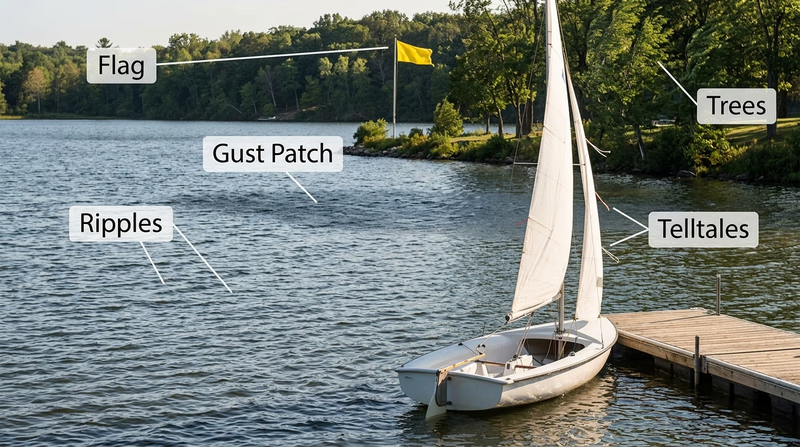
Wind indicators you can use
Look at the water
Small ripples, darker patches called gusts, and the angle of wavelets all give clues. On a lake, the water often shows the wind before you feel it clearly in the boat.
Look at flags, pennants, and telltales
A flag on shore, a burgee on a mast, or telltales on the sails can show both direction and steadiness. They help you notice whether the wind is shifting or pulsing.
Look at the shoreline and the sky
Tree movement, smoke drift, and the way clouds are moving can all help. Shore features can also bend or block wind, so the breeze at the dock may not match what you meet farther out.
Why you check before setting sail
Knowing wind direction helps you answer practical questions right away:
- Which way will the boat want to point when you launch?
- Will leaving the dock be easy or awkward?
- Where are the gustier or calmer areas?
- What point of sail will you start on?
- Which shore or obstacle becomes more dangerous if the wind increases?
If you guess wrong, you may launch into a bad angle, overpower the boat early, or discover too late that your return trip will be harder than your outgoing leg.
Pre-Launch Wind Check
A fast routine before you leave shore- Find the general direction: Use flags, ripples, or a wind pennant.
- Look for gusts and lulls: Is the wind steady or changing?
- Check the course area: Where will you be sailing relative to the wind?
- Think about the return: Will coming back be harder if the wind builds?
🎬 Video: Video tip: Wind direction — American Sailing — https://www.youtube.com/watch?v=5B1YdpLkYFE
Once you can read the wind from shore, you are ready to connect that information to real boat-handling skills underway.
Req 6 — Sailing Skills Underway
This requirement is the practical center of the badge. It covers the full cycle of a small-boat outing: preparing the boat, launching, sailing the course, handling direction changes, stopping or recovering when things go wrong, helping with towing and rescue situations, and securing the boat when you are done.
Requirement 6a
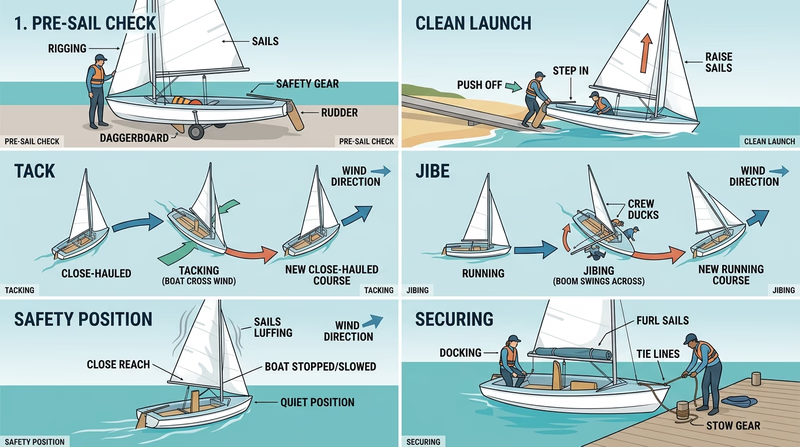
Before a good sailing session, the boat is inspected on land. Check the hull for damage, confirm the rudder and centerboard are ready, inspect lines and fittings, make sure sails are usable, and verify that required safety gear is present.
Pre-Sail Boat Check
What to inspect before launch- Hull and fittings: no major cracks, leaks, or loose hardware.
- Rigging and sails: lines run correctly, no obvious tears or dangerous wear.
- Steering and foils: rudder, tiller, and centerboard work freely.
- Safety gear: life jackets, bailer, painter, and other required items are aboard.
Requirement 6b
Getting underway from a dock
Keep the boat controlled, the bow pointed where you intend to go, and the crew informed before you cast off.
Getting underway from a mooring
Plan the first sail angle before you release the boat. Wind and nearby traffic matter immediately.
Getting underway from a beach
Move efficiently through shallow water, protect the rudder and centerboard if needed, and get the boat organized before fully powering up.
Requirement 6c
Sail setting for the points of sail
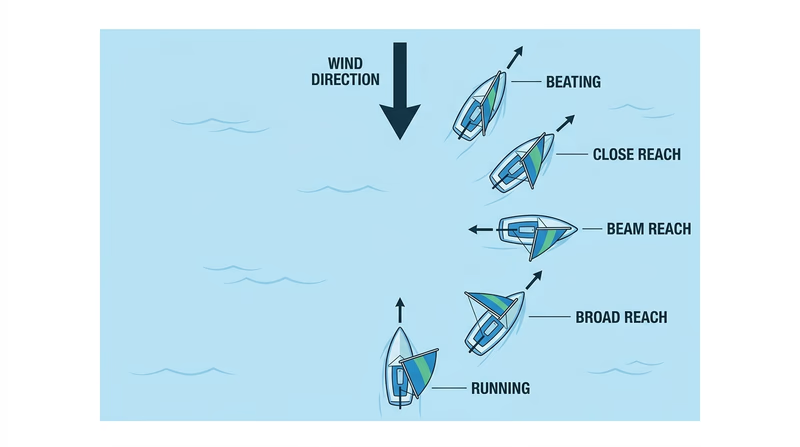
The pamphlet identifies five basic points of sail: beating, close reach, beam reach, broad reach, and running. Your requirement specifically calls for running, beating, and reaching, so you should understand how sail trim changes as the wind angle changes.
Running, beating, and reaching
- Beating: sails are trimmed in relatively close as you work upwind by tacking.
- Reaching: sails are eased more than when beating, with trim depending on whether you are on a close, beam, or broad reach.
- Running: sails are eased farther because the wind comes from behind.
Good helmsmanship
Good helmsmanship means steering smoothly, watching wind and traffic, keeping the boat balanced, and avoiding oversteering. It also means thinking ahead before each tack, jibe, docking approach, or change in wind strength.
Requirement 6d
Change direction by tacking
A tack turns the bow through the wind. The sails move across as the boat changes from one tack to the other. Tacking is the normal way to make progress upwind.
Change direction by jibing
A jibe turns the stern through the wind. Because the boom can swing across more forcefully, jibing demands more control and communication than many beginners expect.
Requirement 6e
A boat is in irons when it points into the wind and loses forward motion so completely that the rudder no longer steers effectively. The pamphlet explains that a cat-rigged boat may be backed into reverse briefly with tiller and boom used to push the bow off, while a sloop-rigged boat often gets out of irons by backing the jib until the bow turns away from the wind.
The big idea is the same on both rigs: you must get the bow turned enough that the sails can fill on one side again and the boat can regain steerage.
Requirement 6f
The pamphlet describes the safety position as a convenient way to stop temporarily without going into irons. You place the boat on a close reach and ease the sheets so the sails luff fully. The boat slows to a stop and drifts slowly while staying ready to sail again.
This is useful when you need a pause to get bearings, wait for another boat, talk briefly, or handle a small onboard problem without fully losing control of the situation.
Requirement 6g
This is one of the most serious requirements in the badge. The goal is not to show bravery. The goal is to show calm, correct procedure under close supervision.
For a capsize, stay with the boat, account for the crew, follow the counselor’s instructions, and use the recovery method appropriate for the training craft. For a person overboard, keep visual contact, communicate clearly, and approach in a controlled way so the rescue does not create a second accident.
Requirement 6h
If the boat runs aground, stop making the problem worse. Reduce power in the sails, protect the rudder and centerboard, check whether anyone is hurt, and work through the recovery method your counselor teaches for the boat and bottom conditions. Groundings are as much about judgment as technique.
Requirement 6i
Accepting the tow safely
A towed boat must stay organized and communicate with the towing craft. Loose lines, poor balance, or surprise turns can make towing unsafe fast.
Maneuvering while under tow
The boat being towed still needs attention. Steer as instructed, avoid sudden movements, and keep the tow line or side-tow setup from becoming a hazard.
Requirement 6j
Secure all equipment
Lines, gear, and safety equipment should be put away so nothing can blow loose, collect water, or create a hazard for the next crew.
Furl or stow sails
Sails should be lowered, rolled, or folded correctly and protected from unnecessary sun, chafe, and weather.
Prepare the craft for unattended storage
Think about changing wind, wake, rain, and overnight conditions. A boat left carelessly can fill with water, damage gear, or break loose.
What This Requirement Really Tests
More than boat handling alone- Preparation before launch
- Communication with your buddy
- Control during normal maneuvers
- Calm recovery during abnormal situations
- Discipline after the sail is over
Once you can handle the boat underway, the next skill set is the ropework and line knowledge sailors use constantly.
Req 7 — Knots, Lines & Seamanship
This requirement is about practical ropework. Sailors handle lines all day: tying off, securing the boat, throwing a line, coiling it so it runs cleanly, and choosing the right kind of rope for the job. “Working knowledge” means you can actually use these skills, not just name them.
Requirement 7a
The knot matters, but the use matters too.
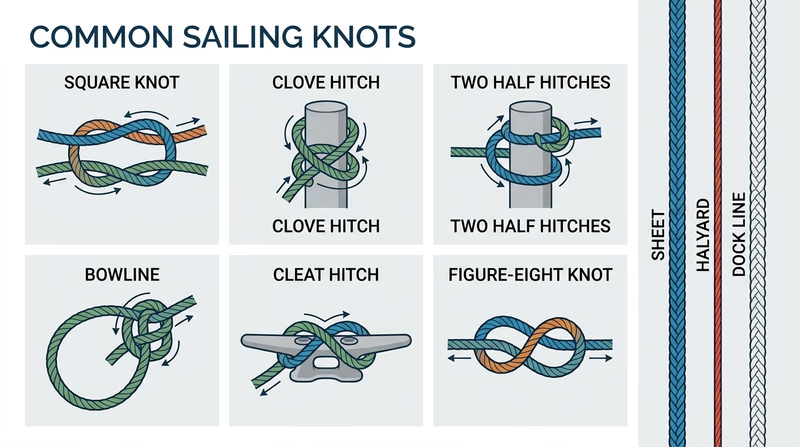
- Square (reef) knot: joins two ends of similar line for light-duty bundling, not for critical load-bearing jobs.
- Clove hitch: fast temporary attachment around a post or spar.
- Two half hitches: useful for tying a line to a ring or post securely.
- Bowline: makes a fixed loop that does not tighten under load.
- Cleat hitch: the standard way to secure a line to a cleat neatly and fast.
- Figure-eight knot: a stopper knot that helps keep a line from running out of a block or fairlead.
Requirement 7b
These are small skills that make a big difference in real boat handling.
Heave a line
A heaving line should be coiled so it can run free and thrown under control toward the target. Accuracy and a clean run matter more than dramatic distance.
Coil a line
Coiling keeps a line organized, easy to carry, and ready for the next use.
Fake down a line
To fake down a line is to lay it out in a way that lets it run without tangling. This matters any time a line needs to pay out smoothly.
Requirement 7c
Sailboats use different lines for different jobs. A halyard, mainsheet, dock line, and tow line may all need different qualities.
Common kinds of lines aboard
- Sheets control sails.
- Halyards raise sails.
- Dock lines secure the boat.
- Tow or rescue lines are used in special situations.
Common fiber choices
Modern sailing lines often use synthetic fibers such as polyester or nylon. Some specialty lines use higher-performance materials for lower stretch or lighter weight.
- Polyester: durable, handles sun reasonably well, often a solid all-around choice.
- Nylon: strong and stretchy, useful where shock absorption helps, but that stretch is not ideal for every sailing control line.
- High-performance fibers: lower stretch and lighter weight, but usually more expensive and sometimes less forgiving.
A strong answer compares the tradeoffs: stretch, grip, durability, cost, and resistance to sunlight and wear.
How to Compare Sailing Lines
Good talking points for your counselor- What job is the line doing?
- Does stretch help or hurt?
- Will the line be exposed to sun, abrasion, or shock loads?
- Is easy handling more important than top performance?
🎬 Video: Six Knots - AB Marlinespike Seamanship Practical Demonstration — US Captain's Training — https://www.youtube.com/watch?v=oWQpfGYyRus
Now that your ropework is in place, the next step is learning how to care for the boat and gear between outings.
Req 8 — Care for Boat and Gear
A sailboat lasts because people take care of it between trips, not because it is tough enough to survive neglect. This requirement is about thinking like a skipper or fleet manager: what needs to be rinsed, dried, inspected, repaired, covered, or stored so the boat is ready and safe next time.
After each use
Start with the habits that prevent small problems from growing.
- rinse salt, mud, and sand from hull, rigging, and fittings when needed
- empty standing water from the boat
- check sails for tears, stretched stitching, or broken battens
- coil and store lines so they do not kink, mildew, or turn into a cockpit tangle
- inspect life jackets and safety gear before putting them away
Routine inspection points
Hull and fittings
Look for cracks, gouges, loose hardware, damaged drain plugs, and anything that could leak or fail under load.
Spars and rigging
Inspect the mast, boom, stays, shrouds, halyards, and sheets for wear, corrosion, broken strands, or chafe.
Sails
Check seams, corners, grommets, slides, and batten pockets. A small tear caught early is much easier to fix than a sail that rips wider during the next windy day.
Trailer or storage supports
If the boat uses a trailer or dolly, those also need care. Tires, straps, lights, bearings, and bunks all matter if you transport the boat.
Year-Round Boat Care Mindset
What responsible sailors keep doing- Clean it: Dirt and salt shorten gear life.
- Dry it: Moisture leads to mildew, rot, and corrosion.
- Inspect it: Look for wear before it becomes failure.
- Repair it early: Small fixes are cheaper and safer.
- Store it well: Covers, supports, and ventilation matter.
Seasonal care
If the boat sits for part of the year, think about weather. Sun damages sails and lines. Freezing water can crack fittings or trapped containers. Covers should protect the boat but still allow ventilation so moisture does not stay trapped.
In colder climates, sailors often remove sails, lines, and loose gear for indoor storage, support the hull correctly, and make sure rainwater cannot pool inside the boat.
BoatUS Foundation for Boating Safety and Clean Water Boating education resources that support safe equipment habits and routine care. Link: BoatUS Foundation for Boating Safety and Clean Water — https://www.boatus.org/foundation/With boat care covered, finish the guide by sharpening your sailing vocabulary and comparing different kinds of sailboats.
Req 9 — Sailing Terms and Sailboat Types
This final requirement ties the badge together. By now, you have worked through safety, boat parts, weather, wind, maneuvers, and seamanship. Here, you prove that you can speak the language of sailing and compare different kinds of boats in a way that shows real understanding.
Sailing terms worth knowing well
You should be comfortable with terms like port, starboard, bow, stern, leeward, windward, mast, boom, rudder, tiller, sheet, halyard, and tack. These words matter because sailing depends on fast, clear communication.
The points of sail
The pamphlet notes five basic points of sail: beating, close reach, beam reach, broad reach, and running. These names describe the angle at which the wind approaches the boat.
Beating
Also called sailing upwind at an angle. The boat cannot point straight into the wind, so it works upwind in zigzags by tacking.
Close reach
A fast and efficient point of sail with the wind coming from forward of the beam, but not as close to the wind as beating.
Beam reach
The wind comes from the side. Many sailors find this one of the easiest and most balanced points of sail.
Broad reach
The wind comes from behind at an angle. The boat can move quickly, but sail control still matters.
Running
The wind comes mostly from behind. This feels simple, but it requires attention because accidental jibes can happen if the boom crosses unexpectedly.
How to Explain the Points of Sail
A simple structure for your counselor discussion- Say where the wind is coming from relative to the boat.
- Describe how the sails are usually trimmed compared with other points of sail.
- Mention one handling challenge such as tacking upwind or avoiding an accidental jibe while running.
Types of sailboats in use today
Dinghies
Small, usually light, often open boats used for training, racing, and short recreational sailing. They are responsive and great for learning.
Keelboats
Keelboats use a fixed keel for stability. They are often heavier and may feel steadier than dinghies, but they still require sail trim, rules knowledge, and good weather judgment.
Cat-rigged boats
A cat-rigged boat usually carries one sail. This can simplify sail handling for beginners.
Sloop-rigged boats
A sloop usually has a mainsail and a jib. Many training and cruising boats use this rig. It gives sailors more sail-control options, but also more lines and tasks to manage.
Racing boats and cruising boats
Some sailboats are built for speed and fast adjustments. Others are designed for comfort, stability, or carrying more people and gear.
🎬 Video: What's the Best Sailboats for Beginners? — Practical Sailor — https://www.youtube.com/watch?v=wy13QKapiq4
You have finished the core badge flow. The next page looks beyond the requirements and shows where sailing can take you after the badge is done.
Extended Learning
Congratulations!
You finished a badge that asks for real judgment, not just memorization. Small-boat sailing teaches you how to stay calm in a changing environment, work with another person in a tight space, and make decisions before a problem gets bigger. Those habits carry far beyond sailing.
Racing Teaches More Than Speed
Many Scouts first notice sailing because racing looks exciting. Racing can be exciting, but the deeper value is that it sharpens your awareness. You start reading wind shifts sooner, steering more smoothly, and planning maneuvers before the boat reaches the next mark.
Even if you never care about trophies, a little racing experience can make you a more thoughtful sailor. It teaches timing, communication, and the difference between being busy and being efficient.
Weather Judgment Is a Lifelong Sailing Skill
As sailors gain experience, many realize that weather judgment matters more than fancy maneuvers. A sailor who can read clouds, local gust patterns, changing lake texture, and forecast timing often avoids trouble before the less experienced crew even notices a pattern.
If you want to improve quickly, start comparing the forecast with what you actually see on the water. Ask yourself:
- What did the forecast get right?
- What changed locally near shore or around buildings and hills?
- When did the strongest gusts arrive compared with what I expected?
That habit turns “checking the weather” into learning from the weather.
Seamanship Grows Through Repetition
A lot of sailing confidence comes from repeated ordinary practice: rigging the boat neatly, launching cleanly, coiling lines without knots, securing sails properly, and putting the boat away ready for the next crew. These are not glamorous jobs, but they are part of what makes someone trustworthy on the water.
Strong sailors are often the ones who do the small things well every time.
Real-World Experiences
Take a beginner regatta clinic
A clinic or fun regatta can teach starts, mark roundings, and tactical thinking in a way casual sailing often does not.
Volunteer on a club workday
Helping rig boats, move dollies, repair gear, or clean a waterfront teaches how much seamanship happens before and after the sail.
Watch a sailing race from shore
Try calling out the wind shifts, points of sail, and maneuvers you see. It is a great way to train your eye even when you are not afloat.
Try another aquatics badge
Badges like Canoeing, Rowing, Kayaking, or Motorboating show how different craft solve the same water-safety problems in different ways.
Organizations
US Sailing
The national governing body for sailing in the United States, with training pathways, racing information, and educational resources.
Scouting America Safety Afloat
Revisit this policy any time you help plan or participate in Scout boating activities.
National Weather Service
Reliable forecasts, alerts, and weather education that help sailors make smarter go-or-no-go decisions.
U.S. Coast Guard Boating Safety Division
Practical boating-safety information on life jackets, rules, required equipment, and accident prevention.