Req 1 — Safety, Injuries & Safety Afloat
This opening requirement gives you the safety mindset for the whole badge. It covers three connected ideas: the hazards you are most likely to meet while sailing, the injuries and illnesses that can happen on the water, and the Safety Afloat system that Scouting uses to reduce preventable risk.
Requirement 1a
A small sailboat feels peaceful right up until something changes fast. Wind shifts, the boom swings, a squall builds, or someone loses balance during a maneuver. Your counselor wants you to think like a sailor before things go wrong, not after.
A four-step way to talk about hazards
Hazard Thinking for Sailors
The verbs in the requirement matter
- Anticipate: Notice what could go wrong before it does.
- Prevent: Take actions that lower the chance of the problem.
- Mitigate: Reduce the damage if the problem still happens.
- Respond: Know what to do once the incident begins.
Common small-boat sailing hazards
Wind and sudden weather changes. Wind is the engine of the boat, but it is also the source of many sailing problems. Gusts can overpower beginners, push the boat onto its side, or make docking harder than expected.
Boom strikes and moving gear. The boom can swing suddenly during a tack or jibe. Sheets under load can also snap across the cockpit or pinch fingers.
Capsize risk. Many training sailboats are designed to be capsizable. That makes them useful learning boats, but it also means Scouts must be ready for getting wet and staying calm.
Cold water and exposure. Water temperature matters as much as air temperature. Falling into cool water can steal strength and clear thinking fast.
Sun, heat, and dehydration. Hours on reflective water can make sunburn and heat stress build faster than you expect.
Collision and grounding. Shallows, docks, swimmers, paddlers, moored boats, and other traffic all demand attention.
What good answers sound like
A strong answer to your counselor connects each hazard to a response. For example, if you mention a boom strike, also explain how to prevent it by warning the crew, watching the boom during maneuvers, and keeping your head low during a jibe. If you mention capsize, explain how life jackets, buddy awareness, supervision, and calm capsize recovery reduce the danger.
Requirement 1b
This requirement is about recognizing trouble early and responding before a smaller problem becomes a bigger emergency.
Prevention of common sailing injuries and illnesses
- Blisters: Wear sailing gloves if appropriate, keep ropes from sawing across bare skin, and make sure footwear fits well.
- Cold-water shock and hypothermia: Dress for water temperature, not just air temperature. Avoid cotton in cool conditions.
- Dehydration and heat illness: Drink before you feel thirsty, use shade breaks when possible, and wear sun-protective clothing.
- Sunburn: Reapply sunscreen and remember that water reflects sunlight upward.
- Sprains and strains: Move carefully in the boat, keep your center of gravity low, and avoid jumping from dock to boat.
Symptoms to recognize early
- Blisters: hot spot, rubbing, tender skin, raised fluid-filled area.
- Cold-water shock: gasping, panic, fast breathing, poor control in the first moments after immersion.
- Hypothermia: shivering, clumsiness, slurred speech, confusion, unusual tiredness.
- Dehydration: thirst, headache, dizziness, dark urine, weakness.
- Heat-related illness: cramps, nausea, heavy sweating, weakness, confusion, or in severe cases hot skin and altered thinking.
- Sunburn: red, hot, painful skin; later blistering in severe cases.
- Sprains and strains: pain, swelling, reduced motion, weakness, or pain during use.
First aid that fits these conditions
For blisters, reduce friction, cover the area, and avoid making the rubbing worse.
For cold-water shock, focus first on flotation, calm breathing, and reaching safety. For hypothermia, remove wet clothing, insulate the person, warm the core gently, and get medical help for moderate or severe cases.
For dehydration and milder heat illness, move the person to shade, cool them down, and give fluids if they are awake and alert. Severe heat illness is an emergency.
For sunburn, get out of direct sun, cool the skin, and avoid more exposure. For sprains and strains, rest the injury, cool it, and stop activity until the person can be assessed.
American Red Cross — First Aid Steps Trusted first-aid guidance for common injuries and illnesses, including when to get more advanced care. Link: American Red Cross — First Aid Steps — https://www.redcross.org/get-help/how-to-prepare-for-emergencies/types-of-emergencies/first-aid.htmlRequirement 1c
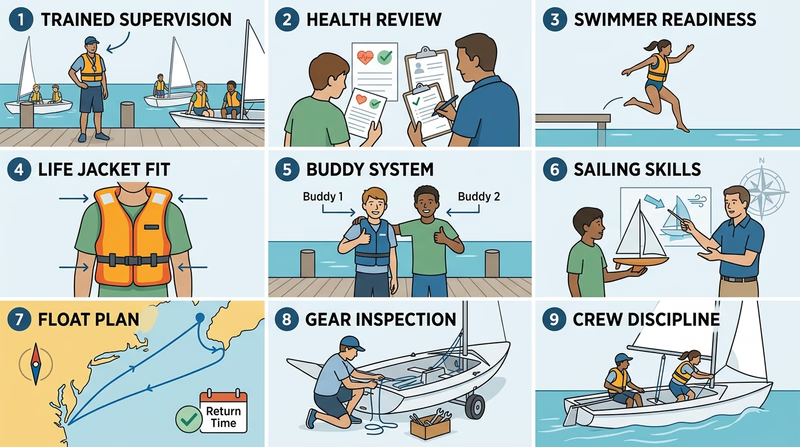
Safety Afloat is the safety system behind every Scout boating activity. In sailing, it matters because small boats react quickly to weather, balance changes, and crew decisions. The policy gives structure to those decisions before the boat even launches.
The nine points of Safety Afloat
1. Qualified supervision
A trained adult age 21 or older supervises the activity and accepts responsibility for safety. In sailing, that means someone with both Safety Afloat training and practical judgment about the boats and conditions.
2. Personal health review
Leaders need to know about medical issues, medication needs, or physical limits that matter on the water.
3. Swimming ability
Sailing includes capsize and overboard risk. Everyone must have honest swimming classification for the activity.
4. Life jackets
Correctly fitted life jackets belong on sailors when the activity requires them. On small boats, that is a major layer of protection, not an optional extra.
5. Buddy system
Each sailor has a buddy, and the group keeps track of every person.
6. Skill proficiency
People build up to conditions they can handle. Beginners do not start in strong wind just because the schedule says it is sailing day.
7. Planning
The route, weather, launch site, emergency plan, and float plan are thought through ahead of time.
8. Equipment
Boats, sails, lines, personal flotation, and rescue gear must match the activity and be in good condition.
9. Discipline
Everyone follows instructions, stays alert, and avoids horseplay. Sailing gets unsafe fast when people ignore commands during maneuvers.
Explain Safety Afloat Like a Sailor
Turn policy into on-the-water examples
- Supervision: Who is in charge if conditions worsen?
- Swimming ability: Why is the swimmer test required before advanced drills?
- Planning: What should be in your float plan and weather check?
- Equipment: How do you know the boat and safety gear are ready?
- Discipline: Why do quick responses matter during a tack, jibe, or capsize?
You now have the safety foundation for the badge. Next, prove you are ready for the water itself with the swimmer test requirement.