Req 3 — Know Your Boat
You cannot handle a sailboat well if every part of it is just “that rope” or “that pole.” This requirement is about knowing what the boat is called and what each part actually does. When your counselor says “ease the mainsheet” or “watch the tiller,” you should know immediately what that means.
The main parts most Scouts should know
Hull
The hull is the body of the boat. It provides flotation and shape. In a small sailboat, the hull is also where crew movement matters most. Leaning too far one way changes balance and performance.
Bow and stern
The bow is the front of the boat. The stern is the back. Sailors use these words because “front” and “back” get confusing fast when people are moving around and giving directions.
Port and starboard
Port means the left side when you face the bow. Starboard means the right side. Learn these early. They are part of the language of safe communication afloat.
Mast, boom, and sails
The mast holds the sails up. The boom supports the bottom edge of the mainsail and swings across the boat during maneuvers like tacking and jibing. The mainsail is the primary sail on most training boats. If your boat is a sloop, it also has a jib at the front.
Rudder, tiller, and centerboard
The rudder helps steer the boat. The tiller is the handle connected to the rudder. On many training boats, you steer by pushing or pulling the tiller. The centerboard or daggerboard helps the boat resist sideways sliding and makes sailing upwind possible.
Standing rigging and running rigging
Standing rigging supports the mast and usually stays in place. Running rigging includes the lines you adjust, such as halyards and sheets. A halyard raises a sail. A sheet controls a sail’s angle to the wind.
A simple way to explain functions
When you describe your boat to your counselor, group parts by job:
Explain the Boat by Function
A clean way to organize your answer
- Float and balance the boat: hull, centerboard or daggerboard.
- Hold the sail plan up: mast, stays, shrouds.
- Catch and control the wind: mainsail, jib, boom, sheets.
- Steer the boat: rudder, tiller.
- Keep people safe and organized: hiking straps, flotation, bailer, painter, and other small-boat gear.
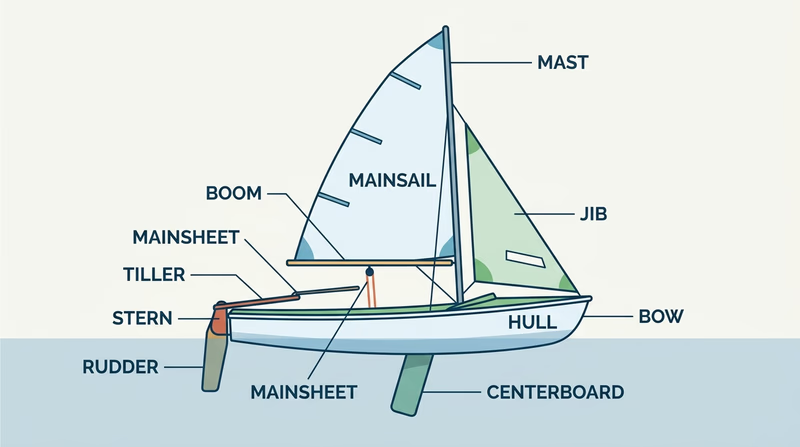
Tailor your answer to the actual boat you sail
A Sunfish, Optimist, Flying Scot, Laser, or other training boat may not have the same exact hardware. That is fine. What matters is that you can describe the major parts on your boat and explain what they do.
U.S. Coast Guard Boating Safety Reliable boating-safety background that helps you connect boat parts with safe operation on the water. Link: U.S. Coast Guard Boating Safety — https://www.uscgboating.org/Once you know the boat, the next step is planning the trip around safety, weather, and gear before you launch.