Req 4 — Planning, Weather & Gear
This requirement is the pre-launch discipline of sailing. It covers the safety system Scouting expects, the local rules that keep boats from colliding, the weather judgment that keeps a fun day from becoming an emergency, the float plan someone on shore depends on, and the clothing and gear that keep you working well on the water.
Requirement 4a
This is the full policy framework behind safe sailing. You already saw the nine points in Req 1. Here, the goal is to discuss them confidently before the boat ever leaves shore.
The nine points in a sailing context
- Qualified supervision — someone trained and responsible is in charge.
- Personal health review — leaders know who has health issues that matter on the water.
- Swimming ability — sailors are honestly classified for water competence.
- Life jackets — fitted, worn, and appropriate to the activity.
- Buddy system — no one is alone or unaccounted for.
- Skill proficiency — sailors are not pushed into conditions beyond their training.
- Planning — route, weather, float plan, and emergency response are thought through.
- Equipment — the boat and its safety gear are inspected and ready.
- Discipline — people follow directions immediately and avoid horseplay.
Discuss Safety Afloat Before Launch
What your counselor wants to hear
- Name the point clearly.
- Connect it to a real sailing action.
- Explain why it matters before getting underway.
Requirement 4b
The rules of the road are the shared system boaters use to avoid confusion and collision. They cover who gives way, how to behave in channels and traffic areas, and how to operate legally on the waters where you sail.
For your counselor discussion, think in two layers:
- general boating navigation rules that help boats avoid one another
- local or state rules such as life-jacket laws, age or training requirements, restricted areas, and local launch rules
A strong answer explains that local laws vary, so sailors must check the rules for the exact place where they boat.
U.S. Coast Guard Navigation Rules A federal source for navigation rules that help boaters understand right-of-way and collision avoidance. Link: U.S. Coast Guard Navigation Rules — https://www.navcen.uscg.gov/navigation-rules-amalgamatedRequirement 4c
Sailing performance and sailing safety are tied together. The same wind that makes the boat move also decides how hard the boat heels, how quickly the sails load up, and how much recovery time you have when something goes wrong.
Water conditions that matter
Chop, boat wakes, current, shallow water, and crowded sailing areas can all change how the boat handles. A small dinghy that feels simple on flat water can become much harder to steer cleanly in waves or gusts.
Weather hazards that matter
Thunderstorms, fast-moving fronts, dropping temperature, strong gusts, and reduced visibility all make sailing riskier. Weather changes also affect judgment: tired, cold, wet sailors make worse decisions.
Heavy wind and performance
In stronger wind, the boat may heel harder, weather helm may increase, maneuvers happen faster, and mistakes get punished sooner. What feels exciting in a controlled setting can become unsafe if the crew is overloaded or undertrained.
Requirement 4d
The key skill here is early recognition. Good sailors notice the day changing before the storm is overhead.
Warning signs to watch for
- building dark clouds, especially tall thunderheads
- sudden wind shifts or gustier conditions
- a fast temperature drop
- distant thunder
- flattening light, haze, or visibility changes
- whitecaps increasing on the water
What to do when weather worsens
If heavy winds build or a storm approaches, shorten the problem immediately. Head for the safest landing or protected water, reduce sail if appropriate for the boat and supervision available, secure loose gear, and follow the adult leader’s decision without delay.
National Weather Service Official forecasts, alerts, and local weather information that help sailors assess storm and wind risk. Link: National Weather Service — https://www.weather.gov/Requirement 4e
A float plan is the message you leave with someone on shore so they know where you are, what boat you are using, when you expect to return, and what to do if you do not check in.
A typical float plan should include:
- names of sailors and adult leaders
- type of boat being used
- launch location
- planned route or sailing area
- start time and expected return time
- emergency contact information
- what the shore contact should do if you are overdue
Requirement 4f
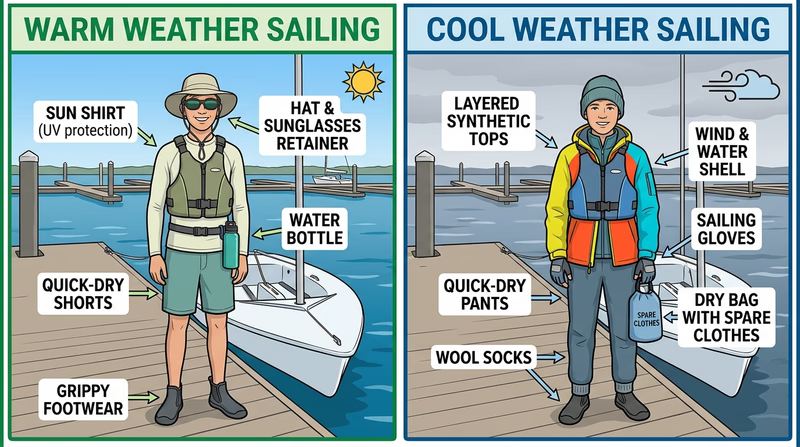
Sailing clothing is about function first. You need gear that helps you move, stay warm enough or cool enough, grip wet surfaces, and avoid preventable problems like sunburn or cold stress.
Warm-weather choices
Think sun shirt or quick-drying layers, hat, sunscreen, closed-toe footwear with grip if required by the activity, water bottle, and clothes that still work when wet.
Cool-weather choices
Add insulating synthetic or wool layers, a wind-blocking shell, extra dry clothes, and gear that protects hands and feet from staying cold and wet. Avoid cotton in cooler conditions because it holds water and loses warmth.
Why this matters
Good clothing helps you stay focused on sailing instead of getting distracted by slipping, shivering, overheating, or burning in the sun.
Personal Gear for a Sailing Day
Adjust for the season and conditions
- Clothing that still works wet
- Footwear with traction and protection
- Sun protection
- Water and weather layers
- Dry spare clothes for after the outing
Before you can trim sails and steer well, you need to read the wind that powers the boat.