Req 6 — Sailing Skills Underway
This requirement is the practical center of the badge. It covers the full cycle of a small-boat outing: preparing the boat, launching, sailing the course, handling direction changes, stopping or recovering when things go wrong, helping with towing and rescue situations, and securing the boat when you are done.
Requirement 6a
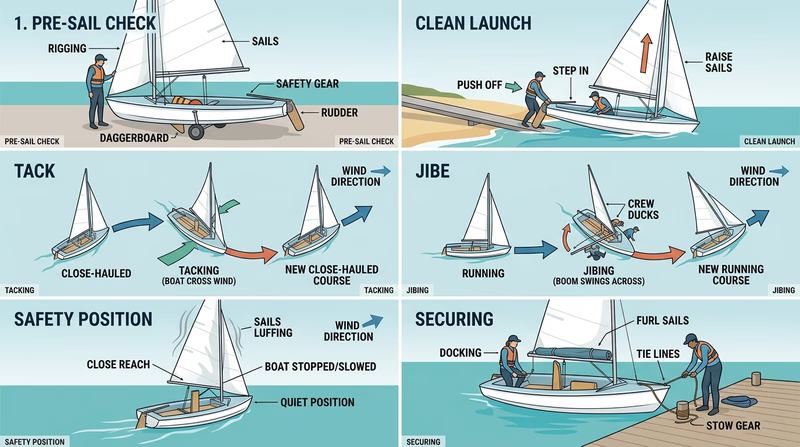
Before a good sailing session, the boat is inspected on land. Check the hull for damage, confirm the rudder and centerboard are ready, inspect lines and fittings, make sure sails are usable, and verify that required safety gear is present.
Pre-Sail Boat Check
What to inspect before launch
- Hull and fittings: no major cracks, leaks, or loose hardware.
- Rigging and sails: lines run correctly, no obvious tears or dangerous wear.
- Steering and foils: rudder, tiller, and centerboard work freely.
- Safety gear: life jackets, bailer, painter, and other required items are aboard.
Requirement 6b
Getting underway from a dock
Keep the boat controlled, the bow pointed where you intend to go, and the crew informed before you cast off.
Getting underway from a mooring
Plan the first sail angle before you release the boat. Wind and nearby traffic matter immediately.
Getting underway from a beach
Move efficiently through shallow water, protect the rudder and centerboard if needed, and get the boat organized before fully powering up.
Requirement 6c
Sail setting for the points of sail
The pamphlet identifies five basic points of sail: beating, close reach, beam reach, broad reach, and running. Your requirement specifically calls for running, beating, and reaching, so you should understand how sail trim changes as the wind angle changes.
Running, beating, and reaching
- Beating: sails are trimmed in relatively close as you work upwind by tacking.
- Reaching: sails are eased more than when beating, with trim depending on whether you are on a close, beam, or broad reach.
- Running: sails are eased farther because the wind comes from behind.
Good helmsmanship
Good helmsmanship means steering smoothly, watching wind and traffic, keeping the boat balanced, and avoiding oversteering. It also means thinking ahead before each tack, jibe, docking approach, or change in wind strength.
Requirement 6d
Change direction by tacking
A tack turns the bow through the wind. The sails move across as the boat changes from one tack to the other. Tacking is the normal way to make progress upwind.
Change direction by jibing
A jibe turns the stern through the wind. Because the boom can swing across more forcefully, jibing demands more control and communication than many beginners expect.
Requirement 6e
A boat is in irons when it points into the wind and loses forward motion so completely that the rudder no longer steers effectively. The pamphlet explains that a cat-rigged boat may be backed into reverse briefly with tiller and boom used to push the bow off, while a sloop-rigged boat often gets out of irons by backing the jib until the bow turns away from the wind.
The big idea is the same on both rigs: you must get the bow turned enough that the sails can fill on one side again and the boat can regain steerage.
Requirement 6f
The pamphlet describes the safety position as a convenient way to stop temporarily without going into irons. You place the boat on a close reach and ease the sheets so the sails luff fully. The boat slows to a stop and drifts slowly while staying ready to sail again.
This is useful when you need a pause to get bearings, wait for another boat, talk briefly, or handle a small onboard problem without fully losing control of the situation.
Requirement 6g
This is one of the most serious requirements in the badge. The goal is not to show bravery. The goal is to show calm, correct procedure under close supervision.
For a capsize, stay with the boat, account for the crew, follow the counselor’s instructions, and use the recovery method appropriate for the training craft. For a person overboard, keep visual contact, communicate clearly, and approach in a controlled way so the rescue does not create a second accident.
Requirement 6h
If the boat runs aground, stop making the problem worse. Reduce power in the sails, protect the rudder and centerboard, check whether anyone is hurt, and work through the recovery method your counselor teaches for the boat and bottom conditions. Groundings are as much about judgment as technique.
Requirement 6i
Accepting the tow safely
A towed boat must stay organized and communicate with the towing craft. Loose lines, poor balance, or surprise turns can make towing unsafe fast.
Maneuvering while under tow
The boat being towed still needs attention. Steer as instructed, avoid sudden movements, and keep the tow line or side-tow setup from becoming a hazard.
Requirement 6j
Secure all equipment
Lines, gear, and safety equipment should be put away so nothing can blow loose, collect water, or create a hazard for the next crew.
Furl or stow sails
Sails should be lowered, rolled, or folded correctly and protected from unnecessary sun, chafe, and weather.
Prepare the craft for unattended storage
Think about changing wind, wake, rain, and overnight conditions. A boat left carelessly can fill with water, damage gear, or break loose.
What This Requirement Really Tests
More than boat handling alone
- Preparation before launch
- Communication with your buddy
- Control during normal maneuvers
- Calm recovery during abnormal situations
- Discipline after the sail is over
Once you can handle the boat underway, the next skill set is the ropework and line knowledge sailors use constantly.