Req 7 — Knots, Lines & Seamanship
This requirement is about practical ropework. Sailors handle lines all day: tying off, securing the boat, throwing a line, coiling it so it runs cleanly, and choosing the right kind of rope for the job. “Working knowledge” means you can actually use these skills, not just name them.
Requirement 7a
The knot matters, but the use matters too.
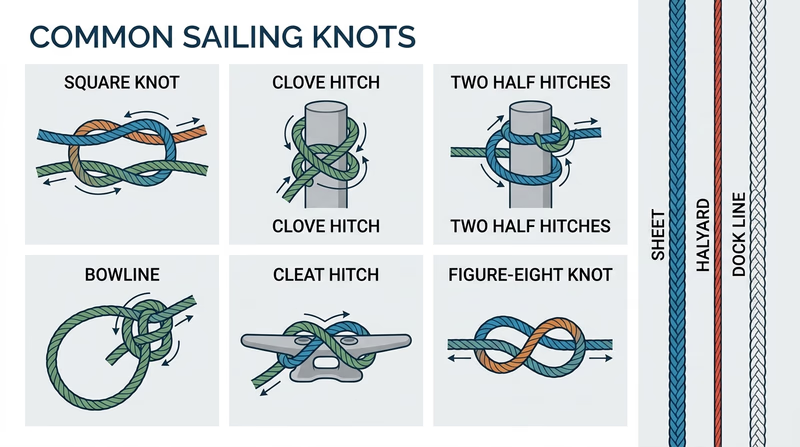
- Square (reef) knot: joins two ends of similar line for light-duty bundling, not for critical load-bearing jobs.
- Clove hitch: fast temporary attachment around a post or spar.
- Two half hitches: useful for tying a line to a ring or post securely.
- Bowline: makes a fixed loop that does not tighten under load.
- Cleat hitch: the standard way to secure a line to a cleat neatly and fast.
- Figure-eight knot: a stopper knot that helps keep a line from running out of a block or fairlead.
Requirement 7b
These are small skills that make a big difference in real boat handling.
Heave a line
A heaving line should be coiled so it can run free and thrown under control toward the target. Accuracy and a clean run matter more than dramatic distance.
Coil a line
Coiling keeps a line organized, easy to carry, and ready for the next use.
Fake down a line
To fake down a line is to lay it out in a way that lets it run without tangling. This matters any time a line needs to pay out smoothly.
Requirement 7c
Sailboats use different lines for different jobs. A halyard, mainsheet, dock line, and tow line may all need different qualities.
Common kinds of lines aboard
- Sheets control sails.
- Halyards raise sails.
- Dock lines secure the boat.
- Tow or rescue lines are used in special situations.
Common fiber choices
Modern sailing lines often use synthetic fibers such as polyester or nylon. Some specialty lines use higher-performance materials for lower stretch or lighter weight.
- Polyester: durable, handles sun reasonably well, often a solid all-around choice.
- Nylon: strong and stretchy, useful where shock absorption helps, but that stretch is not ideal for every sailing control line.
- High-performance fibers: lower stretch and lighter weight, but usually more expensive and sometimes less forgiving.
A strong answer compares the tradeoffs: stretch, grip, durability, cost, and resistance to sunlight and wear.
How to Compare Sailing Lines
Good talking points for your counselor
- What job is the line doing?
- Does stretch help or hurt?
- Will the line be exposed to sun, abrasion, or shock loads?
- Is easy handling more important than top performance?
🎬 Video: Six Knots - AB Marlinespike Seamanship Practical Demonstration — US Captain's Training — https://www.youtube.com/watch?v=oWQpfGYyRus
Now that your ropework is in place, the next step is learning how to care for the boat and gear between outings.