Req 7d3 — Types & Specialized Uses
Snowshoes are not all the same. Different designs are built for different terrain and uses. Understanding the types helps you choose the right tool for your outing.
Types of Snowshoes
Recreational / Flat-Terrain Snowshoes
The most common type. Designed for walking on relatively flat, groomed, or rolling terrain — parks, golf courses, fields, and easy forest trails. Features:
- Wide deck for maximum flotation
- Simple strapping system — easy to put on and take off
- Small or no crampons — adequate for packed or light powder but not icy slopes
- Available at the lowest price point and most rental programs
Trail / Backcountry Snowshoes
Designed for moderate off-trail terrain, rolling hills, and ungroomed winter hiking. Features:
- Narrower and longer than recreational models for more efficient hiking
- More aggressive crampons for better traction on variable snow
- Heel lift bars for reducing calf strain on climbs
- Rotating binding with better articulation for uphill and downhill travel
Mountaineering Snowshoes
Designed for technical backcountry terrain — steep slopes, hard-packed or icy conditions, and long alpine approaches. Features:
- Compact and highly aggressive crampons (often with large teeth for icy terrain)
- Very durable frame — often aluminum with reinforced deck
- Compatible with mountaineering boots
- May include bindings designed for double boots and gaiters
Running Snowshoes
Lightweight, minimalist designs for people who run on snowy trails. Features:
- Much smaller than hiking snowshoes
- Minimal flotation (designed for packed trails, not deep powder)
- Very light weight and low profile so running gait is relatively natural
- Not suitable for deep snow or off-trail travel
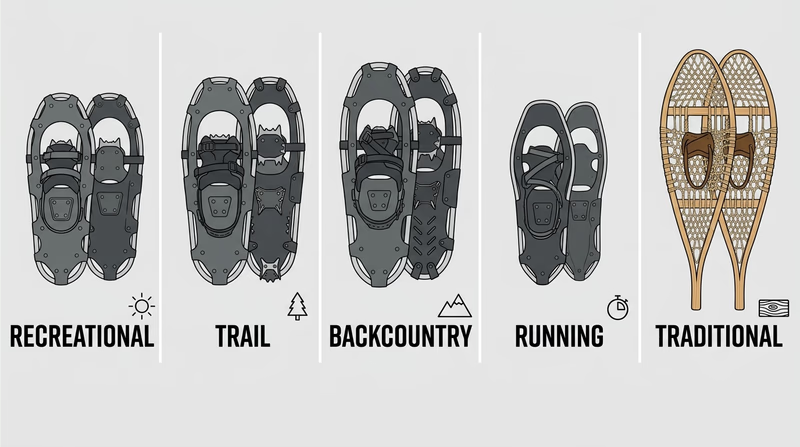
Traditional / Native American-Style Snowshoes
Wood frames (ash or birch) with rawhide or synthetic webbing. Historically used by Indigenous peoples across North America, each culture developed shapes suited to their terrain:
- Bearpaw (round/oval): For dense forests and uneven terrain; maneuverable
- Ojibwe (elongated with tail): For flat open terrain and deep snow; efficient stride
- Alaskan/Yukon (very long and narrow): For open tundra travel; maximum glide
Today these are used in traditional craft and historical programs more than functional recreation.
Factors to Consider When Choosing
| Factor | What to Think About |
|---|---|
| Total weight | Heavier = larger snowshoe needed for flotation |
| Snow type | Deep powder needs more deck area; packed snow allows smaller size |
| Terrain | Flat trails: recreational; hills and off-trail: trail/backcountry; steep/icy: mountaineering |
| Activity pace | Leisure hiking: prioritize comfort; running: prioritize minimal weight |
| Boot type | Check binding compatibility with your specific boots |
| Budget | Recreational models are significantly less expensive than mountaineering |