Req 6 — Water Pollution & Waste Treatment
This requirement moves from water supply to water quality. You will define water pollution, identify common pollution sources, learn the basic stages of waste treatment, and sketch how a complete treatment system works.
🎬 Video: Water Pollution and How We Can Reduce It (video) — https://youtu.be/4Q8dL8RtQM0
🎬 Video: H2-Oh No! Water Pollution 101 (video) — https://www.youtube.com/shorts/mgtpMLsAds0
Requirement 6a
Water pollution means adding substances or energy to water in ways that make the water less safe, less healthy, or less useful. The pollutant might be sediment, sewage, fertilizer, oil, chemicals, trash, harmful bacteria, or even heat.
The key point is not just that something entered the water. It is that the water’s quality changed enough to harm people, wildlife, or normal uses such as drinking, swimming, irrigation, or fishing.
Requirement 6b
Common pollution sources include:
- sediment from erosion — clouds water, covers stream habitat, and often carries attached pollutants
- fertilizer and manure — add excess nutrients that can trigger algae blooms
- sewage and failing septic systems — introduce disease-causing organisms and organic waste
- industrial discharges — may add chemicals, metals, or heat
- oil and fuel leaks — harm aquatic life and contaminate shorelines
- stormwater runoff from streets and parking lots — carries trash, salt, metals, and other pollutants
A strong answer names both the source and the result. For example, fertilizer runoff can lead to algae growth, and when that algae dies, decomposition uses oxygen that fish and aquatic insects need.
Source → Effect
Use this pattern when you explain pollution
- Source: Where did the pollutant come from?
- Pathway: How did it get into the water?
- Effect: What changed in the stream, lake, or water supply?
Requirement 6c
These terms are closely connected, so learn them as parts of one system.
Primary water treatment
Primary treatment is the first major cleanup stage in a wastewater plant. It mainly removes large solids and materials that can settle or float. Screens catch big debris. In settling tanks, heavy solids sink to the bottom and grease or scum rises to the top.
Secondary waste treatment
Secondary treatment goes after dissolved and suspended organic waste that primary treatment does not remove. This stage often uses oxygen and microorganisms to break down that waste. In simple terms, helpful microbes do a lot of the cleanup work.
Biochemical oxygen demand
The pamphlet describes biochemical oxygen demand, or BOD, as the amount of oxygen required to decompose the organic matter present in water. High BOD is a problem because microorganisms use up oxygen while breaking down waste, leaving less oxygen available for fish and other aquatic life.
🎬 Video: How Does Wastewater Treatment Work? (video) — https://youtu.be/cUFKay8VPqo
Requirement 6d
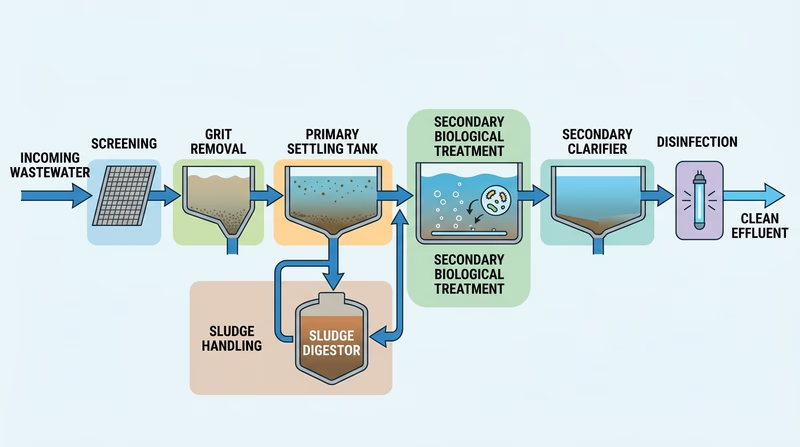
Your drawing does not need to look like an engineering blueprint. It needs to show the main flow and purpose of each stage.
A clear drawing should include:
- incoming wastewater
- screening or grit removal
- primary settling tank
- secondary biological treatment
- secondary clarifier
- disinfection or final cleanup
- treated water leaving the plant
- sludge handling if your counselor wants a fuller picture
Use arrows to show direction of flow, and label each stage with one short note about what it removes or accomplishes.
Req 7a6 gives you a chance to see many of these treatment ideas in action during a site visit.