Build, launch, and recover a model rocket. Make a second launch to accomplish a specific objective. Identify and explain the following rocket parts: Safety Note: Rocket must be built to meet the safety code of the National Association of Rocketry. See the “Model Rocketry” chapter of the Space Exploration merit badge pamphlet. Alternative Requirement: If local laws prohibit launching model rockets, do the following activity: Make a model of a NASA rocket. Explain the functions of the parts. Give the history of the rocket. Identify and explain the following rocket parts:
This is a hybrid requirement. You are not only naming rocket parts — you are building or modeling a rocket, launching and recovering it when allowed, and showing that you understand how every major piece contributes to safe flight. Think of the rocket as a team: each part has a job, and the flight only works when those jobs fit together.
What makes a successful second launch
Pick one clear objective before you fly again
Higher altitude: Try a different approved engine if your kit allows it.
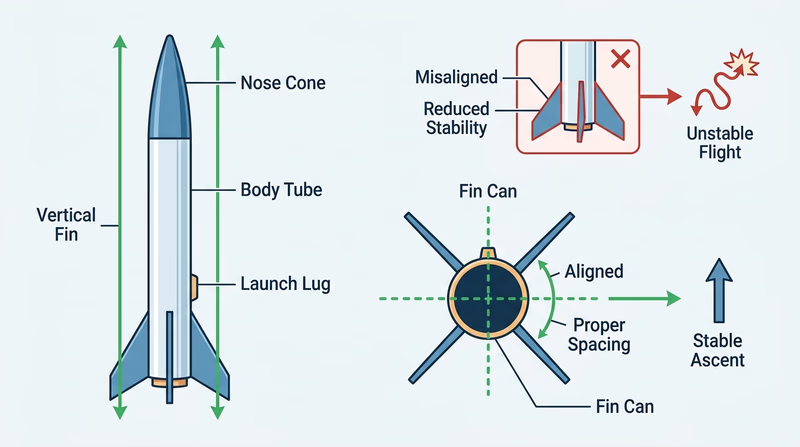
Straighter flight: Focus on fin alignment and launch rod setup.
Safer recovery: Adjust packing so the parachute or streamer deploys cleanly.
Better data: Time the flight, record wind, or compare two launch conditions.
Requirement 3a
3a.
Build, launch, and recover a model rocket. Make a second launch to accomplish a specific objective. Identify and explain the following rocket parts: Safety Note: Rocket must be built to meet the safety code of the National Association of Rocketry. See the “Model Rocketry” chapter of the Space Exploration merit badge pamphlet. Alternative Requirement: If local laws prohibit launching model rockets, do the following activity: Make a model of a NASA rocket. Explain the functions of the parts. Give the history of the rocket. Identify and explain Body tube.
Function of the body tube
The body tube is the main barrel of the rocket. It holds many other parts in alignment, including the engine mount, recovery system, and often the payload. A strong, straight body tube helps the rocket stay stable in flight.
Why it matters in flight
If the body tube is bent, crushed, or poorly glued, the rocket may wobble or fly off course. It also protects the inside of the rocket from handling damage.
Requirement 3b
3b.
Build, launch, and recover a model rocket. Make a second launch to accomplish a specific objective. Identify and explain the following rocket parts: Safety Note: Rocket must be built to meet the safety code of the National Association of Rocketry. See the “Model Rocketry” chapter of the Space Exploration merit badge pamphlet. Alternative Requirement: If local laws prohibit launching model rockets, do the following activity: Make a model of a NASA rocket. Explain the functions of the parts. Give the history of the rocket. Identify and explain Engine mount.
Function of the engine mount
The engine mount holds the rocket motor in the correct position inside the body tube. It keeps the engine from sliding forward or backward when thrust begins.
Why it matters in flight
The motor produces strong force in a very short time. If the engine mount is loose, the rocket can fail before it ever leaves the pad properly.
Requirement 3c
3c.
Build, launch, and recover a model rocket. Make a second launch to accomplish a specific objective. Identify and explain the following rocket parts: Safety Note: Rocket must be built to meet the safety code of the National Association of Rocketry. See the “Model Rocketry” chapter of the Space Exploration merit badge pamphlet. Alternative Requirement: If local laws prohibit launching model rockets, do the following activity: Make a model of a NASA rocket. Explain the functions of the parts. Give the history of the rocket. Identify and explain Fins.
Function of the fins
Fins keep the rocket flying straight. They help the rocket point nose-first by adding stability as air moves past the rocket body.
Why it matters in flight
Crooked fins can make a rocket spin, arc, or tumble. Matching fin shape and careful alignment matter more than flashy decoration.
Requirement 3d
3d.
Build, launch, and recover a model rocket. Make a second launch to accomplish a specific objective. Identify and explain the following rocket parts: Safety Note: Rocket must be built to meet the safety code of the National Association of Rocketry. See the “Model Rocketry” chapter of the Space Exploration merit badge pamphlet. Alternative Requirement: If local laws prohibit launching model rockets, do the following activity: Make a model of a NASA rocket. Explain the functions of the parts. Give the history of the rocket. Identify and explain Igniter.
Function of the igniter
The igniter starts the rocket engine. Electric current heats the igniter so it lights the propellant inside the motor.
Why it matters in flight
A rocket launch should begin from a safe distance using the electrical system. That lets the launcher count down, clear the pad, and avoid placing a flame directly under the rocket by hand.
Requirement 3e
3e.
Build, launch, and recover a model rocket. Make a second launch to accomplish a specific objective. Identify and explain the following rocket parts: Safety Note: Rocket must be built to meet the safety code of the National Association of Rocketry. See the “Model Rocketry” chapter of the Space Exploration merit badge pamphlet. Alternative Requirement: If local laws prohibit launching model rockets, do the following activity: Make a model of a NASA rocket. Explain the functions of the parts. Give the history of the rocket. Identify and explain Launch lug.
Function of the launch lug
The launch lug is a small tube attached to the side of the rocket. It slides along the launch rod or rail during liftoff.
Why it matters in flight
For the first moment of flight, the rocket is still moving too slowly for the fins to stabilize it fully. The launch lug keeps the rocket guided straight until it has enough speed for the fins to take over.
Requirement 3f
3f.
Build, launch, and recover a model rocket. Make a second launch to accomplish a specific objective. Identify and explain the following rocket parts: Safety Note: Rocket must be built to meet the safety code of the National Association of Rocketry. See the “Model Rocketry” chapter of the Space Exploration merit badge pamphlet. Alternative Requirement: If local laws prohibit launching model rockets, do the following activity: Make a model of a NASA rocket. Explain the functions of the parts. Give the history of the rocket. Identify and explain Nose cone.
Function of the nose cone
The nose cone gives the rocket a streamlined front end. It helps reduce drag and often houses or protects the payload area.
Why it matters in flight
A smooth, properly fitted nose cone helps the rocket move through the air cleanly. It also must separate correctly during recovery so the parachute or streamer can deploy.
Requirement 3g
3g.
Build, launch, and recover a model rocket. Make a second launch to accomplish a specific objective. Identify and explain the following rocket parts: Safety Note: Rocket must be built to meet the safety code of the National Association of Rocketry. See the “Model Rocketry” chapter of the Space Exploration merit badge pamphlet. Alternative Requirement: If local laws prohibit launching model rockets, do the following activity: Make a model of a NASA rocket. Explain the functions of the parts. Give the history of the rocket. Identify and explain Payload.
Function of the payload
The payload is whatever the rocket carries besides the equipment needed simply to fly. In a model rocket, that might be a small object, an altimeter, or another demonstration item.
Why it matters in flight
Payload changes the rocket’s mass and balance. Even a small extra load can affect stability, altitude, and recovery, so it has to be planned, not just stuffed in.
Requirement 3h
3h.
Build, launch, and recover a model rocket. Make a second launch to accomplish a specific objective. Identify and explain the following rocket parts: Safety Note: Rocket must be built to meet the safety code of the National Association of Rocketry. See the “Model Rocketry” chapter of the Space Exploration merit badge pamphlet. Alternative Requirement: If local laws prohibit launching model rockets, do the following activity: Make a model of a NASA rocket. Explain the functions of the parts. Give the history of the rocket. Identify and explain Recovery system.
Function of the recovery system
The recovery system brings the rocket back safely. It may use a parachute, streamer, or other device to slow descent.
Why it matters in flight
Without recovery, a successful launch turns into a broken rocket. Good packing, flame protection, and line attachment all help the recovery system open at the right moment.
Requirement 3i
3i.
Build, launch, and recover a model rocket. Make a second launch to accomplish a specific objective. Identify and explain the following rocket parts: Safety Note: Rocket must be built to meet the safety code of the National Association of Rocketry. See the “Model Rocketry” chapter of the Space Exploration merit badge pamphlet. Alternative Requirement: If local laws prohibit launching model rockets, do the following activity: Make a model of a NASA rocket. Explain the functions of the parts. Give the history of the rocket. Identify and explain Rocket engine.
Function of the rocket engine
The rocket engine provides thrust. In model rocketry, a solid-fuel motor burns rapidly and forces hot gas out the back, pushing the rocket upward.
Why it matters in flight
The engine choice affects altitude, acceleration, and total flight time. Use only the engine sizes recommended for your kit and launch setup.
When you talk with your counselor, do not memorize definitions like a glossary. Instead, explain the flight from start to finish: the igniter starts the engine, the engine pushes the rocket up, the launch lug guides it, the fins stabilize it, the body tube holds everything together, and the recovery system brings it home.