Sports Merit Badge — Complete Digital Resource Guide
https://merit-badge.university/merit-badges/sports/guide/
Introduction & Overview
Overview
Sports can teach much more than how to score points. They train your body, challenge your mind, and show you what it means to prepare well, compete honestly, and keep improving over time. The Sports merit badge is about becoming the kind of athlete who understands safety, builds healthy habits, and grows through regular practice and real competition.
This badge also asks you to go beyond casual play. You will choose two sports, follow through for a full season or three months, track your progress, and think carefully about what the experience changed in you. That makes this badge a strong test of discipline as much as athletic ability.
Then and Now
Then
Organized sports have been part of human life for thousands of years. Ancient Greeks held athletic contests to test strength, speed, and skill. Communities around the world created their own games, from stick-and-ball sports to wrestling styles to running competitions. By the late 1800s and early 1900s, schools, clubs, and community leagues were using sports not just for entertainment, but also to build teamwork, fitness, and character.
Scouting picked up that same idea early. Games and contests were never only about winning. They were a way to learn self-control, courage, fairness, and leadership. A Scout who could play hard, respect the rules, and treat opponents well was showing character in public.
Now
Today, sports are everywhere: school teams, local recreation leagues, martial arts studios, swim clubs, road races, esports-adjacent fitness training, and lifelong personal sports like tennis, golf, and distance running. Modern athletes also know more than earlier generations about hydration, concussion safety, recovery, strength training, and nutrition.
That means being a good sports participant now includes more than showing up with energy. You need to understand injury prevention, safe training habits, long-term health, and how to balance effort with recovery. The best athletes still care about performance, but they also know how to protect themselves and help a team thrive.
Get Ready!
You do not need to be the fastest player or the strongest competitor to earn this badge. You do need to be consistent. Expect to plan, practice, compete, keep records, and talk honestly with your counselor about what went well and what still needs work.
Kinds of Sports
Team Sports
Sports like soccer, basketball, volleyball, baseball, softball, lacrosse, and water polo depend on coordination with other people. You have to communicate, cover for teammates, and do your job even when the ball is nowhere near you. Team sports often teach leadership and sportsmanship very clearly because your attitude affects everyone else.
Individual Sports
Sports like tennis singles, diving, golf, wrestling, cross-country, track and field events, and bowling can put more direct focus on your own preparation and performance. That can be exciting because your results feel personal, but it also means you must manage nerves, routines, and self-discipline without hiding behind a team.
Contact and Collision Sports
Some sports involve routine physical contact, such as wrestling, ice hockey, lacrosse, and tackle football. These demand extra attention to technique, protective equipment, rules, and injury awareness.
Endurance and Skill Sports
Other sports emphasize stamina, repeated practice, and precision. Cross-country, swimming, golf, gymnastics, diving, and table tennis all require you to repeat movements until they become reliable under pressure. In these sports, patience matters as much as natural talent.
Lifetime Sports
Some sports can stay with you for decades. Tennis, golf, swimming, running, bowling, and many fitness-based activities can become part of a healthy lifestyle long after a school season ends. One of the best parts of this badge is learning how a sport can fit into your life now and later.
Ready to start like a smart athlete instead of a reckless one? First, focus on the risks that come with sports and the first-aid knowledge that helps you respond well when something goes wrong.
Req 1 — Sports Safety and First Aid
This requirement covers the foundation of every good sports season: knowing what can go wrong and knowing how to respond. Before you think about performance, think about safety. A smart athlete notices risks early, uses gear correctly, and treats small problems before they become big ones.
- Req 1a helps you recognize the most likely risks in sports and plan for them.
- Req 1b helps you review common injuries so you can respond calmly and get the right kind of help.
Requirement 1a
A rolled ankle in practice, a heat problem on a hot field, or a collision during a game usually does not happen out of nowhere. Most sports injuries grow out of patterns: poor preparation, bad technique, rushing back too soon, ignoring warning signs, or using the wrong equipment. Your job in this requirement is to show that you can see those patterns before they turn into trouble.
Common sports risks to watch for
Most sports involve a mix of these risks:
- Contact injuries from collisions, falls, or being hit by equipment
- Overuse injuries from repeating the same movement too often without enough recovery
- Environmental risks such as heat, cold, wet fields, lightning, poor air quality, or unsafe surfaces
- Equipment risks from broken gear, missing protective equipment, or shoes that do not fit the activity
- Conditioning risks when someone jumps into hard activity without enough fitness, warm-up, hydration, or sleep
Sports Risk Scan
Use these questions before practice or competition- Where am I playing? Check the field, court, pool deck, trail, or mat for holes, slick spots, loose equipment, or crowding.
- What is the weather doing? Heat, lightning, strong sun, cold wind, and poor air quality all change what safe participation looks like.
- Do I have the right gear? Shoes, pads, mouthguards, helmets, and sport-specific clothing should fit well and be in good condition.
- Am I ready today? If you are sick, overtired, dehydrated, or still hurting from a previous injury, your risk goes up fast.
- What is the emergency plan? Know where adults are, where first-aid supplies are kept, and how emergency help would be called.
Anticipate, prevent, mitigate, respond
The requirement uses four useful action words. Think of them as the order of good sports judgment.
- Anticipate means looking ahead. If you know two practices are scheduled in high heat, plan extra water and rest breaks.
- Prevent means lowering the chance of injury. Wear proper gear, warm up, and use correct technique.
- Mitigate means making the situation less severe once a problem starts. Stop activity early, move to shade, ice an injury if appropriate, or get help before the athlete gets worse.
- Respond means taking the right action in the moment. Protect the person, use first aid you know, and involve trained adults or emergency care when needed.
Requirement 1b
A sports season almost guarantees minor injuries and sometimes brings serious ones. This requirement does not expect you to become a doctor. It expects you to recognize common problems, give sensible first aid within your training, and know when the situation is bigger than basic care.
Soft-tissue injuries
- Sprain: An injury to a ligament, often around an ankle, knee, or wrist. You may see swelling, pain, and trouble using the joint.
- Strain: An injury to a muscle or tendon. The athlete may feel a pull, sharp pain, or weakness.
- Muscle cramp: A sudden, painful tightening of a muscle, often linked to fatigue, dehydration, or overuse.
- Contusion: A bruise caused by a blow.
- Abrasion: A scrape where skin is rubbed off.
- Blister: A fluid-filled bubble caused by friction.
For many minor soft-tissue injuries, the first response is to stop the activity, protect the area, and get help from a responsible adult. Ice, rest, and limiting movement may help, but the exact response depends on the injury and the guidance of a coach, trainer, parent, or medical professional.
Heat and hydration problems
- Dehydration can cause thirst, dark urine, headache, tiredness, cramps, and poor focus.
- Heat exhaustion can include heavy sweating, weakness, nausea, dizziness, and cool clammy skin.
- Heat stroke is a medical emergency. Signs can include confusion, altered behavior, collapse, and very high body temperature.
Bone, dental, and spine concerns
- Fracture: A broken bone. Do not try to “fix” it yourself. Keep the area still and get trained help.
- Injured tooth: A tooth may be chipped, loosened, or knocked out. Dental injuries need quick attention.
- Head, neck, and back injuries: These can be serious even when the athlete wants to keep playing.
- Concussion: A brain injury caused by a blow or force to the head or body. Warning signs can include headache, confusion, balance problems, nausea, memory trouble, or sensitivity to light.
Quick-response guide
| Injury or problem | First response |
|---|---|
| Sprain or strain | Stop activity, protect the area, limit use, and tell an adult or trainer. |
| Muscle cramp | Stop, rest, gently stretch if appropriate, and rehydrate. |
| Contusion or abrasion | Clean and protect the area; watch for worsening pain or swelling. |
| Blister | Reduce friction, protect the skin, and keep the area clean and dry. |
| Dehydration | Rest, cool down, and drink fluids if the person is alert. |
| Heat exhaustion | Move to shade or a cool area, loosen extra clothing, cool the body, and hydrate. |
| Fracture | Immobilize and get medical help. |
| Knocked-out tooth | Handle it carefully and get dental help quickly. |
| Head, neck, back injury, or concussion | Remove from play and get trained adult or emergency help. |
What your counselor wants to hear
Show understanding, not memorized words- Name the injury clearly. Show that you can tell a sprain from a cramp or a concussion from a bruise.
- Describe the first safe action. Should activity stop? Should the athlete move? Should help be called?
- Know the red flags. Confusion, severe pain, numbness, deformity, trouble breathing, or worsening symptoms mean the situation is more serious.
- Stay within your training. Good first aid is calm and useful. It is not pretending to be a medical professional.
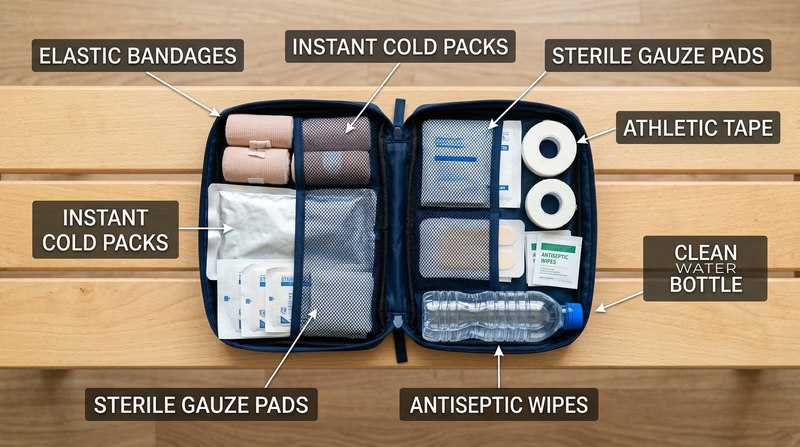
If you are already working on First Aid merit badge, many of these terms will feel familiar. That is a good thing. Sports safety works best when you can connect what you know about injuries to the real conditions of practices, meets, and games.
Now that you know how to reduce risk and respond to common injuries, the next step is building the everyday habits that let athletes stay healthy enough to compete well.
Req 2 — Health Habits That Support Performance
This requirement is about the habits that make athletic effort sustainable. Talent matters, but healthy routines matter more over time. Physical exams, everyday choices, and nutrition all work together to keep you available for practice, ready for competition, and strong enough to improve.
Requirement 2a
A physical exam is not just paperwork for a coach. It is a chance to catch problems early, talk honestly about past injuries, and make sure you are safe to participate in the sport you chose.
Why physical exams matter
A sports physical can help identify concerns such as asthma, heart issues, untreated injuries, vision problems, or recovery limits after a concussion. Many athletes feel healthy right up until hard exercise exposes a weakness. A physical exam gives you and your family a better picture before the season starts.
What to be ready to discuss
- Past injuries and surgeries
- Medicines you take regularly
- Allergies or medical conditions
- Dizziness, chest pain, or shortness of breath during activity
- Family history of heart or other health problems
Requirement 2b
Good athletes do not build performance only during games. They build it every day through sleep, movement, hydration, recovery, and smart decisions. These habits support sports now, but they also support your health long after one season ends.
Health habits that help for life
- Regular exercise keeps your heart, lungs, muscles, and joints working well.
- Consistent sleep helps reaction time, mood, learning, and recovery.
- Hydration supports endurance, focus, and temperature control.
- Recovery time gives muscles and connective tissues time to rebuild.
- Stretching and mobility work can improve movement quality and lower injury risk.
How harmful substances hurt performance
Tobacco damages the lungs and blood vessels, making it harder to deliver oxygen where your body needs it. Alcohol slows judgment, reaction time, coordination, and recovery. Other harmful substances can affect mood, sleep, motivation, decision-making, and long-term health. Even if someone thinks a substance helps them relax or fit in socially, it can hurt athletic progress badly.
Healthy habits athletes can control
These choices often matter more than flashy drills- Sleep enough before practices and games.
- Drink water regularly instead of waiting until you already feel bad.
- Keep moving year-round so you are not starting from zero every season.
- Respect recovery after hard workouts, injuries, and illness.
- Avoid tobacco, alcohol, and other harmful substances because they slow progress and raise risk.
Requirement 2c
Food is fuel, building material, and recovery support all at once. A healthy diet gives your body the energy to train, the protein to repair tissue, and the nutrients to keep bones, muscles, nerves, and the immune system working properly.
What a healthy athlete diet does
A balanced eating pattern helps you:
- keep energy steady through school, practice, and games
- recover faster after hard effort
- support growth if you are still developing
- reduce the chance of feeling weak, lightheaded, or worn down
What balance usually looks like
You do not need a perfect meal plan. You do need variety and consistency.
- Carbohydrates help power activity.
- Protein helps repair and build tissue.
- Healthy fats support long-lasting energy and normal body functions.
- Fruits and vegetables provide vitamins, minerals, and fiber.
- Water supports nearly every system in the body.
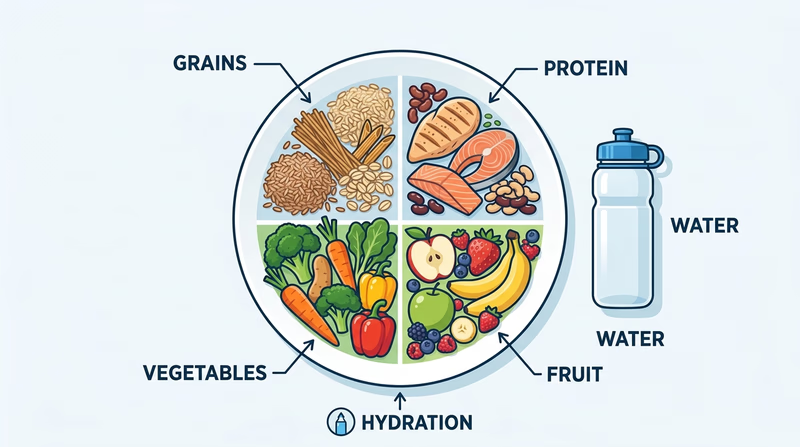
These three topics belong together. A physical exam helps you know your starting point, health habits keep you ready day after day, and a healthy diet gives your body what it needs to train well. Together they turn sports from a short burst of effort into a safer, healthier pattern of living.
Next, you will move from health basics into preparation habits that shape how athletes train, compete, and treat other people.
Req 3 — Preparation, Strength, and Sportsmanship
This requirement moves from physical preparation to character. A good athlete prepares the body, understands what kind of competition they are entering, and acts with respect no matter what the scoreboard says.
Requirement 3a
A warm-up gets your body ready to move well. A cooldown helps your body shift back toward rest. Both matter because sports ask you to change speed, direction, force, and focus quickly.
Why warming up matters
A good warm-up raises body temperature, increases blood flow, wakes up the nervous system, and prepares the exact movements you are about to use. Jogging, dynamic stretches, easy passing drills, and gradual build-up sprints are common examples.
Why cooling down matters
Cooling down helps you lower intensity gradually, notice soreness early, and begin recovery. Light movement, slower drills, walking, and gentle stretching can all be part of a cooldown.
Requirement 3b
Weight training can make athletes stronger, more stable, and more resilient when it is done correctly. It is not just for bodybuilders, and it is not only about lifting the heaviest weight possible.
Benefits of weight training
- stronger muscles to support movement and joint control
- better power for sprinting, jumping, throwing, or changing direction
- improved posture and body awareness
- reduced injury risk when strength supports good technique
What makes it useful
Weight training works best when it uses good form, proper supervision, gradual progress, and recovery time. Technique matters more than ego. A light weight moved correctly teaches more than a heavy weight moved badly.
Requirement 3c
An amateur athlete competes mainly for personal growth, school, club, community, or love of the sport rather than as a full-time paid career. A professional athlete is paid to compete and often treats sport as a job.
Key differences
| Amateur athlete | Professional athlete |
|---|---|
| Competes for school, club, community, or personal goals | Competes as a career |
| May balance sport with school or another job | Usually trains and performs full time |
| Often has limited access to staff and facilities | Often has coaches, trainers, medical staff, and contracts |
| Focuses on development, participation, and achievement | Focuses on high performance, results, and employment |
The line is not always perfectly simple, but the main idea is. Professionals are paid competitors. Amateurs participate without making sport their paid profession.
Requirement 3d
Some athletes are remembered for statistics. Others are remembered because everybody wanted them on the team. Sportsmanship and leadership do not guarantee a win, but they change what kind of team you become and what kind of person you are while competing.
Qualities of a good sport
A good sport is honest, respectful, self-controlled, coachable, and fair. They play hard without playing dirty. They can handle winning without bragging and losing without making excuses.
Why sportsmanship matters
Sportsmanship protects trust in the game. Without it, rules become meaningless and competition turns selfish. Good sportsmanship also makes games safer because athletes respect boundaries, officials, and opponents.
Traits of a good leader and teammate
- encourages others instead of tearing them down
- takes responsibility for mistakes
- listens to coaches and communicates clearly
- stays steady when the team is frustrated
- sets the tone with effort and attitude
- shows Scout spirit away from the game too
Scout spirit in sports
What it looks like in real life- Before the game: Arrive prepared, respect officials, and support teammates.
- During the game: Compete hard, follow the rules, and control your reactions.
- After the game: Thank officials and opponents, own your mistakes, and learn from the result.
- Away from the game: Speak respectfully about teammates, coaches, and competitors even when emotions are high.
These ideas work together. Warm-ups and strength training prepare the body. Understanding amateur competition helps you understand the setting. Sportsmanship and leadership shape how you act inside that setting.
Now it is time to choose two sports that fit the badge well enough for real practice, real competition, and real growth.
Req 4 — Pick Sports You Can Really Commit To
This is the decision point for the badge. You are not just picking two sports you like in theory. You are picking two sports that give you a real chance to complete the full season-style work in Req 5: training, tracking, technique, equipment, rules, diagrams, competition, and reflection.
What your two choices need to include
Each sport must have:
- regular practice sessions
- at least four structured, officiated, scored games, meets, or contests
- enough time for you to train and keep records
- a setting your counselor approves in advance
That means a few casual games in the backyard would not qualify. A school team season, community league, club season, swim schedule, track season, wrestling club, or other organized competitive setup usually makes more sense.
Choosing two workable sports
Ask these questions before you commit- Can I practice regularly? If you cannot attend practice often, the sport may not work for this badge.
- Will I have at least four real competitions? The requirement is specific about this.
- Do I have access to coaching, facilities, and equipment?
- Can I explain technique, rules, etiquette, and the playing area for this sport?
- Can I stay involved long enough to reflect honestly at the end?
Good choices are realistic choices
A common mistake is choosing a sport because it sounds exciting, even though the Scout has no real access to a season, coach, or competition schedule. It is better to choose sports you can fully complete than to pick impressive-sounding options that never become real participation.
For example, a Scout might choose soccer and track because school or community programs already provide practices and meets. Another Scout might choose swimming and bowling because those sports are available year-round nearby. What matters is not which sports are most popular. What matters is whether your plan is realistic.
Think ahead to Requirement 5
Req 5 will ask you to describe equipment, explain rules and etiquette, draw playing areas, track practices, and discuss how the season affected you. Choose sports where you can observe enough details to talk about them confidently.
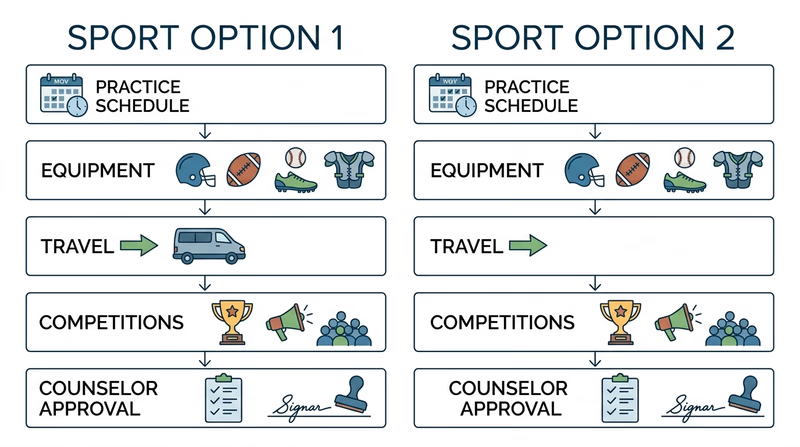
Once you have chosen two sports that truly fit the badge, you can build the training plan and season tracking system that carry the rest of the work.
Req 5 — Train, Compete, and Reflect
This requirement is the heart of the badge. It takes your two chosen sports and turns them into a real season of work. You will plan training, track progress, study technique and equipment, compete in organized events, and then look back at what changed.
Requirement 5a
A good training program is specific enough to guide you, but realistic enough that you will actually follow it. It should match the demands of your sports. A cross-country runner needs endurance and recovery. A volleyball player may need jumping power, shoulder strength, and agility. A swimmer needs stroke work, conditioning, and flexibility.
What to include in your plan
- practice schedule
- conditioning work
- strength or mobility work if appropriate
- rest and recovery days
- goals you can measure over time
A workable personal training program
Keep it simple enough to follow- What am I training for? Identify the main demands of each sport.
- How many days each week will I train?
- What kinds of training will I do? Skill work, conditioning, strength, mobility, recovery.
- How will I know if I am improving? Use measurable goals.
- How will I avoid overtraining? Include lighter days and rest.
Requirement 5b
Tracking turns vague effort into visible progress. Without records, it is hard to tell whether you are improving, staying flat, or heading toward burnout.
Your chart could be a notebook, spreadsheet, calendar, or printed worksheet. The important part is that it records what you actually did, not what you hoped to do.
Sports Season Tracking Worksheet Resource: Sports Season Tracking Worksheet — /merit-badges/sports/guide/sports-season-tracking-worksheet/Useful things to record
- date and type of practice
- drills or workouts completed
- competition results
- what felt stronger or smoother
- soreness, fatigue, or injuries
- short notes about mindset and confidence
Requirement 5c
Technique matters because it affects both performance and safety. In almost every sport, bad form wastes energy and increases injury risk. Good technique usually looks controlled, balanced, and repeatable.
A counselor will not expect you to perform like an elite athlete. They will expect you to show that you understand the basics well enough to move safely and effectively. Focus on body position, balance, timing, and control.
Requirement 5d
This is more than making a packing list. You should be able to explain what each item does and why it matters.
For each sport, think in categories:
- essential playing equipment such as a racket, bat, ball, clubs, or swimsuit
- protective equipment such as a helmet, mouthguard, pads, or goggles
- specialized clothing or footwear suited to the surface, weather, and movement demands
Strong explanations sound like this
Instead of saying, “Cleats are needed for soccer,” go one step further: “Soccer cleats provide traction for cutting, sprinting, and stopping on grass or turf, which helps performance and reduces slipping.”
Requirement 5e
Rules tell you what is legal. Etiquette tells you what is respectful. Both matter. A skilled athlete who ignores etiquette can still damage a team, a match, or their own reputation.
Rules vs. etiquette
- Rules define scoring, boundaries, legal actions, penalties, and match structure.
- Etiquette covers behavior such as respecting officials, waiting your turn, playing safely, handling disagreements, and treating opponents fairly.
Golf and tennis often talk openly about etiquette, but every sport has it. In wrestling, it may show up in how you treat your opponent before and after a match. In swimming, it may show up in how you behave in a lane or staging area. In basketball, it may show up in how you respond to contact and officials.
Requirement 5f
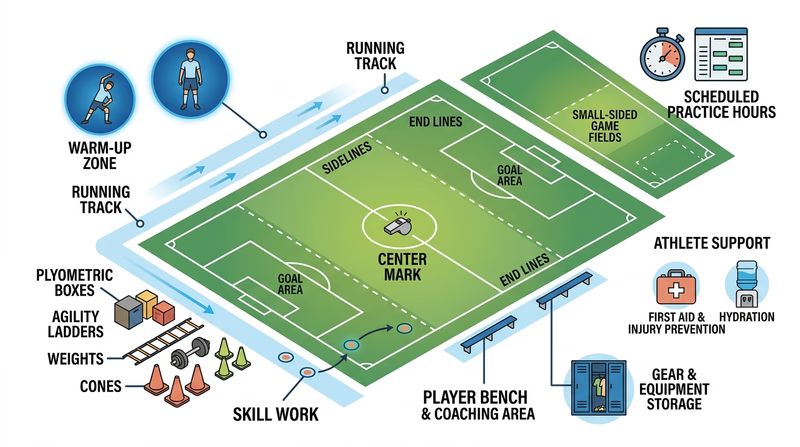
A good diagram shows that you understand where the sport happens and how the space shapes strategy. You do not need to produce fancy artwork. You do need to label the main areas clearly.
What to include in a playing-area diagram
- boundaries or lanes
- scoring areas or goals
- starting or service positions
- key lines, marks, zones, or apparatus
- any special safety zones if relevant
Requirement 5g
This requirement is where the badge becomes real. You must stay involved long enough to experience the rhythm of practices, competition days, setbacks, adjustments, and improvement.
What participation should show
Participation is not just showing up once in a while. It should show commitment over time. That includes attending practices, competing when scheduled, supporting teammates or training partners, and continuing through hard days instead of only easy ones.
Requirement 5h
Reflection is one of the most valuable parts of the badge because it helps you learn from the whole experience instead of just surviving it.
Mental changes to notice
You might notice improved confidence, patience, discipline, focus, or emotional control. You may also notice how competition affected your nerves, motivation, or ability to recover from mistakes.
Physical changes to notice
You might see better endurance, strength, speed, flexibility, coordination, or recovery. You may also notice soreness patterns, new fitness limits, or the effect of sleep and nutrition on performance.
End-of-season reflection
Good topics to discuss with your counselor- What improved most?
- What stayed challenging?
- How did your body adapt over time?
- How did your mindset change?
- Would you continue one or both sports? Why?
These eight parts work like one season-long project. Plan thoughtfully, keep honest records, learn the details of each sport, show up for real competition, and then reflect on what the experience taught you. That full pattern is what makes the Sports merit badge more than just playing games.
Now that you have walked through the full athlete experience, you can decide how sports might connect to your future beyond this badge.
Req 6 — Choose Your Next Step
You must choose exactly one option from this requirement. Both options ask you to think beyond your current season, but they point in different directions.
Your Options
- Req 6a — Explore a Sports Career: Research careers that use sports knowledge, then take one seriously enough to study training, education, costs, pay, and long-term goals. This option helps you see how sports skills can become professional work.
- Req 6b — Build a Sports-Based Lifestyle: Explore how sports can shape a hobby or long-term healthy lifestyle. This option helps you think about enjoyment, growth, and sustainable habits beyond organized competition.
How to Choose
Choosing your final option
Pick the path that best matches your real interest- Career curiosity: Choose 6a if you want to know whether a sports-related job could fit your future.
- Lifestyle focus: Choose 6b if you are more interested in how sports can stay part of your life for fun, fitness, and personal goals.
- Research depth: Both require real research, but 6a usually asks for more information about credentials, salaries, and job prospects.
- What you gain: 6a builds career awareness and decision-making; 6b helps you design a realistic long-term activity plan you could actually keep doing.
Whichever option you pick, the goal is the same: use what you learned in this badge to make a thoughtful next-step decision instead of letting your sports experience fade away.
Req 6a — Explore a Sports Career
This requirement helps you look past the field, court, pool, or track and ask a bigger question: who keeps sports running? The answer includes far more than athletes. Coaches, trainers, physical therapists, officials, sports journalists, equipment designers, recreation directors, and many others all use sports knowledge in different ways.
Start with three possible careers
Choose three careers that honestly interest you. Good options might include:
- coach or instructor
- athletic trainer
- physical therapist
- sports medicine physician
- referee or official
- sports broadcaster or journalist
- recreation director
- strength and conditioning coach
- sports photographer or videographer
Then pick one for deeper research.
What to research about your chosen career
Career research checklist
These are the details your counselor will want to hear- Training and education: What degrees, courses, licenses, or certifications are needed?
- Experience: What beginner experience helps someone enter the field?
- Expenses: What does training or certification cost?
- Employment outlook: Is demand growing, steady, or limited?
- Starting salary: What might someone earn at the beginning?
- Advancement: What higher roles become possible later?
- Career goals: What does success look like in this field?
Compare carefully, not casually
A sports career can sound exciting from the outside, but your research should test the reality. For example, becoming a physical therapist usually requires years of higher education, licensing, and significant expense, but it can lead to stable, meaningful work helping people recover and perform well. Coaching can be rewarding, but pay and job stability vary widely by setting.
National Athletic Trainers' Association Professional organization with information about athletic training, career pathways, and the role athletic trainers play in sports safety and performance. Link: National Athletic Trainers' Association — https://www.nata.org/ American Physical Therapy Association Learn about physical therapy careers, education paths, and the role movement science plays in sports and rehabilitation. Link: American Physical Therapy Association — https://www.apta.org/If you discover that a sports career fits your interests, great. If you discover that you love sports but not the career path, that is valuable too. Either way, you are learning how to make informed decisions.
If you want a different way to carry sports into the future, the next option looks at hobbies and healthy living instead of jobs.
Req 6b — Build a Sports-Based Lifestyle
Not every valuable sports path becomes a career. Many become something just as important: a hobby you love, a fitness habit that keeps you healthy, or a community activity that gives you purpose for years.
Maybe your future includes road races, lap swimming, recreational tennis, adult league softball, martial arts, pickleball, hiking with trail-running goals, or coaching younger players while staying active yourself. This requirement asks you to imagine what a sports-based life could look like beyond one badge season.
Think about fit, not fantasy
The best hobby or healthy lifestyle plan is one you can actually keep doing. Ask:
- What activities do I genuinely enjoy?
- What can I afford?
- What facilities or spaces are nearby?
- What training would help me improve safely?
- What organizations or clubs would help me stay involved?
What to research
Lifestyle research checklist
Build a plan you could really use- Additional training: Lessons, clinics, classes, or coaching that would help you grow
- Expenses: Equipment, membership fees, travel, lessons, competition entry fees, or facility costs
- Organizations: Clubs, leagues, governing bodies, community centers, or interest groups
- Short-term goals: What could you start doing in the next few months?
- Long-term goals: What would you like this activity to become over several years?
Examples of sports-based lifestyles
A Scout who enjoys swimming might join a lap-swim program and set a goal of improving endurance over the next year. A Scout who likes golf might take lessons, practice at a local range, and work toward playing full rounds regularly. A Scout who discovered a love for running during cross-country season might train for local 5K races and eventually volunteer at community race events.
YMCA Many YMCAs offer youth and family sports, swimming, fitness classes, and community programs that can help turn sports into a lasting healthy habit. Link: YMCA — https://www.ymca.org/ Parks and Recreation Finder The National Recreation and Park Association highlights how community recreation programs, leagues, and facilities support lifelong activity. Link: Parks and Recreation Finder — https://www.nrpa.org/This option is really about ownership. If you know how sports help your body, mind, and community life, you do not have to wait for a school season to stay active. You can build a pattern that fits your own future.
You have now reached the end of the requirement pages. The extended learning section will help you keep exploring the wider world of sports, training, and community participation.
Extended Learning
Congratulations!
You have finished a badge that rewards consistency, self-awareness, and follow-through. Sports can teach speed, strength, and skill, but they also teach how to prepare for something hard, stay steady when the outcome is uncertain, and keep learning from both success and failure.
Training Smarter Matters More Than Training Harder
Many athletes improve for a while just by working harder. After that, smart training matters more. That means balancing stress and recovery, focusing on quality instead of endless repetition, and adjusting your plan when your body gives useful feedback.
One reason experienced athletes keep improving is that they watch patterns. They notice what happens when sleep drops, when practice gets sloppy, or when hydration and nutrition improve. If you liked tracking your progress in this badge, you already started building one of the most valuable long-term skills in sports: paying attention with purpose.
Recovery Is a Real Skill
Recovery is not quitting. It is part of training. Athletes who ignore recovery often get trapped in a cycle of soreness, poor performance, and preventable injuries.
Recovery can include sleep, light movement, stretching, good nutrition, hydration, and knowing when to step back after a hard effort. The more serious the season gets, the more important recovery becomes. Learning this early can help you avoid the common mistake of believing that pain and progress always mean the same thing.
Sports Build Communities, Not Just Athletes
Sports can shape more than your own body and mindset. They can connect people across ages and backgrounds. A town rec league, a summer swim team, a cross-country invitational, or a Special Olympics event all create a space where people practice commitment together.
If you keep going in sports, you may eventually become the older player who encourages beginners, helps younger athletes learn routines, or models sportsmanship when others are losing control. That kind of influence matters just as much as statistics.
Real-World Experiences
Attend a College or Semi-Pro Game With a Notebook
Volunteer at a Youth Sports Event
Try a New Sport Clinic or Intro Session
Run or Join a Community Fitness Challenge
Organizations
Supports high school athletics and activities across the United States, including rules education, sportsmanship resources, and safety guidance for school sports.
Organization: National Federation of State High School Associations (NFHS) — https://www.nfhs.org/
Encourages Americans to be active and build lifelong healthy habits through sport, physical activity, and nutrition education.
Organization: President's Council on Sports, Fitness & Nutrition — https://health.gov/our-work/nutrition-physical-activity/presidents-council
Uses sports to build inclusion, confidence, leadership, and community for athletes with intellectual disabilities and the people around them.
Organization: Special Olympics — https://www.specialolympics.org/
Provides youth sports programs, competitions, and development opportunities across many sports throughout the United States.
Organization: Amateur Athletic Union (AAU) — https://aausports.org/
Offers community sports, swimming, wellness programs, and youth development opportunities that can help turn sports into a lasting part of everyday life.
Organization: YMCA — https://www.ymca.org/