Req 1 — Sports Safety and First Aid
This requirement covers the foundation of every good sports season: knowing what can go wrong and knowing how to respond. Before you think about performance, think about safety. A smart athlete notices risks early, uses gear correctly, and treats small problems before they become big ones.
- Req 1a helps you recognize the most likely risks in sports and plan for them.
- Req 1b helps you review common injuries so you can respond calmly and get the right kind of help.
Requirement 1a
A rolled ankle in practice, a heat problem on a hot field, or a collision during a game usually does not happen out of nowhere. Most sports injuries grow out of patterns: poor preparation, bad technique, rushing back too soon, ignoring warning signs, or using the wrong equipment. Your job in this requirement is to show that you can see those patterns before they turn into trouble.
Common sports risks to watch for
Most sports involve a mix of these risks:
- Contact injuries from collisions, falls, or being hit by equipment
- Overuse injuries from repeating the same movement too often without enough recovery
- Environmental risks such as heat, cold, wet fields, lightning, poor air quality, or unsafe surfaces
- Equipment risks from broken gear, missing protective equipment, or shoes that do not fit the activity
- Conditioning risks when someone jumps into hard activity without enough fitness, warm-up, hydration, or sleep
Sports Risk Scan
Use these questions before practice or competition
- Where am I playing? Check the field, court, pool deck, trail, or mat for holes, slick spots, loose equipment, or crowding.
- What is the weather doing? Heat, lightning, strong sun, cold wind, and poor air quality all change what safe participation looks like.
- Do I have the right gear? Shoes, pads, mouthguards, helmets, and sport-specific clothing should fit well and be in good condition.
- Am I ready today? If you are sick, overtired, dehydrated, or still hurting from a previous injury, your risk goes up fast.
- What is the emergency plan? Know where adults are, where first-aid supplies are kept, and how emergency help would be called.
Anticipate, prevent, mitigate, respond
The requirement uses four useful action words. Think of them as the order of good sports judgment.
- Anticipate means looking ahead. If you know two practices are scheduled in high heat, plan extra water and rest breaks.
- Prevent means lowering the chance of injury. Wear proper gear, warm up, and use correct technique.
- Mitigate means making the situation less severe once a problem starts. Stop activity early, move to shade, ice an injury if appropriate, or get help before the athlete gets worse.
- Respond means taking the right action in the moment. Protect the person, use first aid you know, and involve trained adults or emergency care when needed.
Requirement 1b
A sports season almost guarantees minor injuries and sometimes brings serious ones. This requirement does not expect you to become a doctor. It expects you to recognize common problems, give sensible first aid within your training, and know when the situation is bigger than basic care.
Soft-tissue injuries
- Sprain: An injury to a ligament, often around an ankle, knee, or wrist. You may see swelling, pain, and trouble using the joint.
- Strain: An injury to a muscle or tendon. The athlete may feel a pull, sharp pain, or weakness.
- Muscle cramp: A sudden, painful tightening of a muscle, often linked to fatigue, dehydration, or overuse.
- Contusion: A bruise caused by a blow.
- Abrasion: A scrape where skin is rubbed off.
- Blister: A fluid-filled bubble caused by friction.
For many minor soft-tissue injuries, the first response is to stop the activity, protect the area, and get help from a responsible adult. Ice, rest, and limiting movement may help, but the exact response depends on the injury and the guidance of a coach, trainer, parent, or medical professional.
Heat and hydration problems
- Dehydration can cause thirst, dark urine, headache, tiredness, cramps, and poor focus.
- Heat exhaustion can include heavy sweating, weakness, nausea, dizziness, and cool clammy skin.
- Heat stroke is a medical emergency. Signs can include confusion, altered behavior, collapse, and very high body temperature.
Bone, dental, and spine concerns
- Fracture: A broken bone. Do not try to “fix” it yourself. Keep the area still and get trained help.
- Injured tooth: A tooth may be chipped, loosened, or knocked out. Dental injuries need quick attention.
- Head, neck, and back injuries: These can be serious even when the athlete wants to keep playing.
- Concussion: A brain injury caused by a blow or force to the head or body. Warning signs can include headache, confusion, balance problems, nausea, memory trouble, or sensitivity to light.
Quick-response guide
| Injury or problem | First response |
|---|---|
| Sprain or strain | Stop activity, protect the area, limit use, and tell an adult or trainer. |
| Muscle cramp | Stop, rest, gently stretch if appropriate, and rehydrate. |
| Contusion or abrasion | Clean and protect the area; watch for worsening pain or swelling. |
| Blister | Reduce friction, protect the skin, and keep the area clean and dry. |
| Dehydration | Rest, cool down, and drink fluids if the person is alert. |
| Heat exhaustion | Move to shade or a cool area, loosen extra clothing, cool the body, and hydrate. |
| Fracture | Immobilize and get medical help. |
| Knocked-out tooth | Handle it carefully and get dental help quickly. |
| Head, neck, back injury, or concussion | Remove from play and get trained adult or emergency help. |
What your counselor wants to hear
Show understanding, not memorized words
- Name the injury clearly. Show that you can tell a sprain from a cramp or a concussion from a bruise.
- Describe the first safe action. Should activity stop? Should the athlete move? Should help be called?
- Know the red flags. Confusion, severe pain, numbness, deformity, trouble breathing, or worsening symptoms mean the situation is more serious.
- Stay within your training. Good first aid is calm and useful. It is not pretending to be a medical professional.
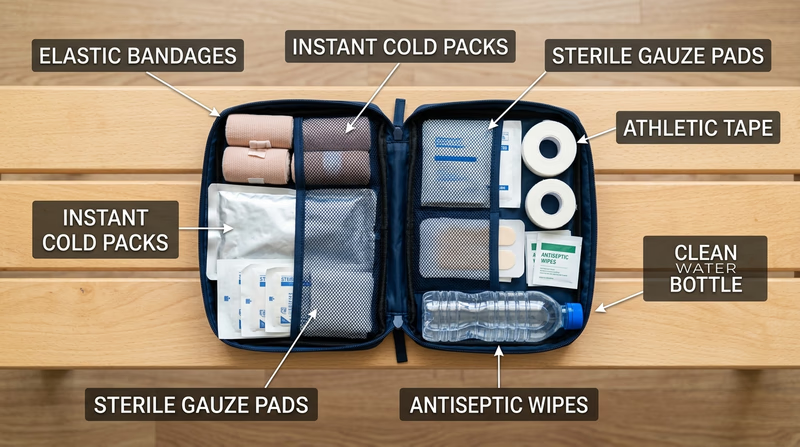
If you are already working on First Aid merit badge, many of these terms will feel familiar. That is a good thing. Sports safety works best when you can connect what you know about injuries to the real conditions of practices, meets, and games.
Now that you know how to reduce risk and respond to common injuries, the next step is building the everyday habits that let athletes stay healthy enough to compete well.