Req 5 — Train, Compete, and Reflect
This requirement is the heart of the badge. It takes your two chosen sports and turns them into a real season of work. You will plan training, track progress, study technique and equipment, compete in organized events, and then look back at what changed.
Requirement 5a
A good training program is specific enough to guide you, but realistic enough that you will actually follow it. It should match the demands of your sports. A cross-country runner needs endurance and recovery. A volleyball player may need jumping power, shoulder strength, and agility. A swimmer needs stroke work, conditioning, and flexibility.
What to include in your plan
- practice schedule
- conditioning work
- strength or mobility work if appropriate
- rest and recovery days
- goals you can measure over time
A workable personal training program
Keep it simple enough to follow
- What am I training for? Identify the main demands of each sport.
- How many days each week will I train?
- What kinds of training will I do? Skill work, conditioning, strength, mobility, recovery.
- How will I know if I am improving? Use measurable goals.
- How will I avoid overtraining? Include lighter days and rest.
Requirement 5b
Tracking turns vague effort into visible progress. Without records, it is hard to tell whether you are improving, staying flat, or heading toward burnout.
Your chart could be a notebook, spreadsheet, calendar, or printed worksheet. The important part is that it records what you actually did, not what you hoped to do.
Sports Season Tracking Worksheet Resource: Sports Season Tracking Worksheet — /merit-badges/sports/guide/sports-season-tracking-worksheet/Useful things to record
- date and type of practice
- drills or workouts completed
- competition results
- what felt stronger or smoother
- soreness, fatigue, or injuries
- short notes about mindset and confidence
Requirement 5c
Technique matters because it affects both performance and safety. In almost every sport, bad form wastes energy and increases injury risk. Good technique usually looks controlled, balanced, and repeatable.
A counselor will not expect you to perform like an elite athlete. They will expect you to show that you understand the basics well enough to move safely and effectively. Focus on body position, balance, timing, and control.
Requirement 5d
This is more than making a packing list. You should be able to explain what each item does and why it matters.
For each sport, think in categories:
- essential playing equipment such as a racket, bat, ball, clubs, or swimsuit
- protective equipment such as a helmet, mouthguard, pads, or goggles
- specialized clothing or footwear suited to the surface, weather, and movement demands
Strong explanations sound like this
Instead of saying, “Cleats are needed for soccer,” go one step further: “Soccer cleats provide traction for cutting, sprinting, and stopping on grass or turf, which helps performance and reduces slipping.”
Requirement 5e
Rules tell you what is legal. Etiquette tells you what is respectful. Both matter. A skilled athlete who ignores etiquette can still damage a team, a match, or their own reputation.
Rules vs. etiquette
- Rules define scoring, boundaries, legal actions, penalties, and match structure.
- Etiquette covers behavior such as respecting officials, waiting your turn, playing safely, handling disagreements, and treating opponents fairly.
Golf and tennis often talk openly about etiquette, but every sport has it. In wrestling, it may show up in how you treat your opponent before and after a match. In swimming, it may show up in how you behave in a lane or staging area. In basketball, it may show up in how you respond to contact and officials.
Requirement 5f
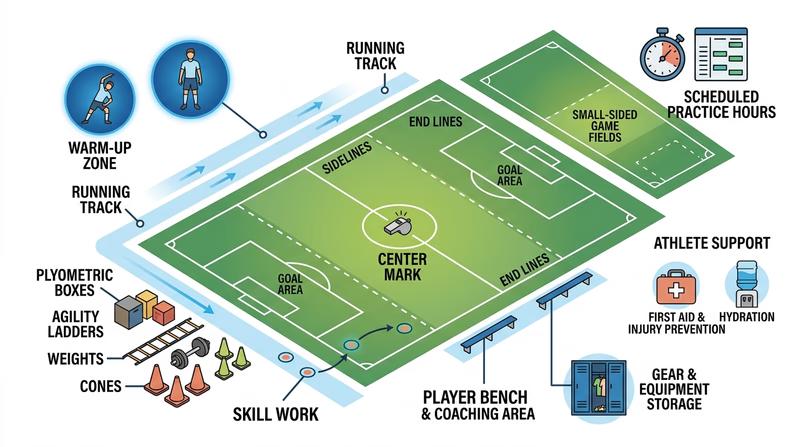
A good diagram shows that you understand where the sport happens and how the space shapes strategy. You do not need to produce fancy artwork. You do need to label the main areas clearly.
What to include in a playing-area diagram
- boundaries or lanes
- scoring areas or goals
- starting or service positions
- key lines, marks, zones, or apparatus
- any special safety zones if relevant
Requirement 5g
This requirement is where the badge becomes real. You must stay involved long enough to experience the rhythm of practices, competition days, setbacks, adjustments, and improvement.
What participation should show
Participation is not just showing up once in a while. It should show commitment over time. That includes attending practices, competing when scheduled, supporting teammates or training partners, and continuing through hard days instead of only easy ones.
Requirement 5h
Reflection is one of the most valuable parts of the badge because it helps you learn from the whole experience instead of just surviving it.
Mental changes to notice
You might notice improved confidence, patience, discipline, focus, or emotional control. You may also notice how competition affected your nerves, motivation, or ability to recover from mistakes.
Physical changes to notice
You might see better endurance, strength, speed, flexibility, coordination, or recovery. You may also notice soreness patterns, new fitness limits, or the effect of sleep and nutrition on performance.
End-of-season reflection
Good topics to discuss with your counselor
- What improved most?
- What stayed challenging?
- How did your body adapt over time?
- How did your mindset change?
- Would you continue one or both sports? Why?
These eight parts work like one season-long project. Plan thoughtfully, keep honest records, learn the details of each sport, show up for real competition, and then reflect on what the experience taught you. That full pattern is what makes the Sports merit badge more than just playing games.
Now that you have walked through the full athlete experience, you can decide how sports might connect to your future beyond this badge.