Req 1 — Field Safety for Surveyors
A survey crew may spend hours in brush, sun, cold wind, rocky ground, or overgrown property corners. That means Requirement 1 is not extra background knowledge. It is part of doing the job well. If someone gets hurt far from the truck or overlooks a poisonous plant patch, the whole crew’s work stops.
Think Like a Survey Crew Member
Surveyors often work in places that look quiet but hide small hazards: rusty wire, thorny plants, ticks, hidden holes, snake cover, and weather that shifts fast. Before starting work, scan the area the same way you would scan a campsite.
Field Safety Scan
Use this before setting up an instrument
- Ground hazards: Look for holes, loose rock, broken glass, wire, and steep or slippery slopes.
- Plant hazards: Notice poison ivy, poison oak, poison sumac, thorny brush, and sticker plants common in your area.
- Animal hazards: Check for snake habitat, fire ant mounds, wasp nests, ticks, and biting insects.
- Weather hazards: Ask whether heat, cold, lightning, wind, or dehydration will be the bigger problem today.
- Crew readiness: Make sure someone has water, a first-aid kit, and a clear plan for calling for help.
Cuts and Scratches
Cuts and scratches are common when moving through brush, handling stakes, or working around old fences and tools. Most are minor, but they can still become painful distractions or infected wounds if ignored.
First aid for cuts and scrapes
- Stop the bleeding with direct pressure.
- Clean the area with clean water.
- Cover it with a clean bandage or dressing.
- Watch for signs of deeper injury, heavy bleeding, or infection.
🎬 Video: How to Treat Cuts & Scrapes | First Aid Training (video) — https://youtu.be/L77rERL64zc?si=3OoxbYxRfSOm5dX7
Snakebites, Insect Stings, and Tick Bites
A surveyor does not need to panic around wildlife. A surveyor does need to notice where wildlife may be hiding and know what to do if something goes wrong.
Snakebite
Most snakebites happen when someone surprises or tries to handle a snake. The safest response is simple: step back, give it space, and let it move away.
If a bite happens, keep the person calm, limit movement, and get medical help quickly. Do not cut the bite, suck out venom, or apply a tourniquet.
Snake Bites (website) Official Scouting guidance on preventing snakebites and responding correctly if one happens in the field. Link: Snake Bites (website) — https://www.scouting.org/health-and-safety/safety-moments/snake-bites/Insect stings and arachnid bites
Bee, wasp, hornet, ant, and spider problems range from annoying to life-threatening. Remove a visible stinger if present, wash the area, use a cold pack for swelling, and watch for allergic reaction signs such as trouble breathing, widespread hives, or swelling of the face or throat.
🎬 Video: Bites or Stings of Insects and Arachnids (video) — https://youtu.be/qP2ETKAOPWo?si=_tmXRhrdNV5cbQRn
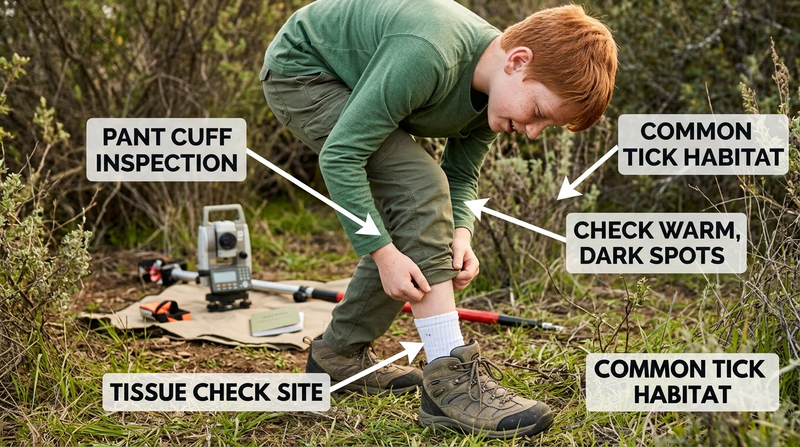
Tick bites
Ticks are a surveying hazard because crews work in grass, brush, and woods where ticks wait to latch onto clothing or skin. Use tweezers to remove a tick close to the skin with steady pressure. Then wash the area and tell an adult leader or parent so the bite can be monitored.
Heat, Cold, and Dehydration
Survey work can be slow and precise, which tricks people into forgetting how much the environment is affecting them. A Scout concentrating on a rod reading or a field sketch may not notice thirst, chills, or overheating until the problem is already serious.
Heat reactions and dehydration
Hot weather can lead to heavy sweating, dizziness, cramps, headache, nausea, and confusion. Dehydration often starts before you feel very thirsty.
🎬 Video: Heat and Cold Emergencies - How to Treat Dehydration (video) — https://youtu.be/3q0s8uKfE8I?si=9vjG5zfeGQpDo3mv
Cold reactions
Cold, wind, and wet clothing can cause shivering, numb fingers, poor coordination, and confusion. Those signs matter to a surveyor because cold hands and tired thinking lead to bad measurements as well as medical trouble.
🎬 Video: First Aid Training - St John Ambulance (video) — https://youtu.be/DXo5hmiFQmQ?si=pAKne0eAc6FdMZOo
Water and Weather Habits
Simple habits prevent many field injuries
- Drink early: Start hydrated before you arrive.
- Dress in layers: Surveying often means standing still between short bursts of movement.
- Use sun protection: Hat, sunscreen, and shade breaks matter on open sites.
- Watch your crew: If someone becomes clumsy, dizzy, unusually quiet, or confused, stop and check on them.
Poisonous Plants and Animals in Your Area
Surveyors need local hazard knowledge because the job takes them off sidewalks and into edge spaces: fence rows, drainage areas, vacant lots, stream banks, and overgrown corners. That is exactly where poisonous plants and venomous animals may be hard to notice.
When you talk with your counselor, be ready to explain:
- which poisonous plants are common where you live
- how to recognize them in different seasons
- which venomous or dangerous animals are realistic local concerns
- how knowing that information changes where you walk, kneel, place equipment, and take breaks
You now know how to protect yourself and your crew before the measurements begin. Next, you will collect the kind of angle and distance data that turns a marked lot into a real survey.