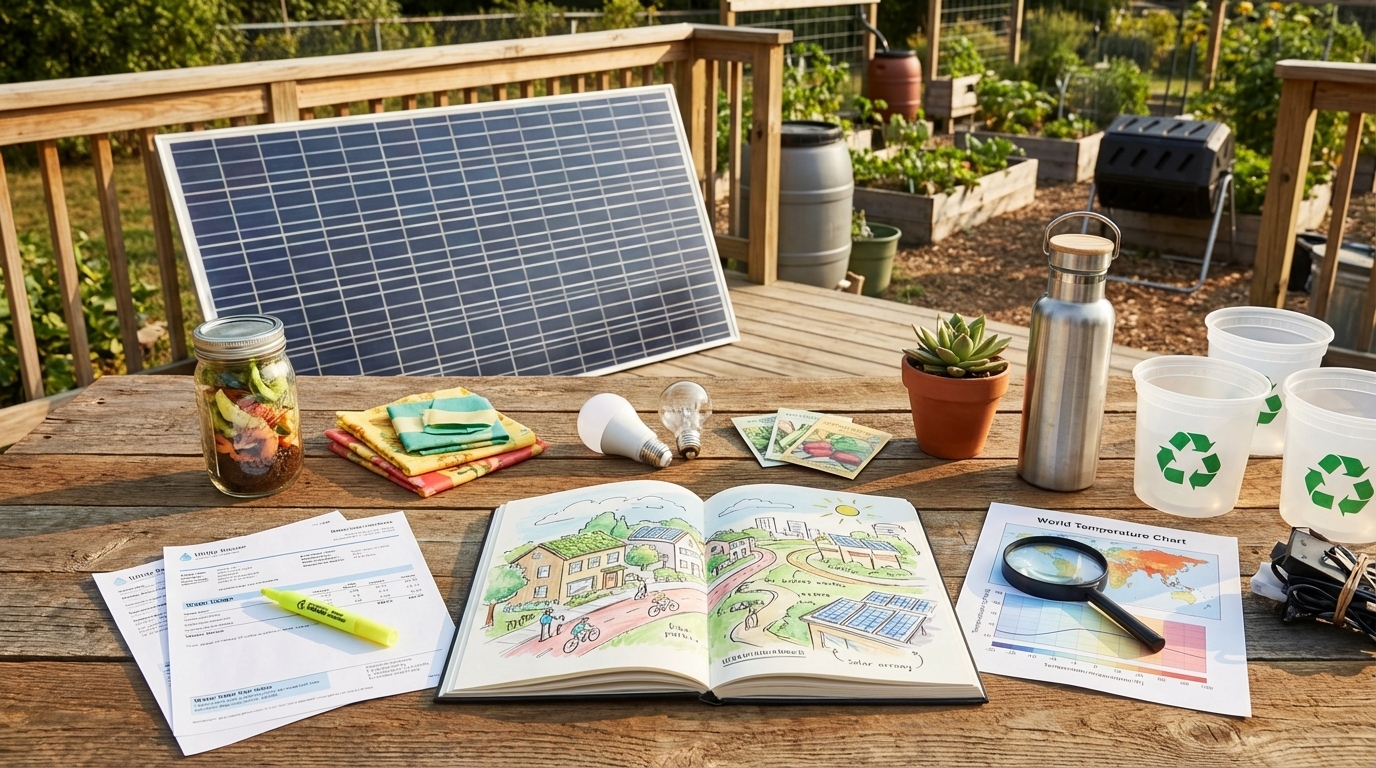
 Getting Started
Introduction & Overview
Every choice you make — what you eat, how you get to school, what you do with old clothes — shapes the world around you. The Sustainability merit badge helps you see those connections and gives you the tools to make choices that protect the planet for generations to come.
Sustainability is one of the most important ideas of our time. It touches everything: water, food, energy, communities, and the stuff you own. This Eagle-required badge will challenge you to look at everyday life through a new lens and take real action in your home, your community, and beyond.
Then and Now
Then — Ancient Wisdom
Long before anyone used the word “sustainability,” people lived by its principles. Indigenous communities around the world practiced land stewardship for thousands of years — rotating crops, managing forests with controlled burns, and harvesting only what they needed. The Haudenosaunee (Iroquois) made decisions based on how they would affect the next seven generations. Ancient civilizations in Mesopotamia built irrigation systems to share water fairly, and terraced farming in the Andes kept soil from washing away for centuries.
- Key idea: Take only what you need, give back what you can
- Mindset: Survival depended on keeping the land, water, and wildlife healthy
Now — A Global Movement
The modern sustainability movement took shape in 1987 when a United Nations report called “Our Common Future” (also known as the Brundtland Report) defined sustainable development as “meeting the needs of the present without compromising the ability of future generations to meet their own needs.” That idea changed everything. Today, 193 countries have agreed on 17 Sustainable Development Goals, businesses measure their carbon footprints, and young people are leading the charge for climate action.
- Key idea: Balance what we use today with what future generations will need
- Mindset: Every person, business, and community plays a role
Get Ready! You are about to explore one of the biggest challenges — and greatest opportunities — of your lifetime. The skills you build in this merit badge will serve you long after you earn it. Let’s dig in!
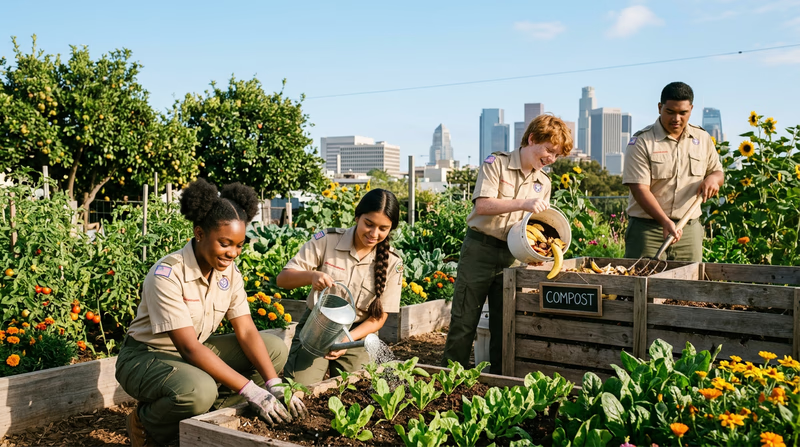
Kinds of Sustainability
Sustainability is not just about “going green.” It is a way of thinking that applies to many parts of life. Here are the main areas you will explore in this badge.
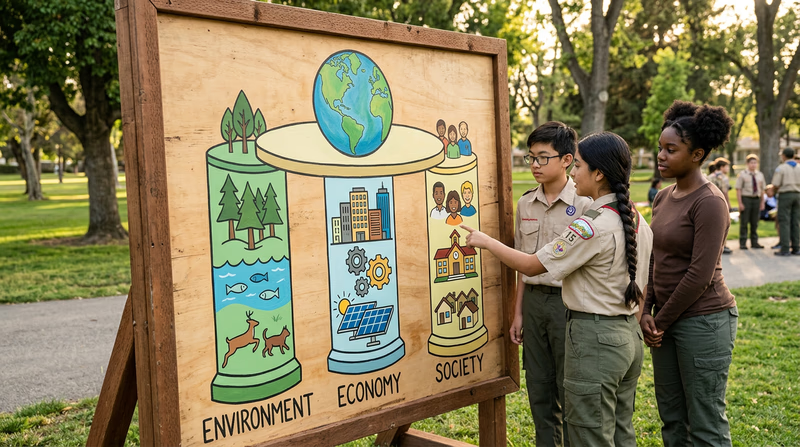
Environmental Sustainability
This is what most people think of first — protecting the natural world. Clean air, clean water, healthy forests, thriving wildlife, and a stable climate all depend on how we treat the environment. Environmental sustainability means using natural resources at a rate that allows them to replenish themselves.
Economic Sustainability
A sustainable economy does not just grow — it grows in ways that do not destroy the resources it depends on. This means creating jobs and businesses that use materials responsibly, minimize waste, and invest in renewable solutions. When a company designs products that can be repaired instead of thrown away, that is economic sustainability in action.
Social Sustainability
People matter too. Social sustainability means making sure that communities have access to clean water, nutritious food, education, healthcare, and safe places to live — not just today, but for generations to come. It means treating people fairly and making sure that the benefits of progress are shared.
Personal Sustainability
This one is all about you. Personal sustainability is the set of daily choices you make — turning off lights, reducing food waste, choosing to walk instead of drive, and thinking twice before buying something you do not need. Small actions, repeated by millions of people, add up to massive change.
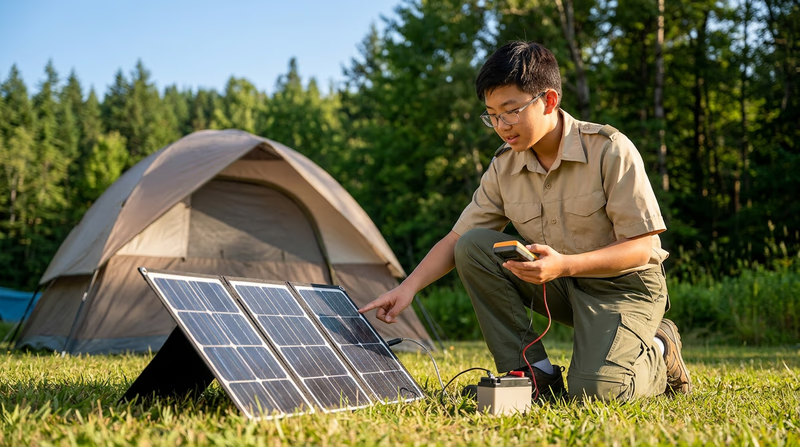
Sustainability connects to almost every other merit badge you can earn — from Camping and Environmental Science to Cooking and Citizenship in the World. As you work through these requirements, you will see how the skills you build here make you stronger in every part of Scouting.
Now let’s start with the big question: what does sustainability actually mean?