Req 1 — Defining Sustainability
What Does Sustainability Mean?
At its core, sustainability is about balance. Imagine a bank account. If you keep withdrawing money without ever making deposits, eventually you run out. Earth’s resources work the same way. Sustainability means using resources — water, soil, energy, forests, minerals — at a pace that lets them replenish, so future generations have what they need too.
The most widely used definition comes from the United Nations’ 1987 Brundtland Report: “Meeting the needs of the present without compromising the ability of future generations to meet their own needs.” That single sentence shaped how governments, businesses, and communities think about the future.
But sustainability is not just about the environment. It rests on three connected pillars:
- Environmental — Protecting ecosystems, clean air, clean water, and biodiversity
- Economic — Creating jobs and wealth without destroying the resources we depend on
- Social — Making sure all people have access to food, education, healthcare, and safe communities
When all three pillars are strong, a society is sustainable. When one is weak, the others eventually suffer too.
Why Sustainability Matters to Society
Think about the resources you used just today. The water in your shower came from a river, lake, or underground aquifer. The electricity powering your phone was generated by burning fuel, splitting atoms, or capturing sunlight. The food on your plate traveled an average of 1,500 miles to reach you.
Now multiply that by 8 billion people. Every day, humanity uses enormous quantities of water, energy, and materials. Some of those resources — like solar energy and wind — are renewable. Others — like fossil fuels and certain minerals — are not.
Sustainability matters because:
- Resources are finite. We cannot keep using non-renewable resources as if they will last forever.
- Ecosystems are connected. Cutting down a forest does not just remove trees — it changes rainfall patterns, drives away wildlife, and increases flooding downstream.
- People depend on each other. A drought in one country can raise food prices worldwide. Pollution from one factory can affect communities hundreds of miles away.
- Future generations deserve a fair chance. The choices we make now determine what kind of world our children and grandchildren will inherit.
How You Can Contribute
You do not need to be a world leader or a scientist to make a difference. Sustainability starts with everyday choices:
- Reduce waste by using reusable water bottles, lunch containers, and shopping bags
- Conserve energy by turning off lights, unplugging chargers, and choosing energy-efficient appliances
- Save water by taking shorter showers and fixing leaky faucets
- Choose wisely by buying durable products instead of disposable ones
- Spread awareness by sharing what you learn with family, friends, and your Scout troop
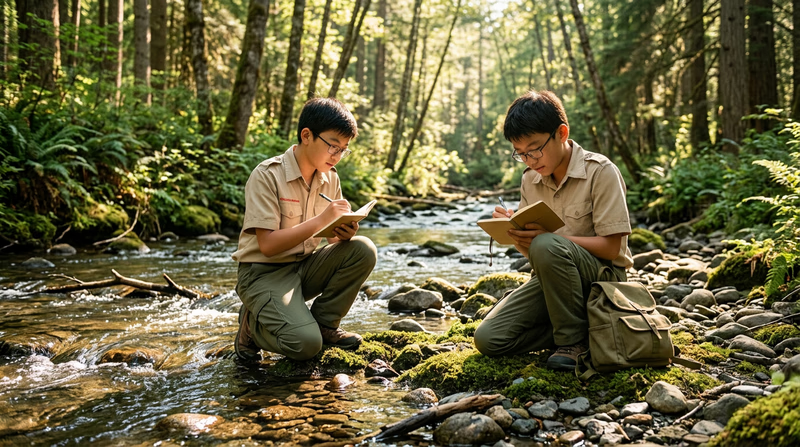
As you work through the rest of this badge, you will dive deep into each pillar of sustainability — water, food, community, energy, and more. Each requirement builds on this foundation.