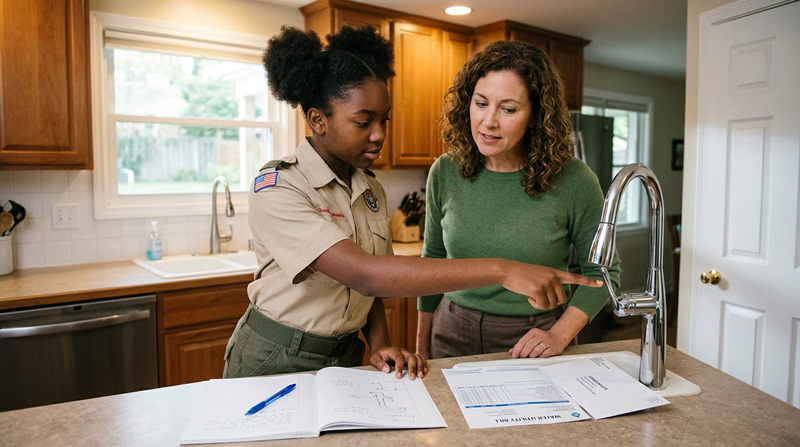
Req 2a — Household Water Usage
Choose ONE of requirements 2a, 2b, or 2c. This page covers option 2a. Read all three options before deciding which one interests you most.
Understanding Your Water Footprint
Every household uses water differently, but the average American family uses about 300 gallons of water per day. That is enough to fill six bathtubs. Some of that water is obvious — showers, flushing toilets, running the dishwasher. But a lot of it is hidden, like the water used to grow your food or manufacture your clothes.
To complete this requirement, you need to become a water detective in your own home.
How to Evaluate Your Water Usage
Step 1: Find your water bills. Ask a parent or guardian for water bills from the past 12 months. Most water utilities measure usage in gallons or CCF (centum cubic feet — one CCF equals 748 gallons). If paper bills are not available, many water utilities offer online accounts where you can view usage history.
Step 2: Track seasonal patterns. Create a simple chart or table showing your monthly water usage over the year. Look for patterns:
- Does usage spike in summer? (Lawn watering, pools, garden hoses)
- Does it drop in winter? (Less outdoor watering)
- Are there any unexplained spikes? (Could indicate a leak)
Step 3: Compare to benchmarks. The EPA estimates that the average American uses about 82 gallons of water per day at home. How does your household compare?
Where Does Household Water Go?
Average indoor water use breakdown
- Toilets: About 24% of indoor water use
- Showers: About 20% of indoor water use
- Faucets: About 19% of indoor water use
- Clothes washers: About 17% of indoor water use
- Leaks: About 12% of indoor water use (often unnoticed)
- Other (dishwashers, baths): About 8% of indoor water use
Three Ways to Reduce Water Consumption
The requirement asks you to identify three ways — but here are several ideas to choose from. Pick the ones that would make the biggest difference in your home.
Fix Leaks
Check every faucet, toilet, and hose connection in your home. To test a toilet for leaks, put a few drops of food coloring in the tank. If color appears in the bowl within 15 minutes (without flushing), you have a leak.
Shorten Showers
Cutting your shower by just two minutes can save up to 5 gallons of water per shower. Set a timer on your phone to keep yourself honest.
Upgrade Fixtures
Low-flow showerheads and faucet aerators can cut water use by 30–50% without a noticeable difference in water pressure. They are inexpensive and easy to install.
Water the Lawn Wisely
If your family waters the lawn, do it early in the morning when evaporation is lowest. Better yet, consider drought-resistant landscaping that needs little or no watering.
Run Full Loads
Only run the dishwasher and washing machine when they are full. A half-empty dishwasher uses the same amount of water as a full one.