Req 2c — Floods & Droughts
Too Much or Too Little
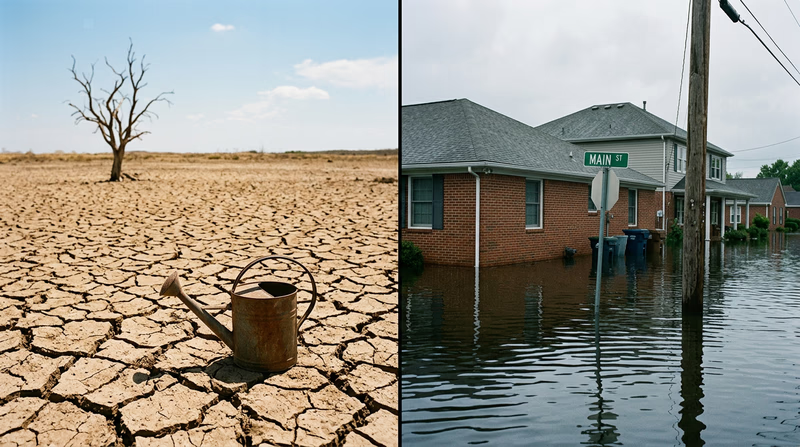
Water is one of nature’s most powerful forces. When there is too much, it floods homes, washes away roads, and contaminates drinking water. When there is too little, crops fail, wells run dry, and wildfires become more likely. Most places in the world deal with one or both of these challenges.
Understanding Drought
A drought happens when an area receives significantly less rainfall than normal for an extended period. Droughts can last weeks, months, or even years. They affect:
- Agriculture — Crops wither and livestock need more water than is available
- Water supplies — Reservoirs and wells drop to dangerously low levels
- Ecosystems — Fish, wildlife, and plant life struggle to survive
- Fire risk — Dry vegetation becomes fuel for wildfires
The western United States has experienced severe drought conditions in recent decades. The Colorado River, which supplies water to 40 million people, has seen its reservoirs drop to historically low levels.
Understanding Flooding
A flood occurs when water overflows onto normally dry land. Floods can be caused by:
- Heavy rainfall — Too much rain in a short time overwhelms rivers and drainage systems
- Snowmelt — Rapid spring warming can melt snow faster than the ground can absorb it
- Storm surge — Hurricanes and coastal storms push ocean water inland
- Dam failure — When a dam breaks, the released water can devastate communities downstream
Flooding is the most common natural disaster in the United States. It can happen in every state and in any season.
Does This Affect Where You Live?
To explore whether drought or flooding affects your area, try these steps:
- Check your state’s drought monitor at the U.S. Drought Monitor website. It shows current drought conditions across the country, updated weekly.
- Look up flood zone maps from FEMA. Enter your address to see if your home or community is in a flood-prone area.
- Ask local officials or librarians about historical floods or droughts in your area. Many communities have records of past events.
- Talk to older family members or neighbors. They may remember droughts, water restrictions, or flooding that affected your community.
Water Conservation and Flood Mitigation Practices
Here are examples of practices that communities have tried. Research which ones apply to your area — and whether they worked.
Conservation Practices (For Drought)
Water rationing and restrictions — During droughts, many communities limit lawn watering, car washing, and other non-essential uses. Some assign watering days based on your address. These have been effective in reducing usage by 20–30% during drought emergencies.
Desalination — Removing salt from ocean water to make it drinkable. San Diego, California opened one of the largest desalination plants in the Western Hemisphere. It is expensive but provides a drought-proof water source.
Water recycling — Treating wastewater to a high standard and reusing it for irrigation, industrial processes, or even drinking water. Orange County, California has been recycling wastewater into drinking water since 2008.
Rainwater harvesting — Capturing rain from rooftops and storing it in tanks for later use. Some communities encourage this with rebates for rain barrel purchases.
Flood Mitigation Practices
Levees and floodwalls — Barriers built along rivers to hold back floodwater. New Orleans relies heavily on levees, though Hurricane Katrina in 2005 showed what happens when they fail.
Green infrastructure — Using natural features like wetlands, rain gardens, and permeable pavement to absorb rainwater and reduce runoff. These approaches work with nature instead of against it.
Detention basins — Large areas designed to temporarily hold floodwater and release it slowly. Many communities build these near rivers or in parks that serve double duty as recreational spaces.
Buyout programs — Some communities purchase homes in repeatedly flooded areas and return the land to its natural state, giving the river more room to flood safely.