Req 3a — Food Sources
Choose ONE of requirements 3a, 3b, or 3c. This page covers option 3a. Read all three options before deciding which one interests you most.
From Farm to Fork
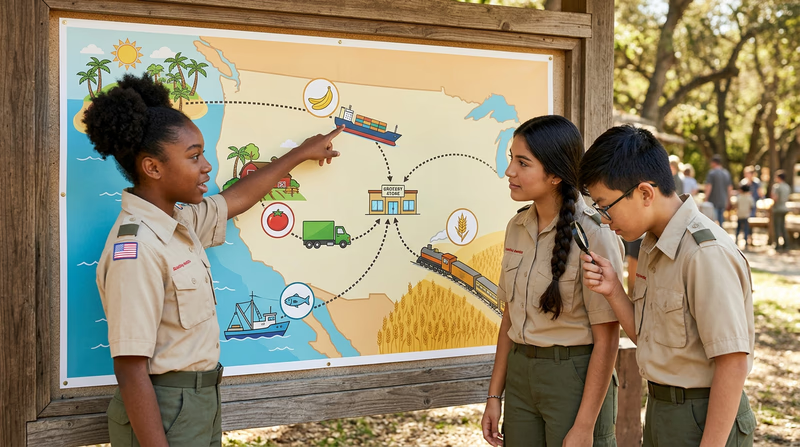
Every food you eat has a story. That story includes where the food was grown or raised, how it was harvested, how it was processed and packaged, and how it traveled — sometimes thousands of miles — to reach your plate. Understanding that journey is key to understanding food sustainability.
Three Types of Food Production
Plant-based foods include fruits, vegetables, grains, nuts, and legumes. These are grown on farms and require soil, water, sunlight, and often fertilizers and pesticides. Some plant-based foods, like lettuce, are eaten fresh. Others, like wheat, go through extensive processing to become bread, pasta, or cereal.
Animal-based foods include meat, dairy, eggs, and poultry. These come from livestock raised on farms and ranches. Animal agriculture generally requires more water, land, and energy than plant-based food production because animals need to eat plants (or other feed) throughout their lives before becoming food themselves.
Aquaculture foods come from fish and shellfish farming. Instead of catching wild fish from the ocean, aquaculture raises fish in controlled environments — ponds, tanks, or ocean pens. It is the fastest-growing form of food production in the world, now providing about half of all fish consumed globally.
Tracing Four Foods
The requirement asks you to pick four foods and trace their journey. Here is what to look for with each one:
Food Journey Checklist
Questions to answer for each food
- Where is this food originally grown, raised, or caught?
- What climate and resources does it need (water, land, temperature)?
- How is it harvested or collected?
- What processing steps does it go through before reaching a store?
- How is it packaged?
- How far does it travel to reach your community?
- What transportation methods are used (truck, ship, plane, train)?
Example: A Banana
- Source: Grown on tropical plantations in countries like Ecuador, Costa Rica, and the Philippines
- Harvest: Picked green by hand, washed, and sorted at a packing facility
- Processing: Minimal — bananas are sold fresh with no cooking or canning
- Transport: Shipped by refrigerated cargo ship (about 2 weeks at sea), then by truck to distribution centers and stores
- Sustainability factors: Banana farming uses significant pesticides, and long-distance shipping burns fossil fuels. Some farms use monoculture (growing only one crop), which can deplete soil
Example: Canned Tuna
- Source: Caught in the Pacific, Atlantic, or Indian oceans by commercial fishing boats
- Harvest: Caught using purse seine nets, longlines, or pole-and-line methods
- Processing: Cleaned, cooked, canned, and sealed at a processing plant — often in Thailand, Vietnam, or Ecuador
- Transport: Shipped by cargo container to warehouses, then trucked to stores
- Sustainability factors: Overfishing threatens some tuna species. Certain fishing methods also catch dolphins, sea turtles, and other marine life (called bycatch)