Req 3b — Global Food Supply
What Limits Food Availability?
The world produces enough food to feed everyone on the planet — yet nearly 800 million people go hungry. The problem is not just about growing enough food. It is about getting food to where it is needed, keeping it affordable, and making the systems that produce it sustainable.
Here are key factors that limit food availability around the world:
Climate and Weather
Farming depends on predictable weather patterns. When droughts, floods, heat waves, or unexpected frosts hit, crops fail and livestock suffer. Climate change is making weather less predictable, which makes farming riskier in many regions. Areas near the equator — where many developing nations are located — face some of the most severe impacts.
Soil Degradation
Healthy soil is the foundation of food production. When soil is overfarmed, overgrazed, or exposed to erosion, it loses the nutrients plants need to grow. The United Nations estimates that about one-third of the world’s soil is moderately to highly degraded. Without healthy soil, food production drops — and recovering damaged soil can take decades.
Water Scarcity
Agriculture uses about 70% of the world’s freshwater supply. In regions where water is scarce — parts of Africa, the Middle East, and western United States — there is often not enough water to grow food and supply communities at the same time. As populations grow and water sources shrink, this competition gets more intense.
Political Instability and Conflict
War and political instability destroy farming infrastructure, displace farmers, and block food supply routes. In conflict zones, food is sometimes used as a weapon — shipments are blocked, farms are burned, and humanitarian aid is prevented from reaching people who need it.
Poverty and Economic Inequality
Even when food is available, many people cannot afford it. Poverty limits access to nutritious food in both developing nations and wealthy countries. In some communities, there are “food deserts” — areas where grocery stores with fresh produce are miles away, and the only nearby options are fast food or convenience stores.
Transportation and Infrastructure
In remote or rural areas, poor roads, lack of refrigeration, and limited access to markets mean that food often spoils before it can be sold or eaten. Post-harvest losses — food that is grown but never eaten — can reach 40% in some developing countries.
Growing Your Own Food
You do not need a farm to produce food. Here are ways individuals, families, and communities can create their own food sources:
Backyard and Container Gardens
Even a small space — a patio, a balcony, or a sunny windowsill — can produce herbs, tomatoes, peppers, lettuce, and more. Container gardening works for people without a yard. Start with easy-to-grow crops and expand as you learn.
Community Gardens
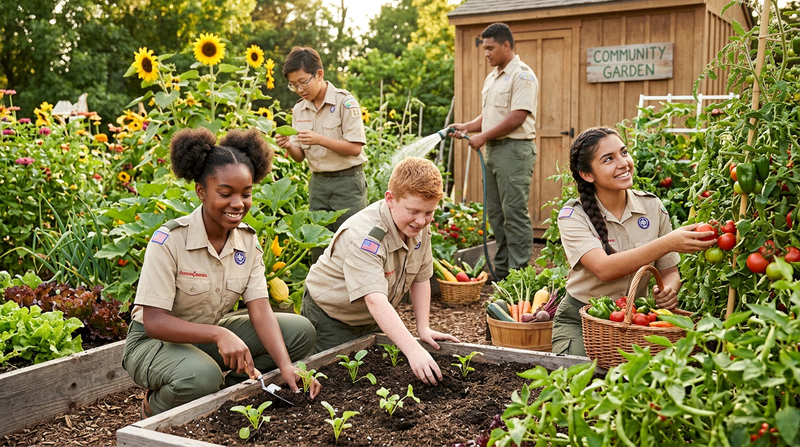
A community garden is a shared space where neighbors grow food together. They build community connections, provide fresh produce in areas that might lack it, and teach gardening skills to the next generation. Many cities offer plots for free or a small fee.
School and Troop Gardens
Starting a garden at your school or Scout meeting place is a great service project. It teaches sustainability, provides fresh food, and connects people to where their food comes from.
Raising Small Livestock
Depending on local regulations, families can raise chickens for eggs, keep bees for honey, or raise rabbits for meat. These small-scale operations can supplement a family’s food supply and reduce dependence on grocery stores.
Farmers Markets and CSAs
While not growing your own food, buying from local farmers through farmers markets or Community Supported Agriculture (CSA) programs reduces the distance food travels, supports local economies, and often provides fresher, more sustainably grown food.